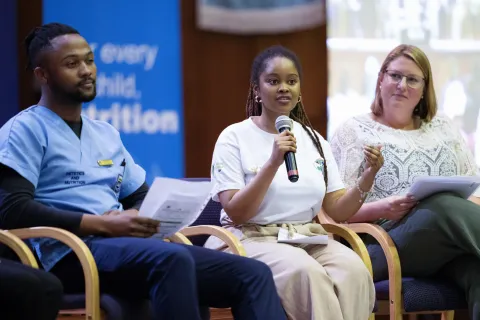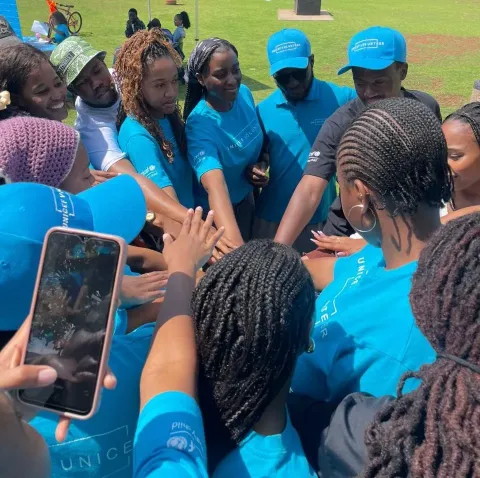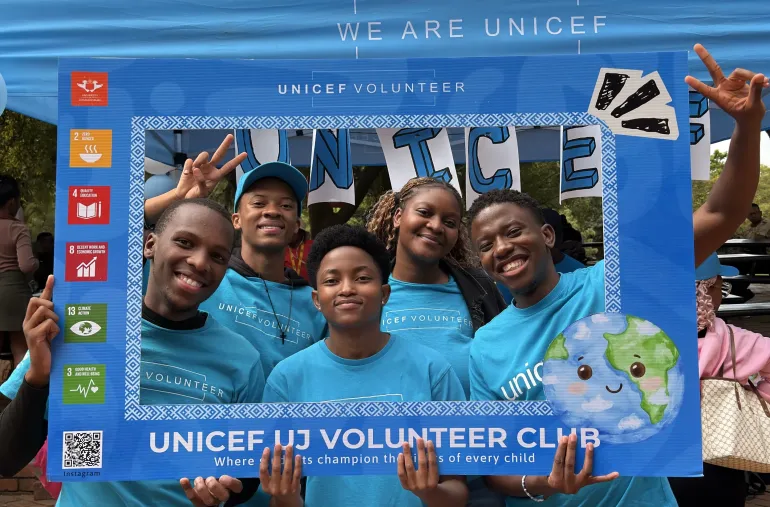
In the past month, I had the privilege of making brief visits to a few UNICEF Volunteer Campus Clubs across Gauteng. I arrived expecting quick check-ins and short introductions. I left feeling something much bigger: hope, pride, and that familiar reminder that when young people are trusted with responsibility, they don’t just participate — they build movements.
Clubs visited during these Gauteng stop-ins:
- University of Pretoria Campus Club
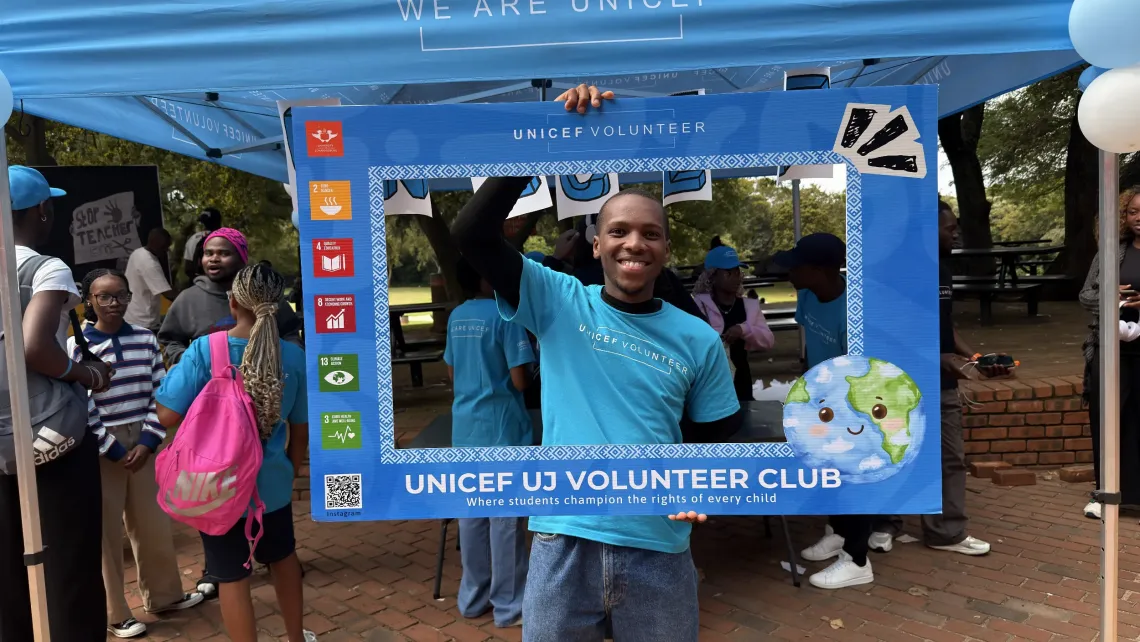
- University of Johannesburg Campus Club
- Tshwane University of Technology Ga-Rarankua Campus Club
- University of the Witwatersrand Campus Club
- North West University Vaal Campus Club
What struck me first was the energy of welcome. In the busiest corners of campus life — where first-years are still finding lecture venues and figuring out who they are — UNICEF volunteers were doing what healthy societies do best: creating belonging. They were mobilising new members, greeting students like family, and making it clear that this is not just another society with a poster and a logo. This is a community that believes children’s rights are not an abstract idea, but a living commitment.
The most powerful thing I saw: volunteers making UNICEF real
In conversations with executive committee members and students, I asked a simple question: “What does UNICEF mean to you?”
The answers weren’t rehearsed. They were personal. For some, UNICEF meant a voice — the credibility to speak about child rights with confidence and clarity. For others, UNICEF meant structure — a framework to turn compassion into organised action. For many, it meant identity: “I didn’t know where I fit on campus until I found this.”
These moments matter because UNICEF on Campus is, at its core, a youth-led movement that supports UNICEF South Africa’s mission by activating local communities through awareness, advocacy, volunteering, and fundraising for children’s rights and wellbeing.
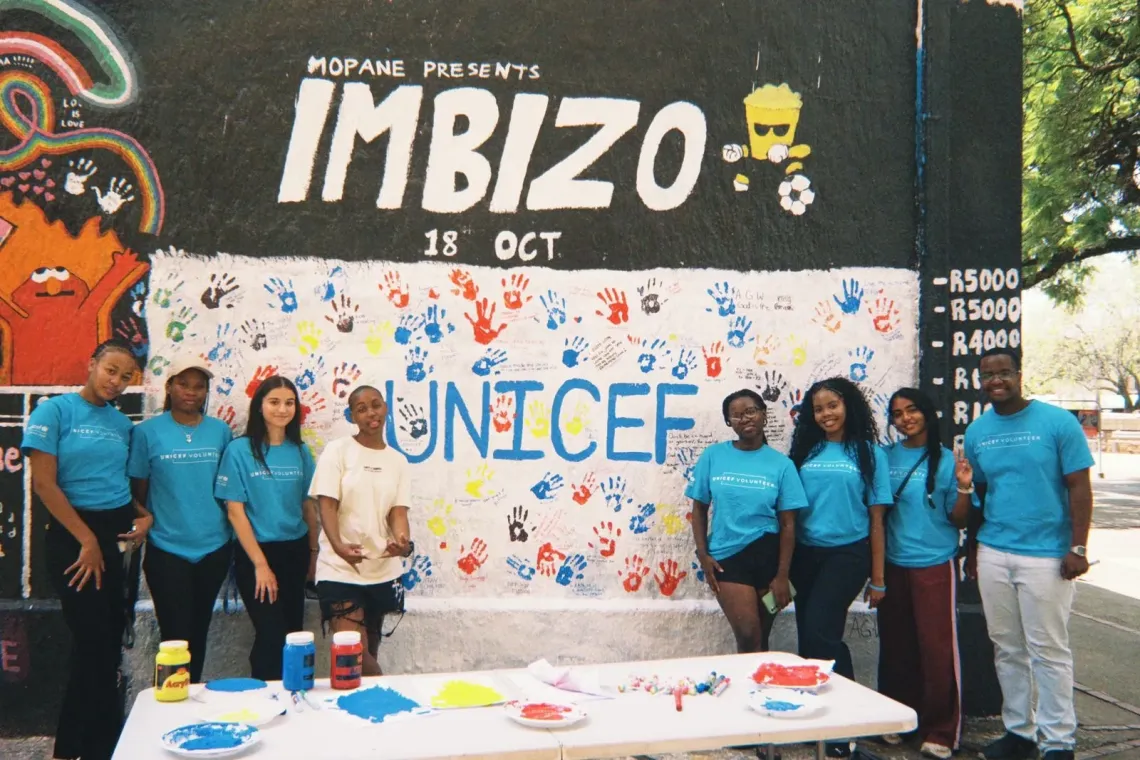
What the UNICEF Volunteer Programme is (and why it matters)
The UNICEF South Africa Volunteer Programme exists to mobilise people — particularly young people — to improve the lives of children and strengthen a nationwide network that advances UNICEF’s mission.
It is a platform for young people to learn about children’s rights, take practical action in their communities, and contribute to initiatives that support child and youth development across South Africa.
Participation is voluntary. There is no salary attached to being part of the programme. What you gain instead is often more valuable in the long run: skills, leadership experience, a track record of impact, and a stronger sense of purpose.
The strongest activities are designed with clear outcomes: they teach, mobilise, and connect students to real community issues.
Across the programme, clubs are encouraged to align their work to four civic engagement pillars:
- Education (literacy, learning support, mentorship)
- Ending Violence Against Children (prevention, protection pathways, awareness and advocacy)
- Climate Action (stewardship, sustainability education, clean-ups, greening projects)
- Healthy Lifestyles (nutrition, sexual and reproductive health, mental wellbeing, hygiene)
When activities are aligned like this, volunteering becomes more than a calendar of events — it becomes a coherent contribution to children’s rights.
Leadership is not a title here — it is a system
Behind every successful activation is governance. The strongest clubs I visited treat leadership as a system, not a personality.
Executive committee structures and role clarity help clubs plan properly, communicate responsibly, manage finances transparently, and track impact consistently.
That last piece — monitoring and reporting — matters more than people realise. It is how volunteer hours, activities, and outcomes are captured for accountability and learning, and how a volunteer’s contribution becomes professionally legible over time.
Volunteering as a pathway: skills, experience, and becoming
On campus, volunteers are building practical competencies that translate into real-world readiness. They learn how to:
- Lead teams and manage responsibilities with maturity
- Plan and deliver campaigns with clear objectives
- Communicate with credibility in public spaces
- Fundraise ethically and report transparently
- Collect evidence of impact and reflect on what works
- Represent children’s rights in ways that are practical and locally relevant
For many students — especially first-years — this becomes their first real leadership training ground. You can see it in the confidence that grows when a young person realises their voice can organise others, influence culture, and create safer spaces for children.
Safeguarding and integrity: the non-negotiables
A movement for children’s rights must protect children — always.
Safeguarding and integrity are non-negotiable. Volunteers are expected to uphold high standards of ethical conduct, respect confidentiality, and ensure that engagement with children follows safe practices and appropriate supervision.
This is what builds trust — with communities, with partners, and with the children and families we serve.
Leaving Gauteng inspired
These campus visits were brief, but they were deeply affirming.
I saw young leaders who don’t need to be convinced that children matter — they already know. What they need (and deserve) is support, guidance, and opportunities that match their commitment.
To every volunteer who welcomed a first-year, recruited a new member, chaired a meeting, planned a campaign, designed a poster, captured an impact story, or asked a hard question about how to do this work better: you’re building more than a club.
You’re building a culture — one that says children’s rights belong on every campus, in every residence, in every conversation, and in every community.