A lifeline for mothers and newborns in Galkayo
A strengthened health facility in Galkayo is bringing lifesaving healthcare closer to mothers and children.

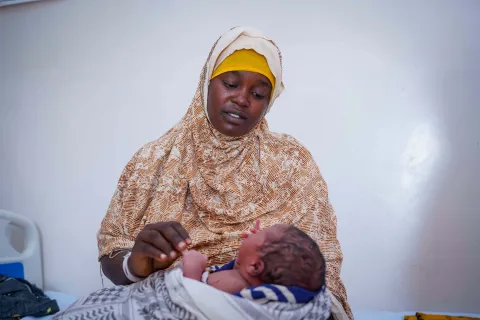
When Nimo Abdi, went into labour, she knew where to go. At the Galkayo Health Center, help was close, skilled health workers were ready, and the care she needed was available. There, Nimo safely delivered a healthy baby girl.
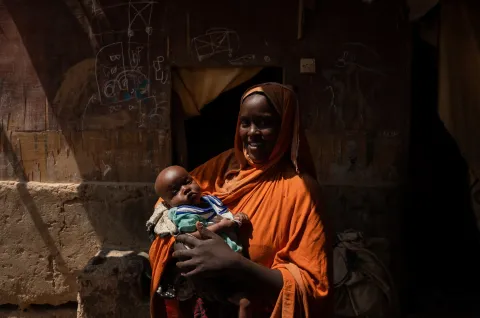
For Nimo, a mother of five who was displaced from Beledweyne and now lives with her family in Karaamo camp in Galkayo, this experience was very different from what many mothers once faced.
“Before this health centre was available, women in our community had very few options,” she says, gently holding her newborn. “If complications happened during childbirth, especially heavy bleeding, it was very dangerous. Some mothers did not survive.”

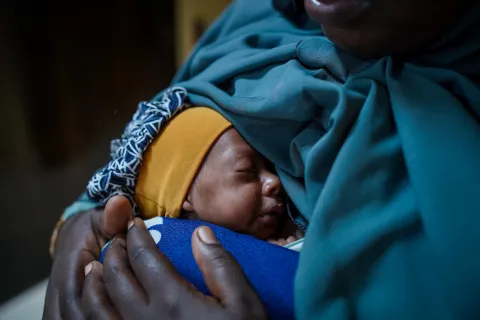
Today, that reality is changing. Established in 2023, Galkacyo Health Center has become a vital lifeline for families across the community, providing round-the-clock healthcare for mothers, newborns and children. From safe deliveries and antenatal care to immunization, nutrition support, outpatient consultations and emergency referrals, the facility offers essential services that many families previously struggled to access.
The health centre is supported through the Joint Resilience Programme , funded by the German Government, helping strengthen access to quality healthcare for vulnerable communities in Galmudug.
For Khadijo Mohamud, a nurse, every shift is a reminder of why this work matters “Many mothers arrive frightened, especially if they have experienced complications before or have travelled long distances while in labour,” she says. “Our role is not only to provide medical care, but also reassurance. When a mother leaves here healthy with her baby, that is the best part of our work.”

At the health centre, families can access a range of essential services, from maternal and newborn care to immunization, nutrition support and outpatient consultations, making quality healthcare more accessible for vulnerable communities. The facility serves more than 35,000 households, offering dependable care at any hour. For families like Nimo’s, proximity and trust make all the difference.
“When labour started, I did not panic,” she says. “I knew I could come here and be helped.” That confidence is critical in a region where barriers such as displacement and distance often delay families from seeking care until emergencies arise.
Through the Joint Resilience Programme, UNICEF and partners are helping improve service delivery by supporting health facilities with essential medical supplies, equipment, trained personnel and strengthened community health systems, ensuring children and mothers can access care when they need it most.

For health workers, the impact is visible every day. “We are seeing more mothers coming for skilled deliveries, more children being vaccinated, and families seeking care earlier,” says Hani. “That helps prevent complications and saves lives.”
As Nimo prepares to return home with her newborn daughter, she reflects on what this health centre means. “It gave me safety,” she says. “It gave my baby a healthy start.” For communities in Galkayo, that simple assurance can change everything.