Somalia Launches New Community Health Strategy to Strengthen Primary Health Care and Advance Health System Resilience
Mogadishu, Somalia, 6 April 2026 – The Federal Government of Somalia today launched the Somalia Community Health Strategy 2025–2029, a landmark policy aimed at strengthening the country’s primary health care system and accelerating progress toward Universal Health Coverage (UHC).
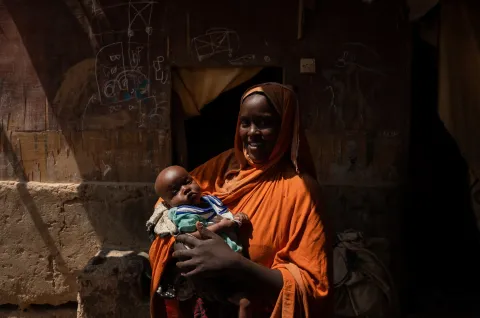
Somalia continues to face significant health challenges, including some of the world’s highest maternal and child mortality rates, widespread malnutrition, low immunization coverage, and recurring disease outbreaks such as polio and measles. The new strategy directly responds to these challenges by expanding maternal and newborn care, improving early detection and treatment of childhood illnesses, scaling up nutrition screening and support, increasing immunization outreach, and strengthening community‑based disease surveillance.
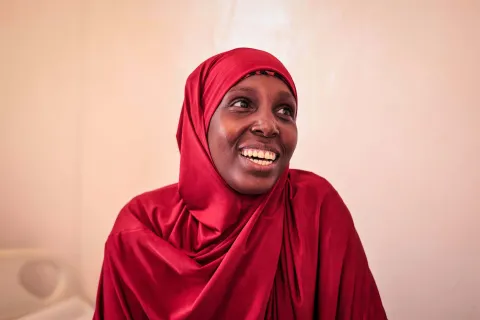
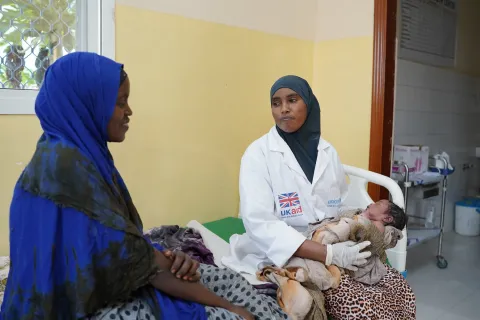
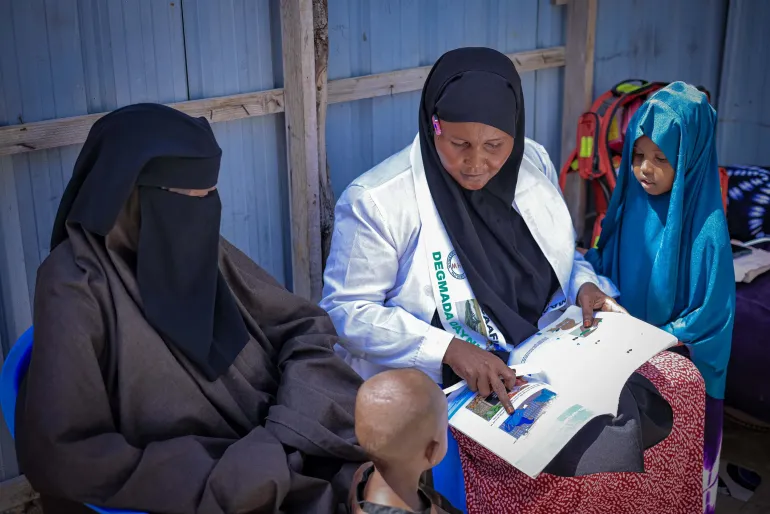
Led by the Federal Ministry of Health and Human Services, and developed in close partnership with UNICEF, WHO, the World Bank, the Global Fund, Africa CDC, development partners, civil society, and community representatives, the strategy establishes a harmonized national community health system. At its core is a professionalized, government‑employed community health workforce led by Female Health Workers (FHWs) trained and certified to deliver essential services directly to households. FHWs serve as the primary link between families and primary health care facilities, marking a critical shift from fragmented, partner‑driven approaches to a unified, government‑led system. The strategy is anchored under one national plan, one leadership, and coordinated implementation by the Ministry of Health. It also contributes to Africa’s continental target of building a two‑million‑strong community health workforce by 2030.
“For too long, community health in Somalia has been fragmented, different partners, different cadres, different training. Today, we begin a new chapter: one health system, one workforce, and one coordinated approach to serve every Somali family,” said Dr. Ali Haji Adam Abubakar, Federal Minister of Health and Human Services. “Over the next five years, we will harmonize all community health cadres under the Female Health Worker model, ensuring that every household no matter how remote has access to quality, accountable health services.”
Dr. Jean Kaseya, Director General of Africa CDC, described the launch as a defining moment for the continent. “By investing in a professionalized and integrated community health workforce, Somalia is demonstrating that even in complex settings, it is possible to build resilient, equitable, and government‑led health systems. Africa CDC will continue to support Somalia through technical assistance, continental tools, and peer learning across Member States.”
“Somalia’s Community Health Strategy is a commitment to one of the most fundamental principles of primary health care: essential services must reach people where they live,” said Dr. Kamil Mohamed Ali, WHO Representative in Somalia. “Community health workers are often the first and most consistent link between households and the health system. By professionalizing and expanding this workforce under government leadership, Somalia is strengthening early disease detection, immunization, and care for mothers and children. WHO is proud to stand alongside the Government and partners in translating this strategy into results for communities across the country.”
“Investing in community health is one of the most powerful investments Somalia can make for children and their families,” said Nisar Syed, Officer in Charge, UNICEF Somalia. “By strengthening the community health workforce, this strategy will bring essential services closer to families. UNICEF will continue to support the Government of Somalia in integrating community health across sectors so that every child can survive and thrive.”
The launch of the Somalia Community Health Strategy 2025–2029 represents a major step toward building a resilient, people‑centered health system capable of reaching every Somali household. By strengthening community health workers and linking communities to essential services, Somalia is laying the foundation for healthier families, stronger health systems, and improved health outcomes supported by sustainable domestic financing and the long‑term institutionalization of community health within national systems.
Media contacts
About UNICEF
UNICEF promotes the rights and wellbeing of every child, in everything we do. Together with our partners, we work in 190 countries and territories to translate that commitment into practical action, focusing special effort on reaching the most vulnerable and excluded children, to the benefit of all children, everywhere.
UNICEF has been working in Somalia since 1972 when its first office opened in Mogadishu. Today UNICEF has over 300 staff working in Mogadishu, Baidoa, Dollow, Garowe, Hargeisa and also Nairobi, Kenya. Together with 200 international and national NGOs and community-based organizations, UNICEF delivers services in Health, Nutrition, WASH, Education and Child Protection, and responds to emergencies and supports peace-building and development.