The Republic of Korea provides US$2.7 million to expand lifesaving immunization for children in Somalia

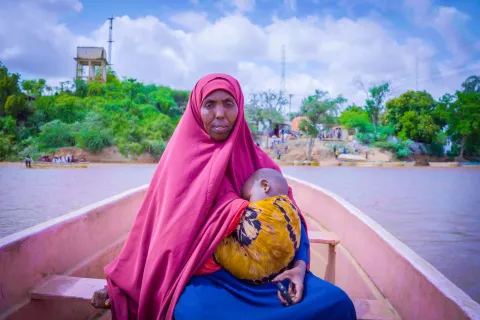
Mogadishu, Somalia, 25 April 2026 – In Somalia, an estimated 700,000 children have never received a single vaccine, leaving them vulnerable to preventable diseases such as measles, diphtheria, and polio. Many of these children live in hard-to-reach communities affected by displacement, climate shocks, and limited access to health services. Reaching zero-dose children is critical to protecting their health and survival. It is noteworthy that through the Big Catch-Up initiative, Somalia has reached 828,394 zero-dose children, but an almost similar number remains unreached.
To help address these challenges, the Government of the Republic of Korea is providing US$2.7 million to UNICEF and the Federal Ministry of Health (FMOH) to expand equitable access to lifesaving immunization services for children across Somalia. Announced during World Immunization Week 2026, the contribution will help strengthen routine immunization, reach zero-dose children and improve outbreak response in high-priority districts across the country.
The programme will support integrated outreach services, strengthen vaccine cold chain and logistics systems, and enhance community engagement to ensure vaccines reach children in hard-to-reach areas. Health workers and community mobilisers will be supported to identify, trace and vaccinate children who have never received a vaccine, while addressing misinformation and other barriers to immunization.
The initiative will also expand vaccination services in communities affected by outbreaks of vaccine-preventable diseases such as measles and diphtheria. Investments in vaccine transportation, district-level performance reviews and improved data systems will help strengthen planning, coordination and last-mile delivery of vaccines.
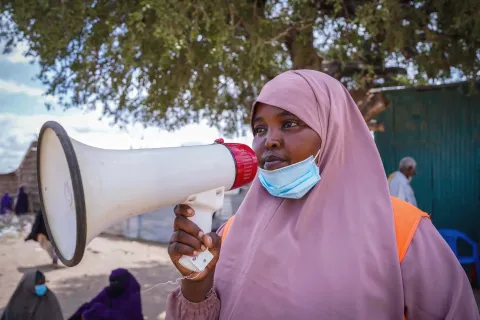
A key component of the initiative is strengthening community-based approaches, including the role of community health workers and community health volunteers, who help connect families to essential health services and ensure that children in remote and underserved communities are reached with lifesaving vaccines.
“Strengthening immunization services is essential to protecting Somali children from preventable diseases and saving lives,” said Dr Ali Haji Adam, Federal Minister of Health and Human Services of Somalia. “With the support of the Government of the Republic of Korea and UNICEF, we are expanding routine immunization, reaching children who have never received a vaccine, and strengthening the health systems that serve families and communities across Somalia.”
“Under the leadership of the Federal Government of Somalia, expanding immunization is critical to protecting children from preventable diseases,” said Sandra Lattouf, UNICEF Representative in Somalia. “With the support of the Government of the Republic of Korea, UNICEF will work closely with the Ministry of Health to strengthen immunization services and reach zero-dose children, including through community-based approaches and the engagement of community health workers and volunteers who help connect families to essential health services.”
The Federal Ministry of Health and UNICEF expressed their appreciation to the Government of the Republic of Korea for its continued commitment to improving the health and survival of children in Somalia. The partnership reflects a shared commitment to ensuring that every child, everywhere, can access lifesaving vaccines and the health services they need to survive and thrive.
Media contacts
About UNICEF
UNICEF promotes the rights and wellbeing of every child, in everything we do. Together with our partners, we work in 190 countries and territories to translate that commitment into practical action, focusing special effort on reaching the most vulnerable and excluded children, to the benefit of all children, everywhere.
UNICEF has been working in Somalia since 1972 when its first office opened in Mogadishu. Today UNICEF has over 300 staff working in Mogadishu, Baidoa, Dollow, Garowe, Hargeisa and also Nairobi, Kenya. Together with 200 international and national NGOs and community-based organizations, UNICEF delivers services in Health, Nutrition, WASH, Education and Child Protection, and responds to emergencies and supports peace-building and development.