Held close to survive, how Kangaroo Mother Care gave Falastiin’s baby a fighting chance
Low-cost, lifesaving Kangaroo Mother Care is helping improve survival for premature and low birth weight newborns in Somalia.
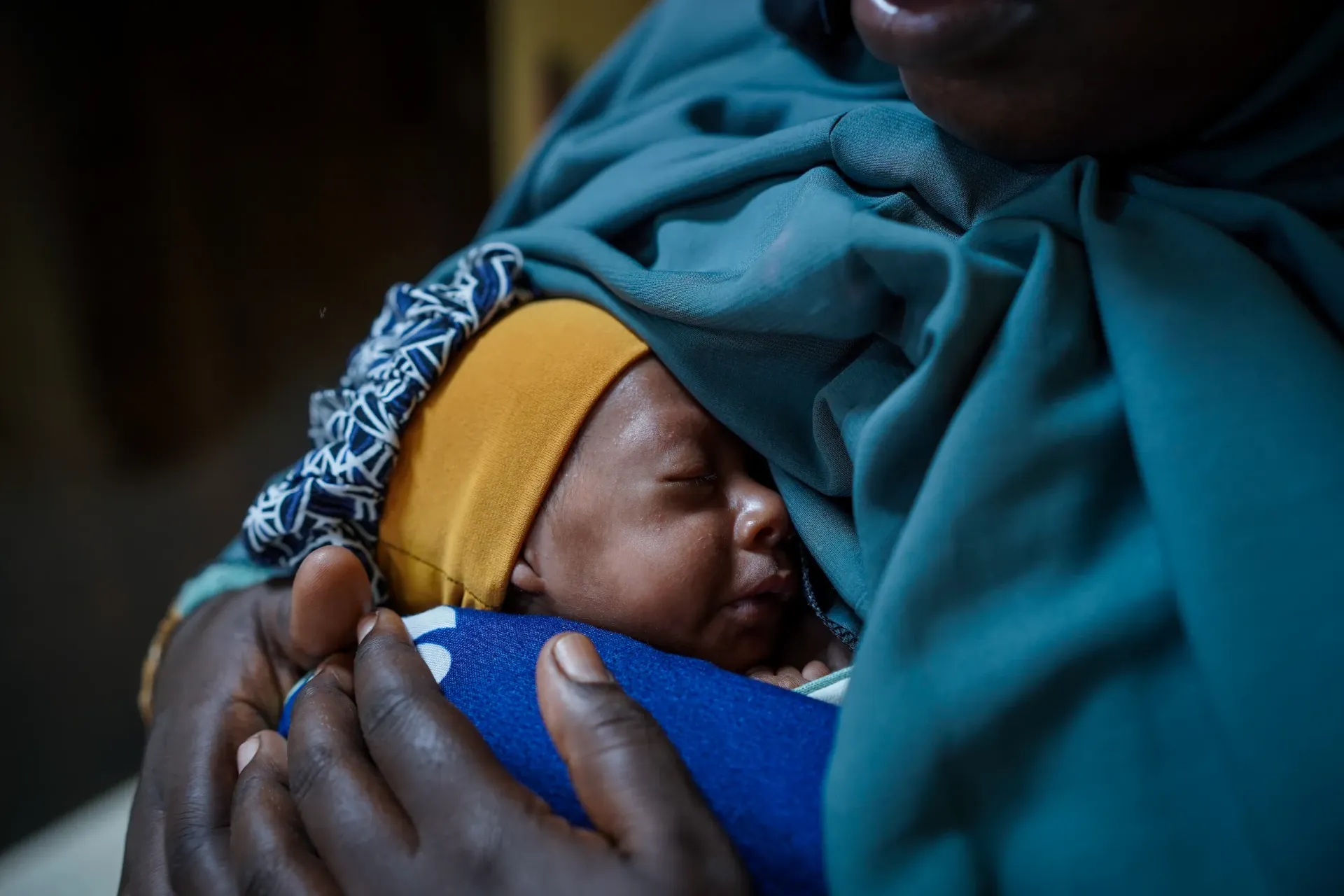
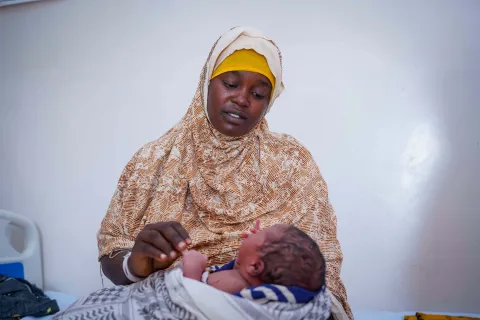
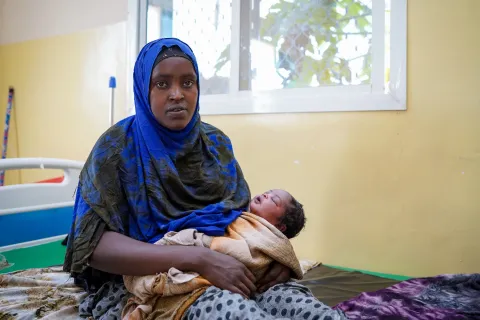
At Banadir Hospital in Mogadishu, Falastiin Abdullahi gently holds her tiny newborn against her chest. Wrapped closely in cloth, the baby sleeps peacefully, comforted by the warmth of his mother’s heartbeat. Just weeks earlier, Falastiin feared she might lose him.
A mother of three, Falastiin gave birth prematurely after a difficult pregnancy. Her newborn arrived too small and too fragile, requiring urgent care at the hospital’s Neonatal and Baby Care Unit (NBCU). She remained admitted at the hospital, rarely leaving her baby’s side.
“I was very worried when my baby was born early,” Falastiin recalls. “He was so small, and I did not know if he would survive.”
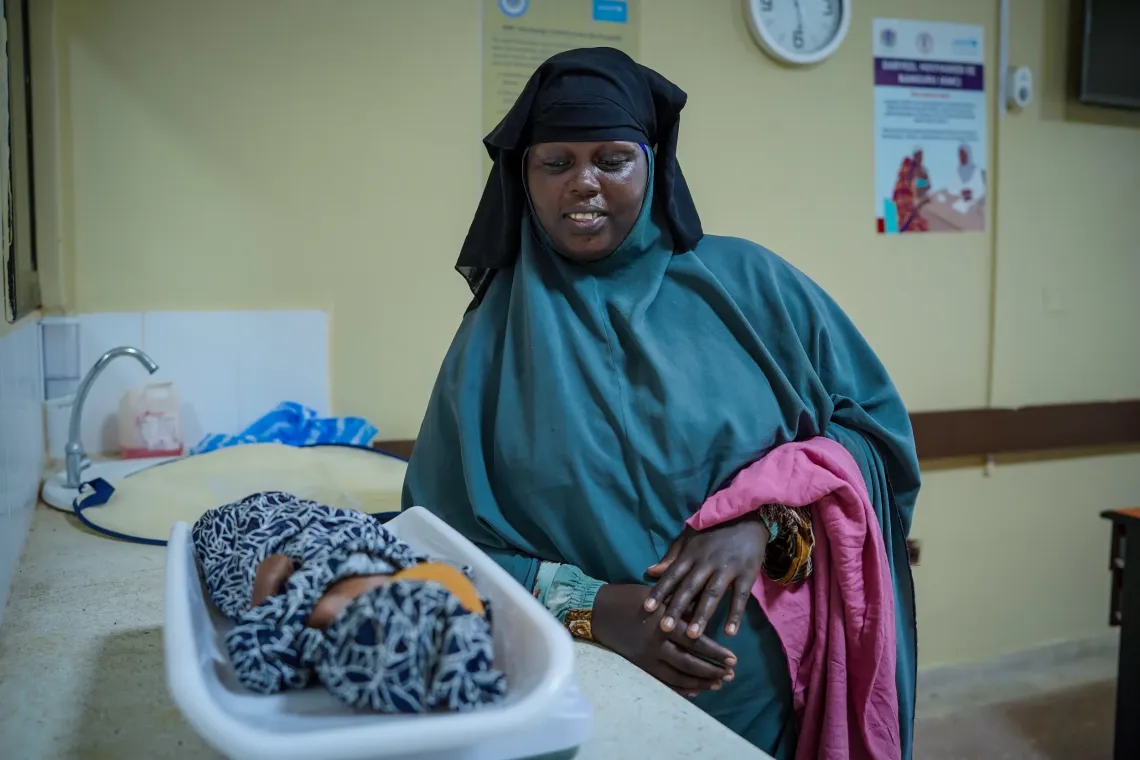
Falastiin and her husband were already facing financial hardship when their baby was born prematurely. Her husband relies on irregular construction work to support the family, making an already uncertain time even more difficult as they worried about their newborn’s survival.
But at Banadir Hospital, Falastiin was introduced to Kangaroo Mother Care (KMC), a simple but lifesaving method where premature and low birth weight babies are held skin-to-skin on a caregiver’s chest for prolonged periods.
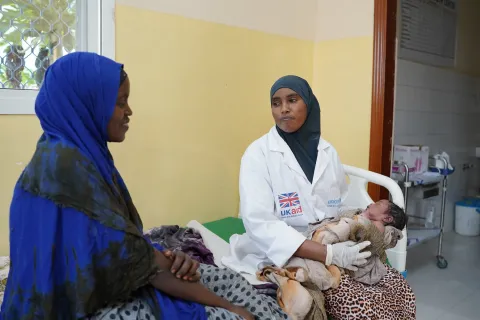
Healthcare workers at the KMC centre trained and supported Falastiin on how to safely care for her baby, maintain skin-to-skin contact, and exclusively breastfeed him. The continuous warmth and closeness helped stabilize the baby’s breathing and heart rate, supported healthy weight gain, and strengthened the bond between mother and child.
“At first, I was afraid to touch him because he looked very weak,” she says. “But the nurses encouraged me and showed me how to hold him safely. Slowly, I saw my baby become stronger every day.”
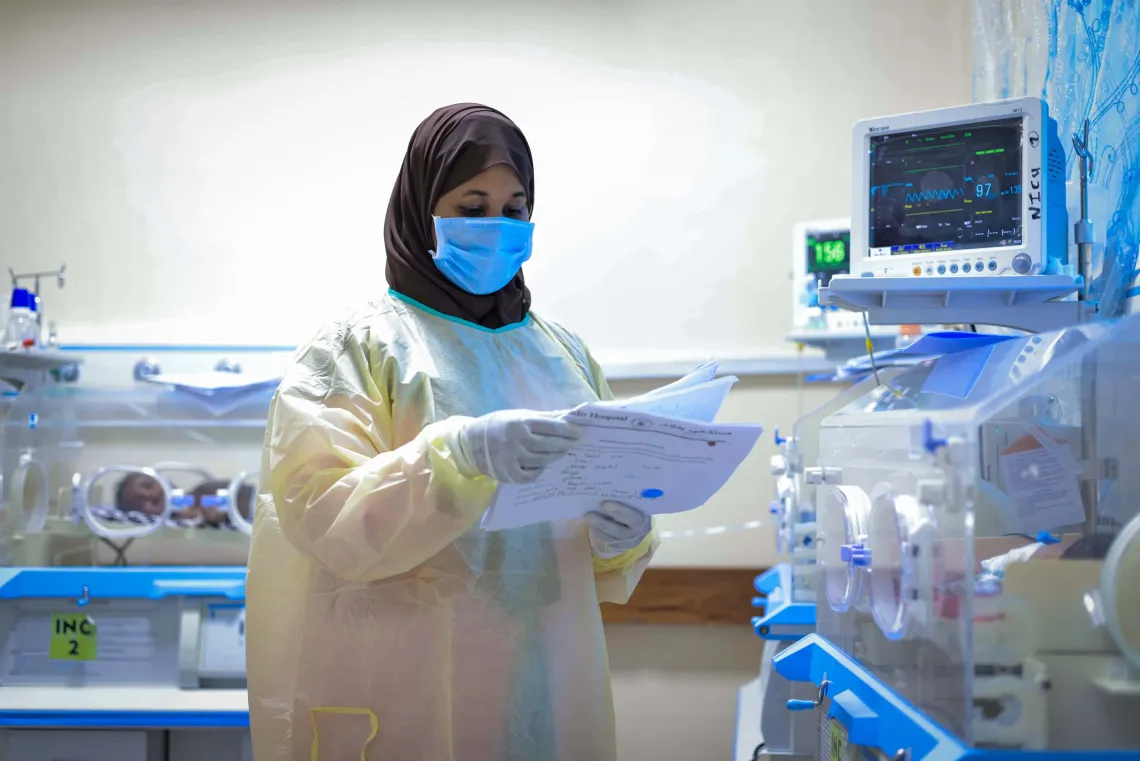
“Before Kangaroo Mother Care was introduced, many premature babies struggled to survive because mothers did not know how important continuous warmth and skin-to-skin care could be,” says Saliha, a healthcare worker at the KMC centre at Banadir Hospital. “Today, we see mothers becoming more confident, babies gaining weight faster, and more newborns going home healthy. It is one of the most effective and affordable interventions we have for saving small and vulnerable babies.”
Thanks to Kangaroo Mother Care and the support of health workers, both Falastiin and her baby are now healthy and safe at home.
Kangaroo Mother Care is a low-cost, high-impact intervention proven to significantly improve survival chances for premature and low birth weight newborns. In Somalia, where complications related to prematurity remain one of the leading causes of newborn deaths, expanding access to quality newborn care is critical.
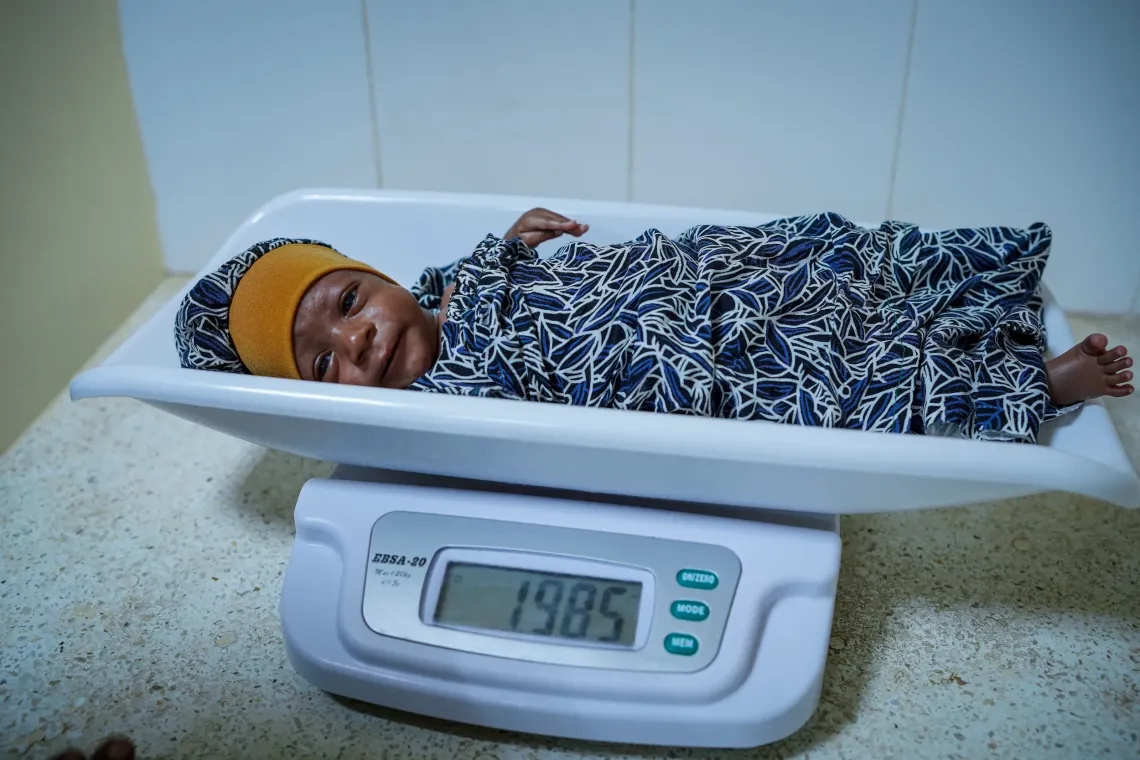
With support from Vanguard Charitable, UNICEF has helped establish and equip Kangaroo Mother Care centres in selected locations across Somalia, including Banadir, Dollow, Dhusamareb and Borama, while training more than 250 healthcare workers and strengthening newborn care services nationwide. In collaboration with the Federal Ministry of Health, UNICEF is also supporting the finalization of the National Small and Sick Newborn Care Guideline and the Kangaroo Mother Care Guideline to strengthen the quality and standardization of newborn care across the country.
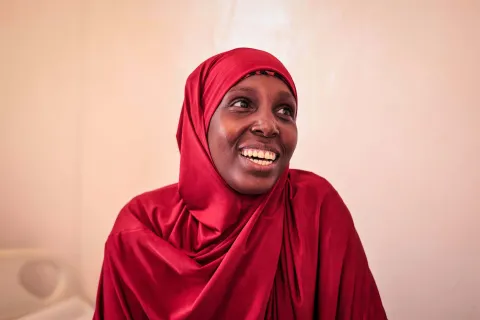
For mothers like Falastiin, these services mean hope during one of the most vulnerable moments of their lives. “When I look at my baby now, I feel happy and grateful,” she says with a smile. “I want other mothers with premature babies to know that there is hope. Kangaroo Mother Care saved my child.”