Delivering lifesaving care in remote Bardhere amidst funding cuts
Child-Sensitive Social Protection Programme offers vital care to children and pregnant and breastfeeding women

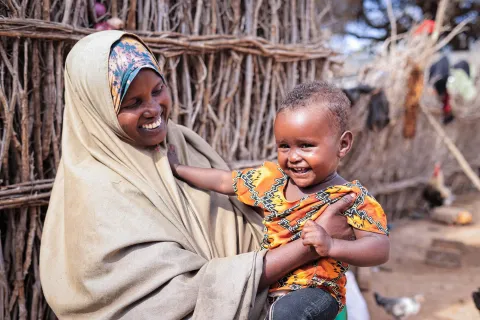
“I gave birth to my children in this facility and made sure they received their vaccinations here. I know I can get them the treatment they need from here when they are sick.” These are the words of Basra Rashid, who has brought her two children to the Iftin Health Centre for treatment. Maryam (aged 2) has a cold, and the youngest, Mohamed (aged 15 months), has diarrhoea. Basra has also come in for a check-up as she is six months pregnant with her seventh child.
“I trust them here,” she says, referring to nurse Hinda and her colleagues who have done a full screening of Basra and prescribed antibiotics to the two children.
The Iftin Health Centre in Bardhere, situated about 350 kilometres west of Mogadishu, the Somali capital, continues to provide critical lifesaving services even during ongoing funding cuts that have shuttered many services across Somalia. It is a hard-to-reach area accessible only by air due to road insecurity, leaving residents with few options for obtaining important social services.
“We are continuing with minimal supplies and staff,” says Hussein Abdirahman, the head nurse. “We service over 33,000 people in this area, and the closest hospital is four kilometres away.” Various organizations have closed due to slashed funding, creating a surge in demand for those remaining open.
Country-wide, humanitarian funding cuts paint a grim picture if resources are not mobilised. Over 95 per cent of Somalia’s health budget comes from foreign funding. Based on 2024 service delivery data, the closures could result in: 5.7 million outpatient visits being denied, 479,000 pregnant women having no antenatal care (increasing the risk of maternal and neonatal deaths), and 250,000 children with severe acute malnutrition missing out on treatment.

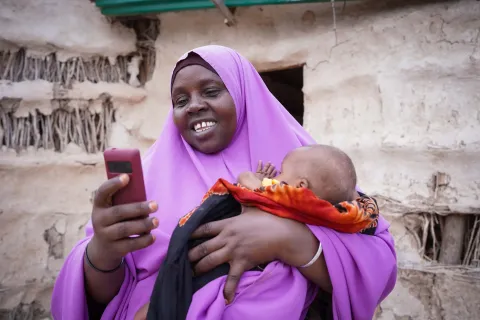
Cosobo Osman Abdi is another mother whose malnourished child was referred to the health centre by community workers. She is part of the Child-Sensitive Social Protection (CSSP) programme, which provides cash assistance to vulnerable families with pregnant and lactating mothers. Implemented primarily through government systems, CSSP ensures that these families are linked to essential services like health, nutrition, child protection (birth registration) and gender-based violence. The programme also builds the capacity of federal, state and local level institutions to deliver these much-needed social services. The Ministry of Labour and Social Affairs leads coordination through a platform that involves key partners like UNICEF and the Norwegian Refugee Council.
The Iftin health centre is one of 15 centres supported by CSSP. The programme, a 36-month initiative tied to the Baxnaano national safety net programme, aims to reach 13,500 pregnant and lactating women in Bardhere and Jalalaqsi. Funded by the German Federal Ministry for Economic Cooperation and Development through the development bank KfW, the programme aims to strengthen the economic resilience of pregnant and lactating women living in areas affected by climate emergencies through a US$20 monthly grant. The cash transfers are administered through the Somali Cash Consortium, formed in 2017 to provide vulnerable populations in districts affected by disasters and conflict with monthly, unconditional cash transfers.

Complementing the activities of the CSSP are campaigns that are conducted in Bardhere, which also reach vulnerable families. Recently, for example, as part of a nationwide immunization campaign, 46,624 children in Bardhere were targeted with vaccination, thanks to support from Gavi, the Vaccine Alliance. Alongside immunization, more than 15,000 residents - including adults and children- benefited from a range of health services that included malaria and HIV prevention, an initiative funded by the Global Fund to Fight AIDS, Tuberculosis and Malaria. Also, Long-Lasting Insecticidal Treated Nets continue to be distributed throughout the community to prevent malaria.
Nationwide in 2026, 372,000 children under one year will miss out on vaccinations if funding gaps are not addressed during this challenging aid landscape. The loss does not end there; individuals affected by emergencies will face limited access to essential WASH supplies, jeopardising their ability to meet basic hygiene needs. Children will be deprived of access to both formal and non-formal education, increasing protection risks, and they will lose access to child protection and gender-based violence services.
To sustain the progress made in saving lives and continue supporting the most vulnerable children in Somalia, UNICEF is reprioritising targets, defining new office results, and placing greater emphasis on efficiency gains. With the support of our partners and donor governments, UNICEF is determined to stay and deliver for the world’s children. We are grateful for the enormous generosity and partnership we have had, and will continue to have. We need this support more than ever. For every dollar invested in children, countries see a ten-fold return, creating socioeconomic benefits and a healthier tomorrow.