Stronger Together
Support, Knowledge, and Friendship for Refugees in Serbia
- Srpski
- English
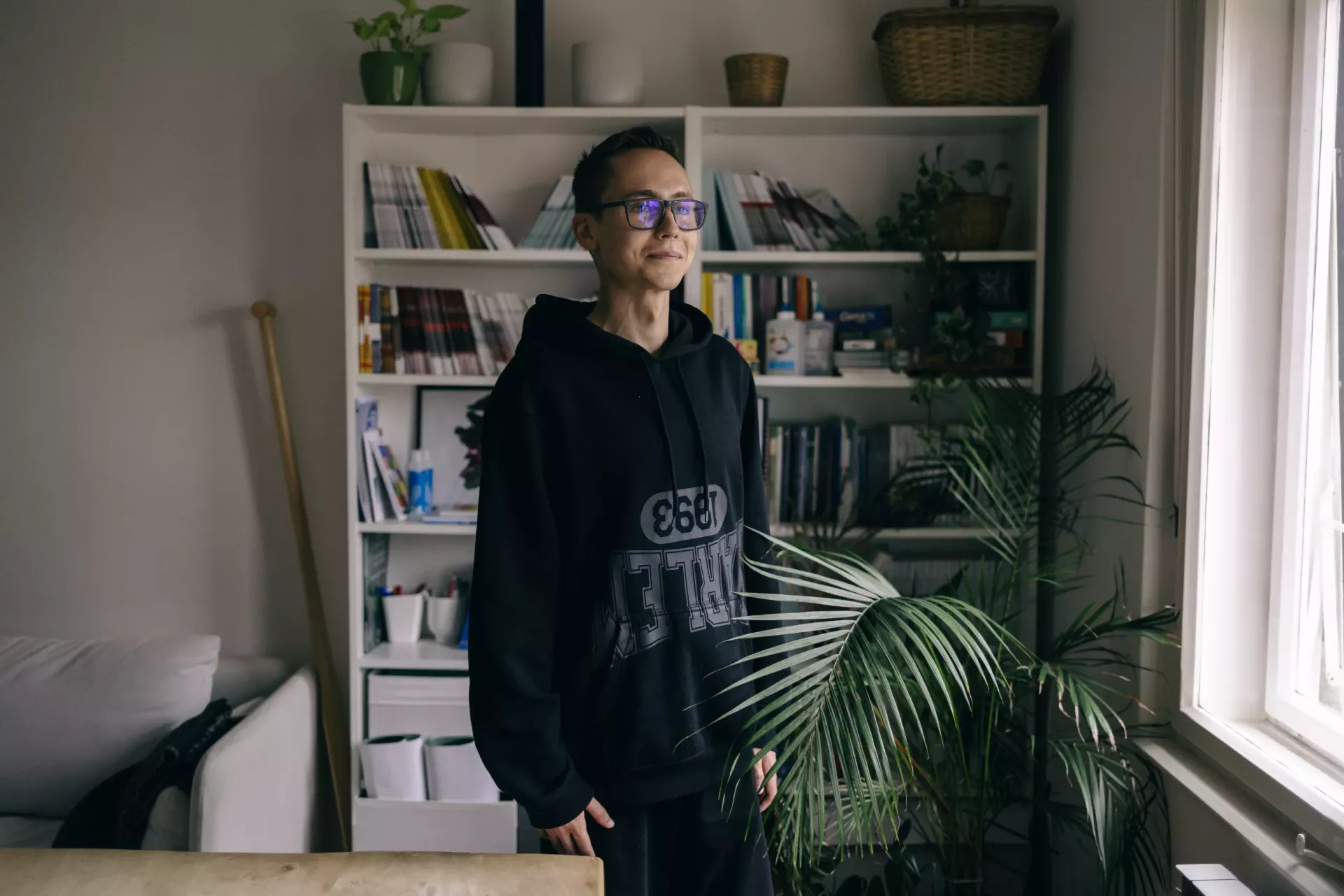
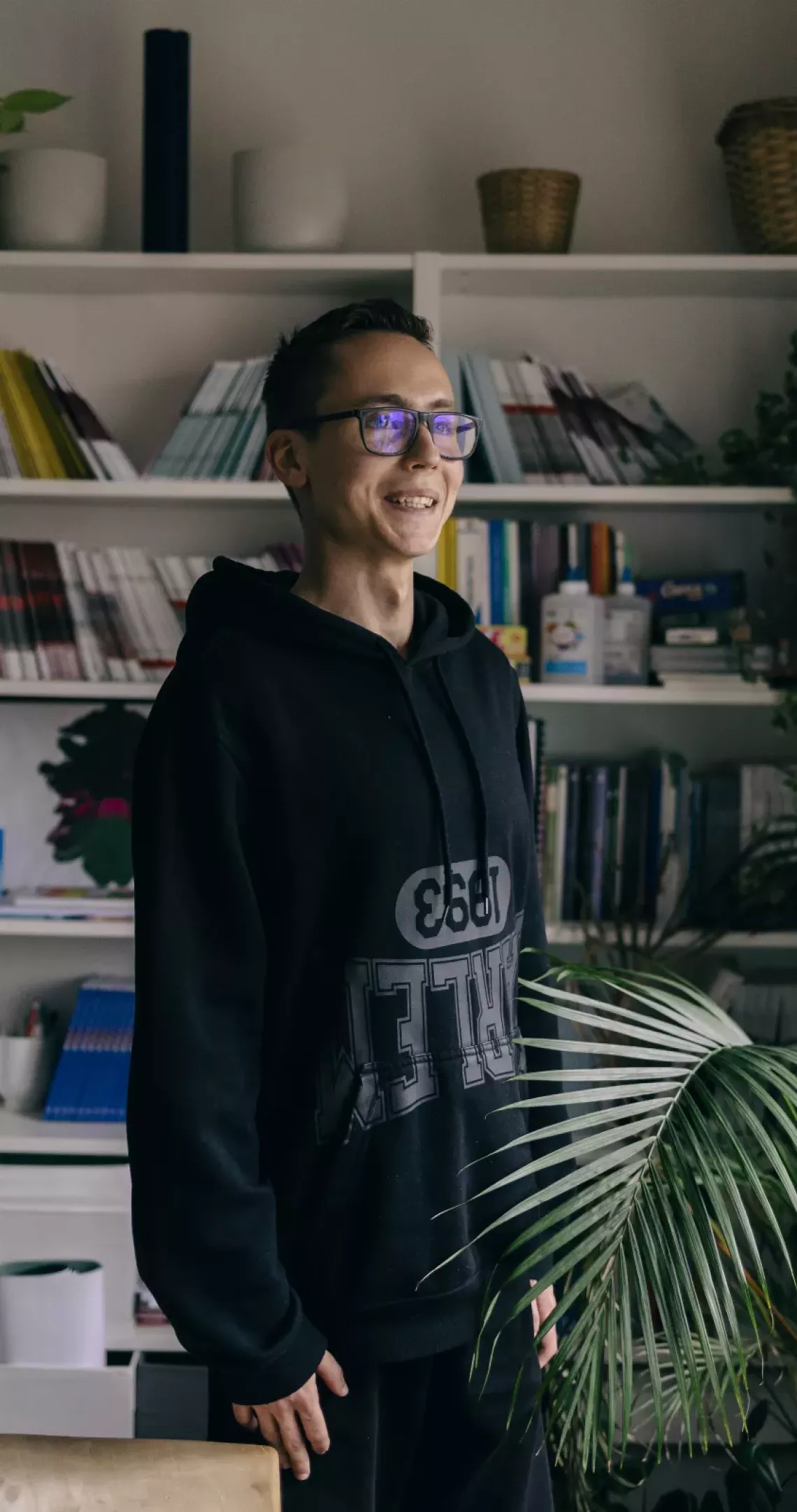
Belgrade, April 2025 - When 17-year-old Artur was recently asked to describe himself in one word during a peer workshop, he chose “active.” And he couldn’t have been more accurate. Three years ago, at the start of the war in Ukraine, Artur arrived in Belgrade with his parents and younger sister. From the very beginning, he dedicated himself to learning Serbian, getting to know the city and its people, and building friendships and learning new skills. At the same time, he continued attending online classes from his hometown of Zaporizhzhia—something he plans to do until he finishes high school.
“I spent the entire summer learning Serbian, then practiced by talking to people, checking my understanding, and expanding my vocabulary,” Artur explains. “Whenever I didn’t know a word, I asked—and that’s how I learned.”
When Artur talks about learning, his eyes light up, his head is held high, and a wide smile spreads across his face—as if he’s looking ahead to all the opportunities still to come. He’s happy and proud of the knowledge he’s gained—and eager to learn more.
In recent months, Artur has had the chance to grow, connect, and receive support thanks to a UNICEF-supported project. Implemented in partnership with the Psychosocial Innovation Network (PIN) and the Commissariat for Refugees and Migration of the Republic of Serbia, the initiative “Strengthening resilience of refugee and migrant children and youth and their families through comprehensive psychosocial, peer, and educational support” has been running from September 2024 to May 2025.
Artur has taken part in all three types of support offered through the project, which runs from September 2024 to May 2025. The project provides psychosocial support—including specialised assistance—peer support, and child protection activities. Peer support is delivered through training sessions where young people act as mentors. Another aim of the project is to offer training in non-formal education and provide volunteering opportunities. The third goal is child protection, ensuring that children have a safe space where they’re protected from abuse and neglect. Parents are also included in the program, given the risks they face.
The project also advocates for a systematic and comprehensive approach to protecting the mental health and wellbeing of refugee children and young people, including unaccompanied minors or those separated from their families. This initiative offers direct support, protection, peer support programs, opportunities for skill development, and thorough mental health support. On top of that, children will benefit from a safe and secure environment in reception centres, where they’ll have the chance to develop the skills and competencies that support their healthy development.
The “Stronger Together” program, created by UNICEF, provides training for young people so they can learn to recognise mental health difficulties that might affect their daily lives.
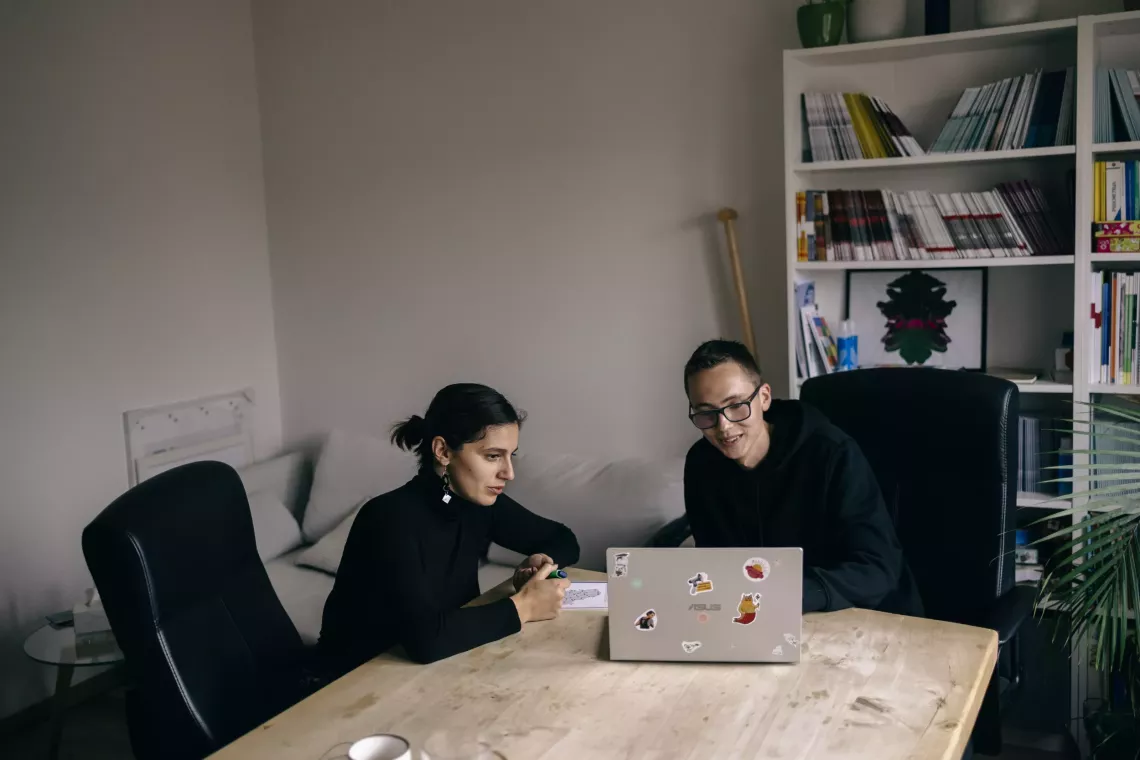
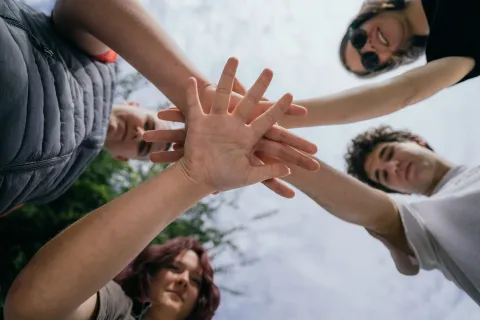
“Young people in the training gained skills to recognise these symptoms, and how to share knowledge, skills, and coping strategies with their peers. A peer’s role isn’t to deal with another young person’s mental health issues, but to recognise when it’s important for an adult to get involved. They’re encouraged to start conversations with their peers, as we’ve heard from young people that it can be hard for them to talk to adults. After this training, they become mentors,” explains Isidora Zivic from PIN.
As a peer mentor, and drawing on what he learnt in psychosocial workshops, Artur put together a presentation and delivered it during an online class to his classmates in Ukraine.
“The topic was relationships with parents, friends, and teachers. My classmates found it really interesting. They talked about it a lot. It was very useful for them, and it helped me too, which is why I kept going to the workshops—we learn about different situations, and about puberty,” says Artur. “It’s useful for me and my age group, and for my sister as well. When I have a problem at home and I can’t connect with my parents, it’s helped me to recognise my feelings and figure out how to talk to them without us ending up in an argument.”
Artur says the sessions helped him better understand his own emotions and become more aware when either he or his peers might need support. But what inspired him most was a web design training, conducted in cooperation with the organization ADRA, which he completed with pride and a certificate.
“I love creative things—designing, making beautiful things. I think I’m creative, and I enjoy learning web design. It looked hard at first, but by the third class, I started to understand. It’s a field I’d love to study in the future.”
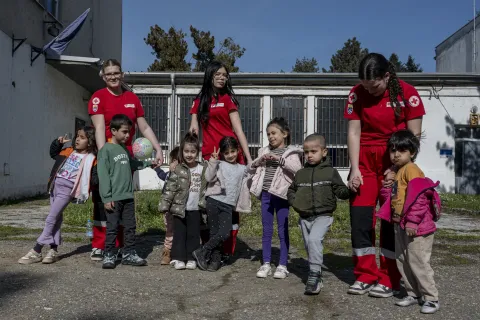
The programme isn’t limited to Belgrade. UNICEF and PIN also work in asylum and reception centres in Principovac, Beograd, Vranje and Bujanovac, as well as with families in private accommodation.
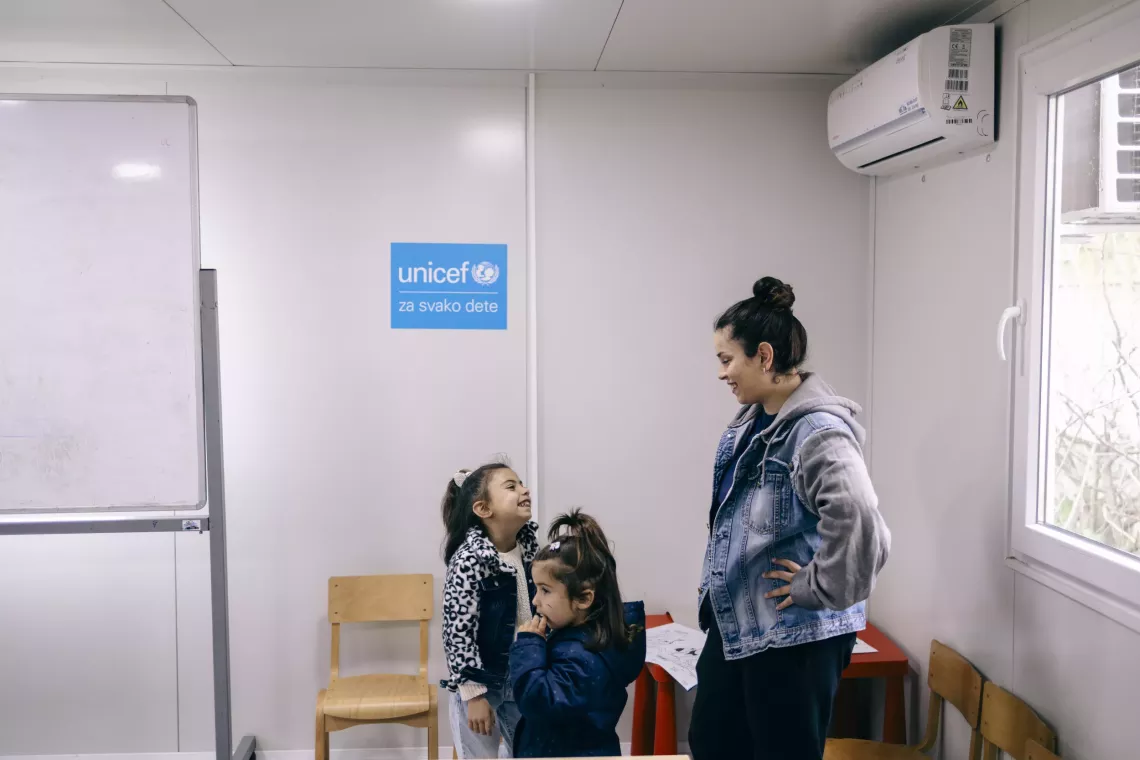
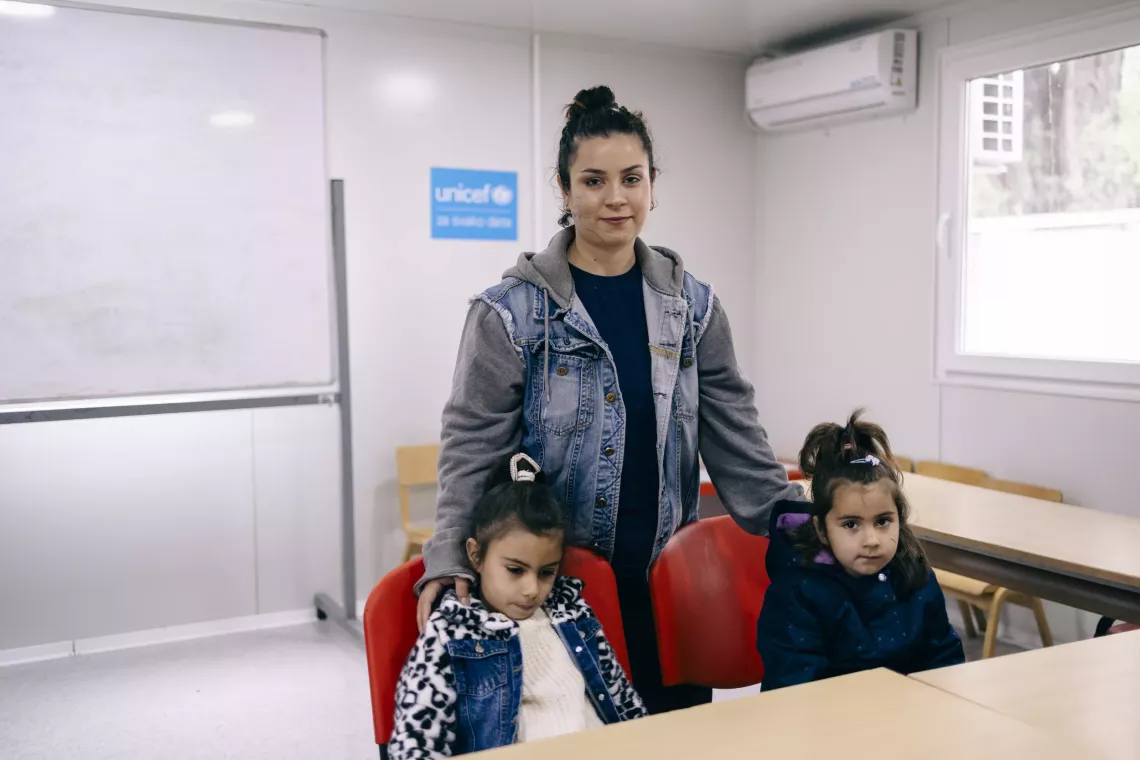
At the Krnjaca Asylum Centre, 23-year-old Kader Kuybulu arrived from Türkiye ten months ago with her husband and two young daughters, alongside other Kurdish refugees.
“The journey was difficult and uncertain. We were deceived and had to sleep at a bus station for two nights in the cold,” Kader recalls. “But here, we were welcomed. We finally found some peace.”
In recent months, Kader proudly earned a certificate in hairdressing. “There are many activities here with UNICEF and PIN, and they mean a lot to us. We get a chance to rest while our children take part in the workshops. We’re happy the activities involve both us and our children.”
Kader fondly recalls visits to the National Museum, the Nikola Tesla Museum, trips to go bowling, and a day excursion to Svilajnac, where they visited the Natural History Museum. She was especially moved by her daughter’s birthday celebration, held in a children’s playroom.
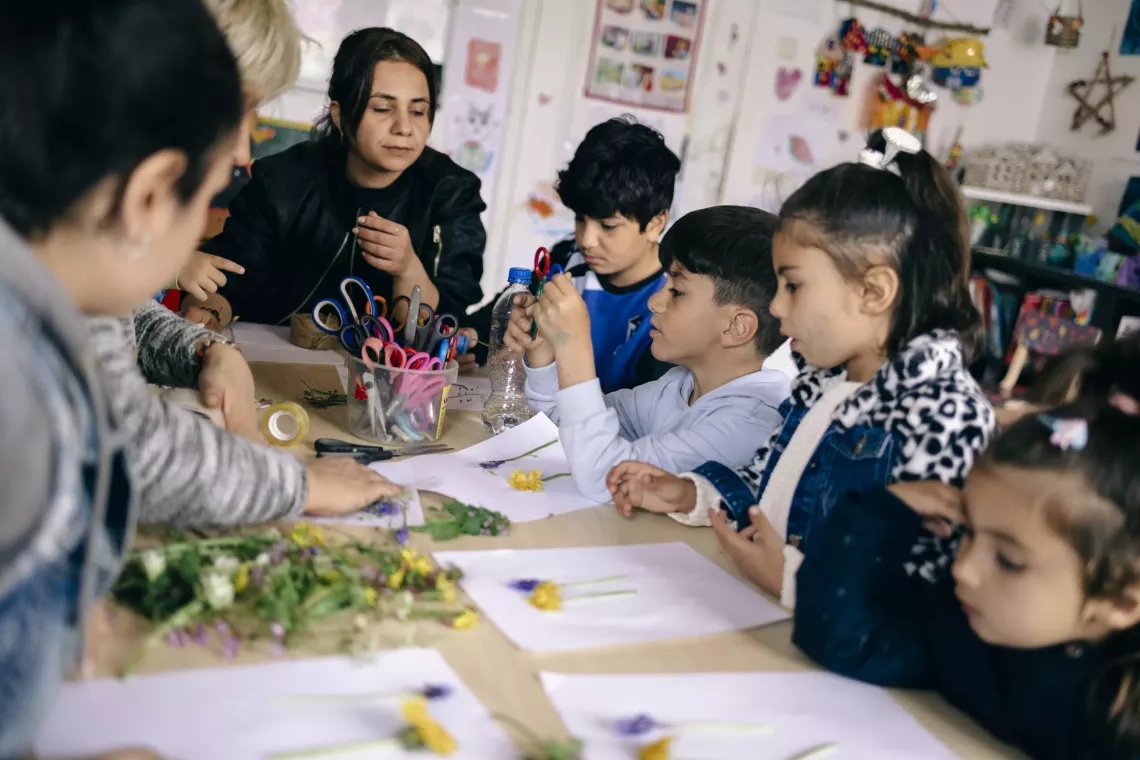
Tuba Ojandi travelled a similar path, arriving in Serbia from Türkiye with her husband and four children. She highlights the psychosocial support workshops, which made a real difference for her eldest daughter, who is a teenager. For Tuba herself, the thing she enjoyed most was going to the movies.
“We loved going to the movies together. Afterwards, we’d talk about what we watched, discuss it as a family. It gave our time meaning,” Tuba shares. “My oldest daughter is going through a sensitive period, and the workshops helped her a lot.”
Jelena Jasovic from the organisation PIN explains that after several months of running the project, a routine has been established among the participants, who now know they have certain activities every Thursday.
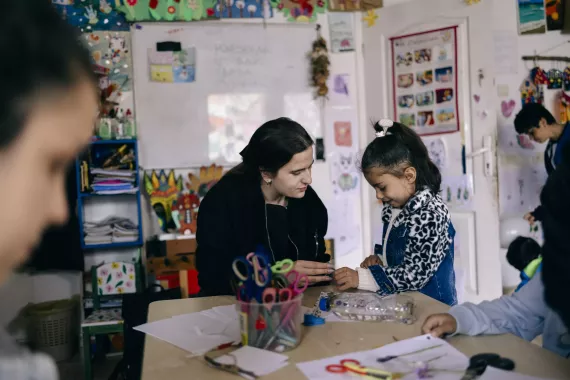
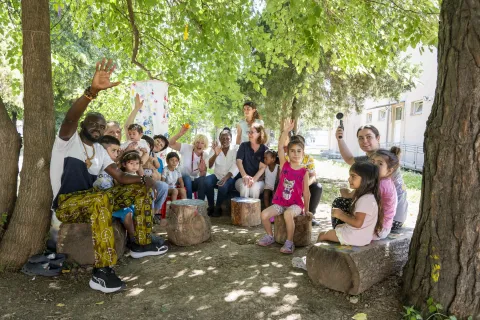
“We come to Krnjaca on Thursdays, to the Asylum Centre. We also go to other locations, like Bujanovac, Vranje, and so on, where we run psychoeducational workshops focused on mental health education. We also work with young people and children, helping them learn how to support themselves in these circumstances and how to recognise risky situations, such as abuse or violence. In the workshops, we use creative techniques like painting, drawing, and dancing to help overcome language barriers. There are two psychologists who come—one always works individually or in pairs, while the other works with groups. It was harder at first, but now they’ve established a routine. The children come more regularly, they’re active, suggest topics, and you can really see their dedication through it all,” Jelena explains.
UNICEF provides systemic support for the development of psychosocial support services and, in partnership with PIN, helps to improve the mental health and psychosocial support for children and young people, the protection of refugee and migrant children, as well as the development of young people’s skills. The program is focused on providing comprehensive psychological and psychosocial support to children, young people, and family members from refugee and migrant backgrounds in Serbia.
This approach includes supporting displaced children, young people, and families based on research findings about the needs of refugees and migrants, running peer support programs, and helping young people gain educational skills—all with the aim of providing thorough and systematic support.