Building Safer, More Carefree Childhoods
Volunteers trained to provide psychosocial support to refugee, migrant and asylum-seeking children, youth and their families
- Srpski
- English
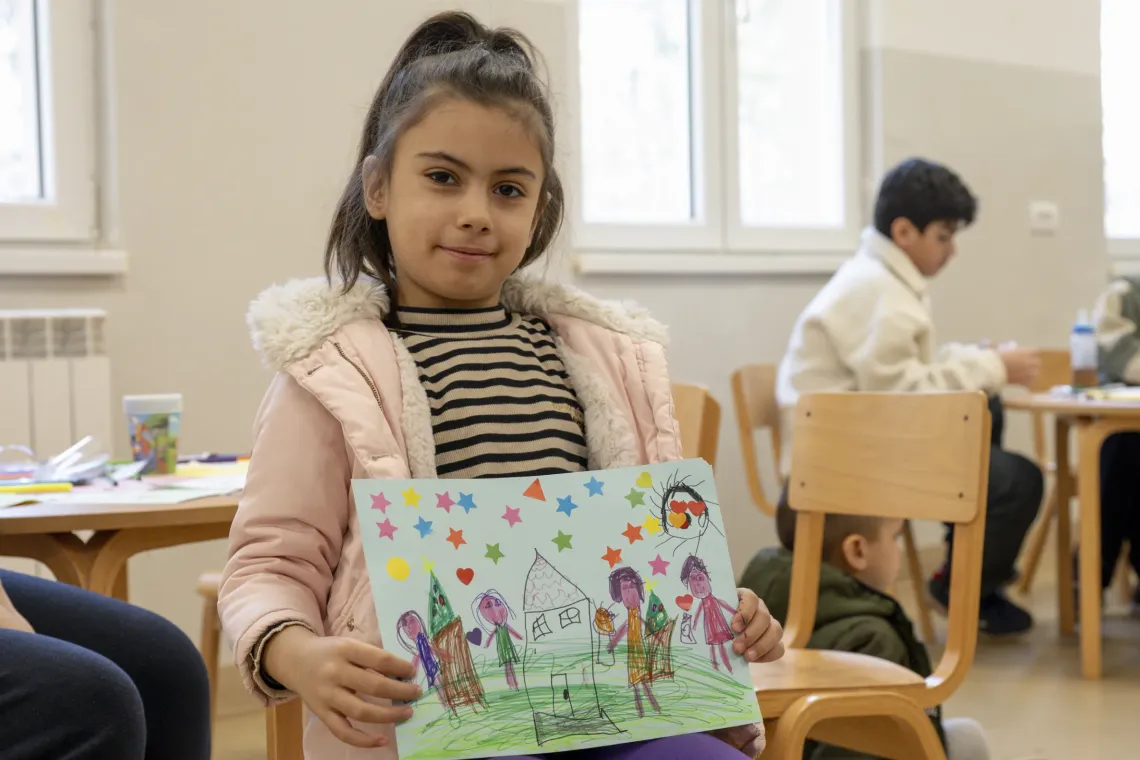
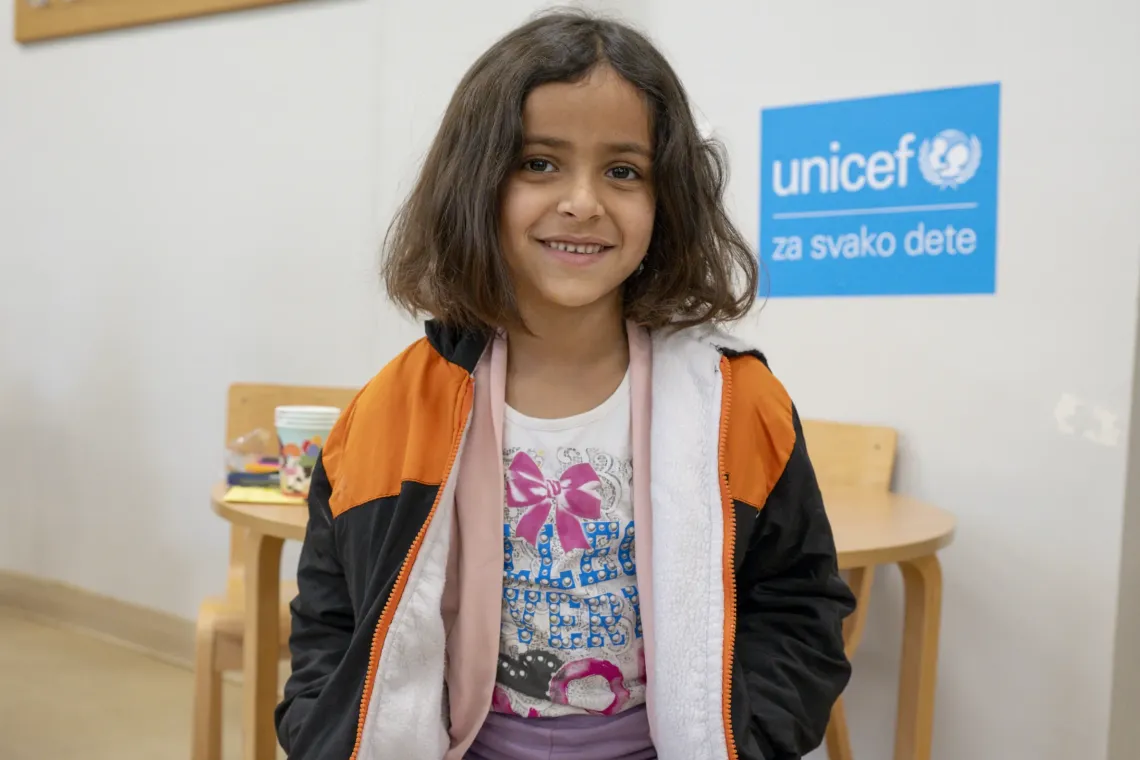
Mitrovo Polje, Obrenovac, November 2025/March 2026 - ”I love colouring. And I like to play,” says six-year-old Sumeyye from Türkiye, proudly showing the drawing she has just finished at a workshop in the Obrenovac Asylum Centre, where she has been living with her family for the past two years.
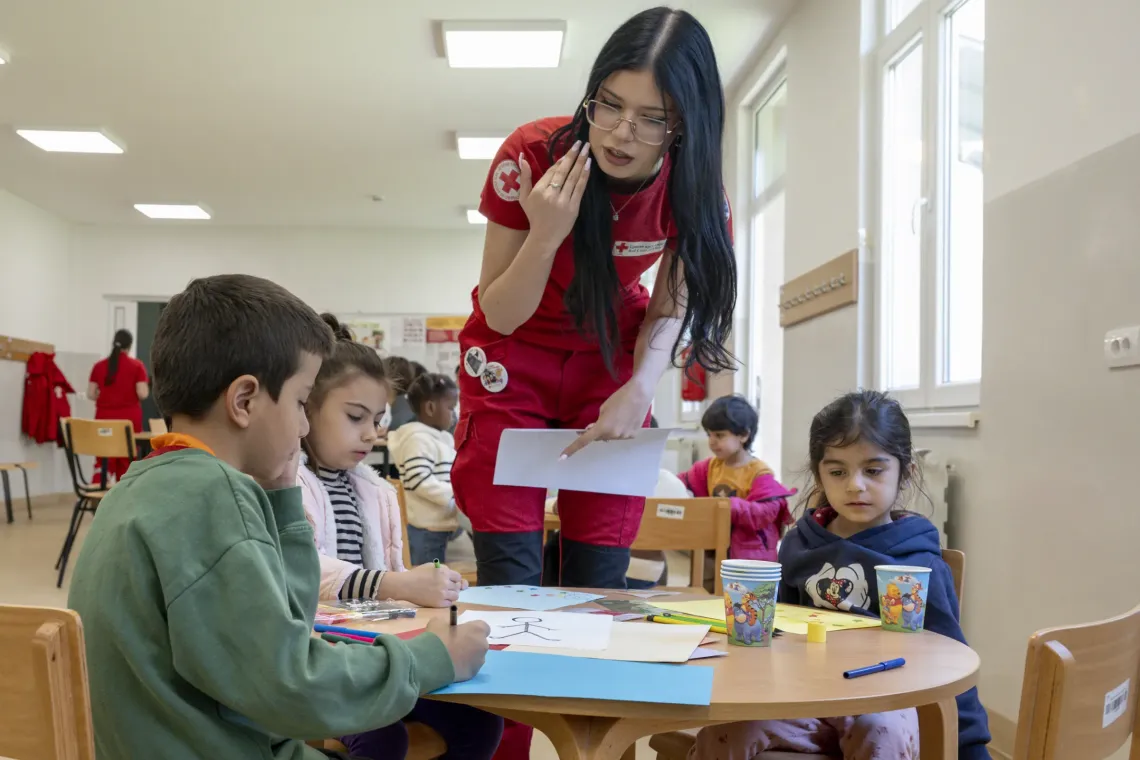
At the next table Hajir from Iraq is also drawing. “I like to play football. And that game with rackets. And I like her too,” Hajir says with a smile, pointing to Una Paulic, a Red Cross volunteer with the Red Cross in Obrenovac.
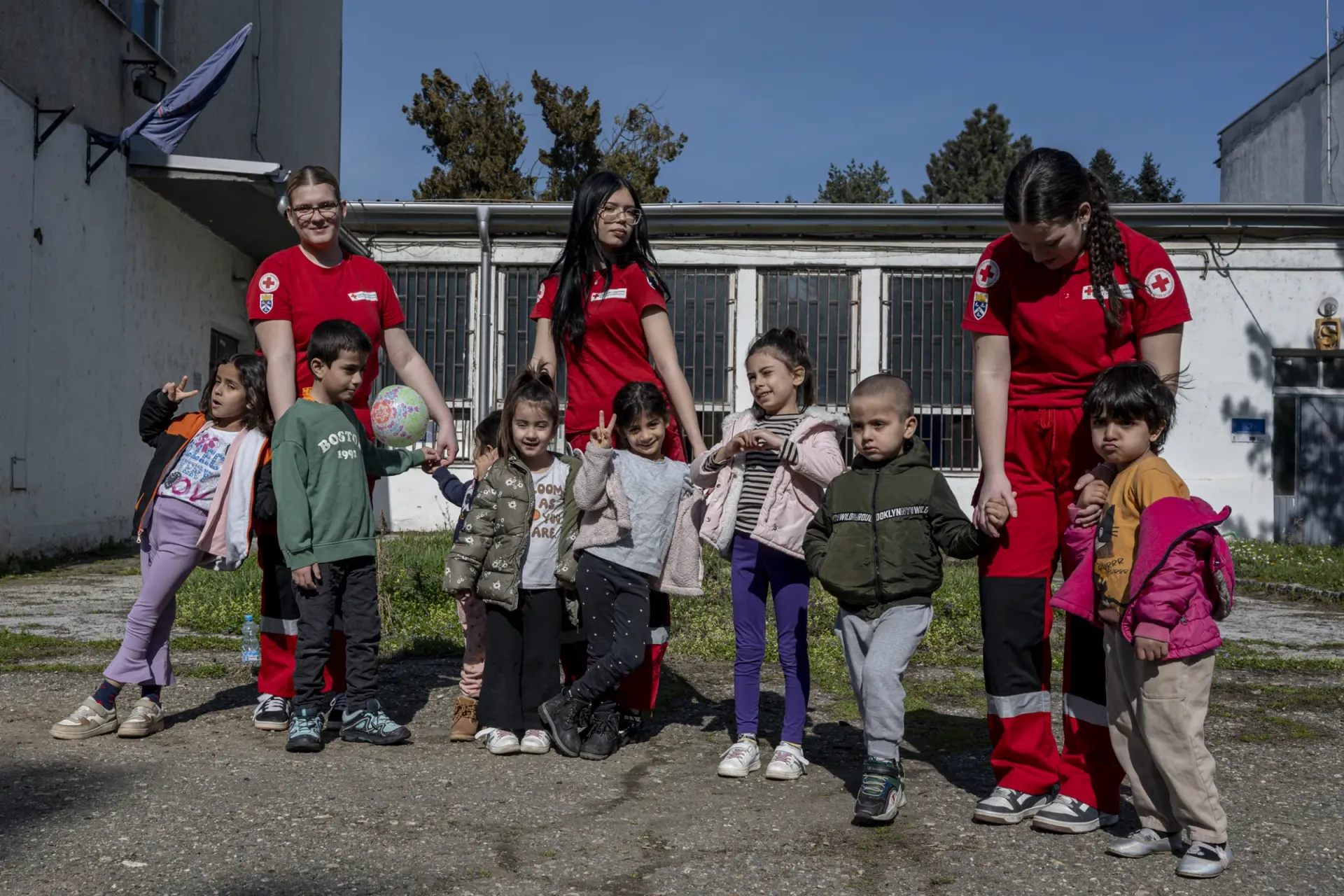
Una is one of three volunteers who organise weekly activities for children and young people at the centre in Obrenovac. That day, she was able to put her newly acquired skills into practice for the first time.
“During the workshop, one child opened up to me about how they were feeling that day and how they had felt in previous days. We learned how to respond in those moments - what to say, and how to refer a child who opens up to us. That was something we could immediately put into practice,” says Una, recalling the training organised by UNICEF, the Red Cross and PIN.
In November, 28 Red Cross volunteers took part in a training in Mitrovo Polje, gaining practical skills to support the protection and well-being of refugee, migrant and asylum-seeking children, young people and families.
A key focus was psychological first aid, explained Katarina Janjic, a volunteer with the Red Cross in Vranje.
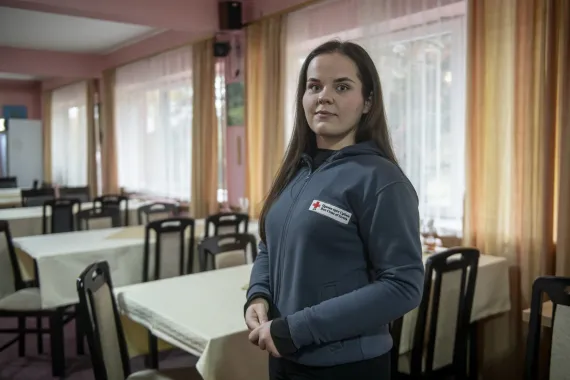
“Most importantly, we learned how to work with different age groups, especially children from vulnerable groups. We also learned how to recognize when someone needs psychological support, how to refer them, in what way, and to whom. We adapt the way we speak, our language, expressions and terms so that they can understand us,” Katarina said, summing up what she had learned in Mitrovo Polje.
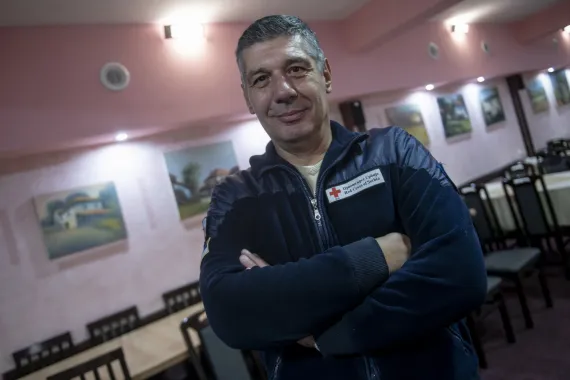
“Active listening is the most important thing, because through it we can recognize different messages, needs and calls for help,” said Vlastimir Stojkovic from the Bujanovac Red Cross, adding: “Not everyone is the same, and not everyone comes from the same background. We need to provide people with appropriate support throughout their journey, regardless of how long they stay with us.”
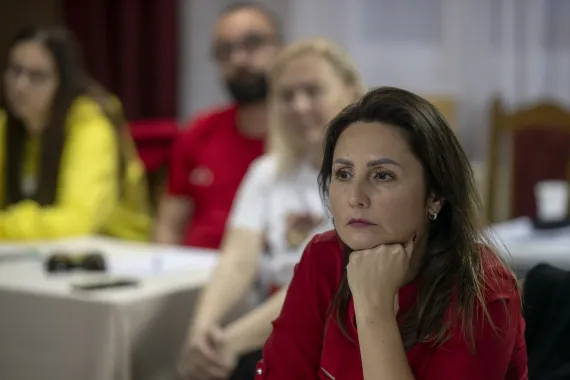
All of this helps build trust, explained Olga Ilic from the Obrenovac Red Cross. “It’s important to build trust with both parents and children, while respecting professional boundaries. That’s exactly what we learned in the training — where those boundaries lie,” Olga explains. “Through interactive workshops, the trainers placed us in situations that we can expect to face in the field. I especially appreciated the sessions led by psychologists, who introduced us to traumatic situations we may face when meeting children who have lived through terrible experiences.”

For Dusica Poletan from the Red Cross in Sid, the training also built on years of experience.“Sid used to be on the refugee route, with more than a million people passing through the municipality. Here, with UNICEF, during this training, I learned some skills that I may not have known before, and some that I had wanted to develop but never had the opportunity to,” Dusica explains. “This training has further strengthened my knowledge and reminded me that empathy needs to be nurtured. Empathy is something we all need to carry within us. Some people have more of it, some less, but it is something we should all keep developing.”
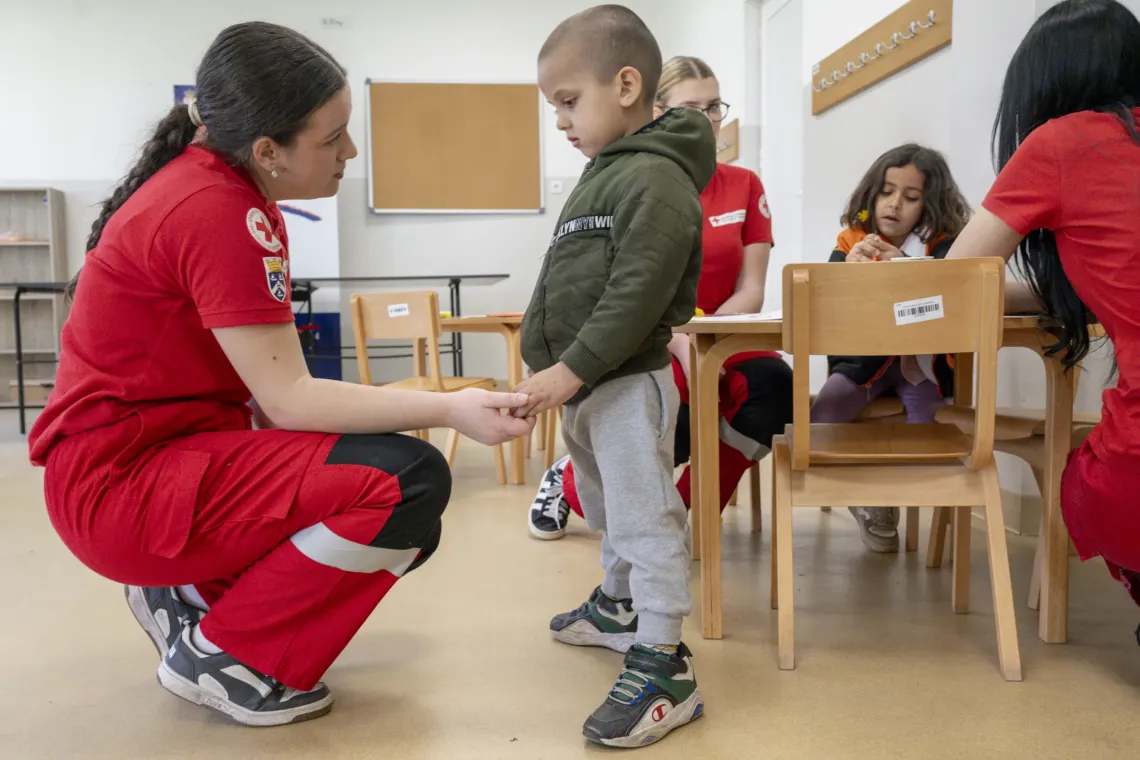
The newly acquired knowledge and skills are being applied in centres in Obrenovac, Vranje and Bujanovac, where families with children are staying. In Obrenovac, families from Türkiye, Iraq and Burundi receive protection through the Commissariat for Refugees and Migration, while additional support from Red Cross volunteers who organise indoor and outdoor activities for children, often joined by parents.


“One and a half years ago, I came to Serbia with my four children and my husband. The children are young, and don’t go to school. Every day is the same — they just sit and do nothing. Today, we are very happy,” says Dilek Savur with a smile. She is a Kurdish woman from Türkiye who arrived a year and a half ago with her husband and four children.
“This is good both for us and for our kids. Sometimes they spend all their time in the room, so they are very happy after these activities,” adds Kader Kuybulu, as she joins the children in drawing and playing.

Cynthia Ngendakumana from Burundi, who is staying at the centre alone with her children, hopes such support can expand.
“We would love for them to have many more activities like this to keep them engaged, not just once a week. So it would be easier for them to learn something new, to speak, to play, to draw — things like that. It would help them grow.”
Despite preparing for university entrance exams, the volunteers remain committed.
“It’s really wonderful to know that you’re actually helping someone, and here you can really see that,” says Una Paulic.
Through partnerships with the Commissariat for Refugees and Migration, the Red Cross and PIN, UNICEF Serbia continues to support the protection and well-being of refugee, migrant and asylum-seeking children and their families — working to ensure that every child has the opportunity to grow up safe, supported and included.