Nourishing Tomorrow: Strengthening Child Nutrition in Rwanda
A multi-agency effort helping families in Rutsiro and Ngororero strengthen children’s nutrition through kitchen gardens, small livestock provision, infant feeding counselling, growth monitoring, school health support and community-led resilience.

It begins with a kitchen garden. Or with 1 egg layering chicken . Or with a mother walking to a health centre, hoping her child is growing well. In Rutsiro and Ngororero, these moments are becoming stories of progress and possibilities. A network of support spanning agriculture, nutrition, health and education is now reaching households in ways that once felt out of reach. The shift towards brighter, healthier childhoods is visible in homes, schools and health centres.
This progress is being driven by the One UN Joint Nutrition Programme, implemented by four UN agencies namely the Food and Agriculture Organization (FAO), the United Nations Children’s Fund (UNICEF), the World Food Programme (WFP) and the World Health Organization (WHO). The programme is funded by the Swiss Agency for Development and Cooperation (SDC), whose long-term investment is strengthening child and maternal nutrition across Rwanda. Gardens for Health and World Vision leads technical implementation on the ground, working with district authorities, community workers and health facilities staff to deliver coordinated services that respond to families’ needs.
In Rwanda, 27 per cent of children under five are still stunted, a condition caused by chronic undernutrition that limits physical growth, learning ability and long-term productivity. Rates are higher in rural districts such as Rutsiro and Ngororero, where families often face limited access to diverse foods, nutrition information and basic services. Even as the programme approaches the close of its implementation period, its impact remains active and growing.
In Rutsiro District, Alphonsine Uwimana, a mother of three, stands beside rows of spinach, amaranth and young fruit trees swaying gently in the breeze in her flourishing kitchen garden. Only months earlier, vegetables were rare in her household.

“This garden changed everything for us,” Alphonsine says. “Before, vegetables were something we bought only when we had extra money. Now they grow at my doorstep, and my children eat them every day.”
Nearby, Ange Mujawamariya, also in Rutsiro, tends to a small flock of egg-laying chickens she received through the programme’s small livestock intervention. Eggs, once a luxury, are now a regular part of meals, improving consumption of animal source food while providing modest income.

At Kayove Health Centre in Rutsiro, mothers gather for Growth Monitoring and Promotion (GMP) sessions. Among them is Jeanette Nyiramasengesho, who brings her two-year-old child for regular follow-up. Earlier in the year, the Mid-Upper Arm Circumference (MUAC) measurement signalled the need for close monitoring.
“When my child was first measured, I was worried,” Jeanette recalls. “But the nurses encouraged me and taught me what to do. Now I can see the difference. My child is growing stronger.”
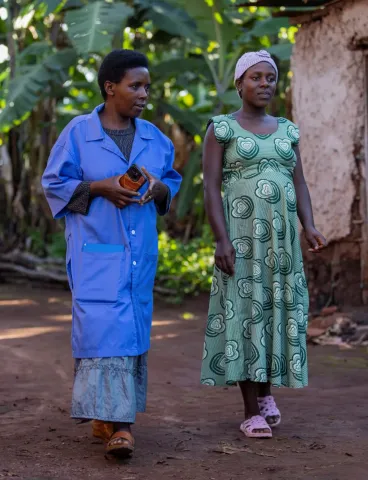
Community Health Worker Laurent Brakabya supports families like Jeanette during home visits, using the child score card to track progress and guide caregivers. Through this approach, 54,548 children under two years have been reached with child score cards, helping families detect risks early and take timely action.

“The score card helps us follow each child closely,” Laurent says. “Parents understand their child’s growth better and know when to seek support.”
Digital tools, including the Nutrition Application, support health workers to track children’s progress and provide practical, tailored advice to caregivers.
For breastfeeding mothers, maternal, infant and young child nutrition (MIYCN) counselling is making a difference. At Nyange Health Centre, Seraphine Dusabe attends regular sessions that help her improve her diet and feeding practices.

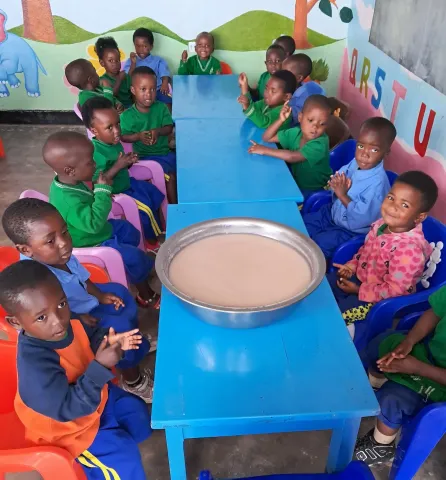
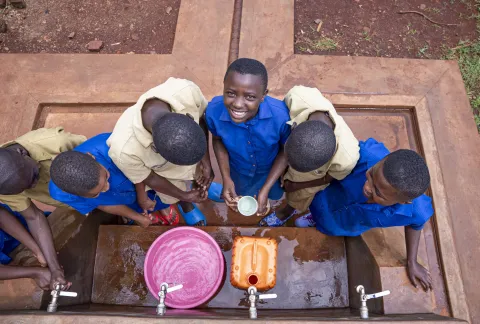
Nutrition education also extends into classrooms. At GS Nyange, Faustin Habimana teaches children about handwashing, hygiene and healthy eating, lessons that travel home with them.


“When children learn these habits early, they practice them everywhere,” he says. “They remind each other and even teach their parents.”
Economic resilience reinforces these gains. Julienne Mukashyaka, a member of the Village Savings and Loan Association (VSLA), says access to savings and small loans has eased the financial burden on her family and has allowed her to purchase nutritious food for her child.

“Before joining the VSLA, paying school fees was very difficult,” Julienne explains. “Now we save, borrow and invest. It helps us develop our family and plan for the future.”
Rwanda has made notable progress in nutrition, yet stunting still affects 27 per cent of children under five, particularly in rural areas. Integrated programmes like this remain essential for ensuring families have the knowledge, resources and confidence to nourish children consistently.
As implementation continues toward its final stages, Jean Pierre Maniraguha, Nutrition Manager for Ngororero District, reflects uponthe change he sees across communities.

Before this programme, many families struggled with nutrition, hygiene and basic health practices,” he says. “Today, the change is visible everywhere, children are healthier, parents understand feeding better, households improve their diets through gardens and livestock, families use VSLA loans to pay school fees and develop their livelihoods, and children practise handwashing both at school and at home. On behalf of the district, I thank the Government of Rwanda and our partners for this support.
Across Rutsiro and Ngororero, communities are building a foundation for healthier generations. By sustaining support for integrated nutrition programmes, partners can help ensure that every child has the chance to survive, thrive and fulfil their potential.