Investing in the mental health of children and adolescents in Romania
UNICEF supports the modernization of the pediatric psychiatry ward at Obregia Hospital

- English
- Română
For many children and adolescents in Romania, getting access to specialized mental health services means traveling dozens, or even hundreds of kilometers to Bucharest. At the “Prof. Dr. Alexandru Obregia” Hospital, home to the country’s largest pediatric psychiatry ward, these realities play out every day. Now, with UNICEF’s support, the ward is becoming more welcoming for young patients: modernized and better equipped to respond to the growing needs of a generation increasingly affected by anxiety, depression, and loneliness.
“It has been a real help to be able to purchase more child-friendly items and create a warmer environment than the usual hospital setting for the teenagers in our care,” says Associate Professor Dr. Florina Rad, head of the pediatric psychiatry ward at Obregia Hospital. Her ward treats children and adolescents between the ages of 2 and 18, not only from Bucharest, but also from regions of the country where specialized services are scarce or entirely absent.
“The pre-hospital mental health system is very underdeveloped in many counties in Romania, especially outside of the big cities. Without specialized outpatient clinics or community mental health centers, many children who need these services simply have nowhere to turn,” Dr. Rad explains.
Psychotherapists for children and parents available in the afternoons
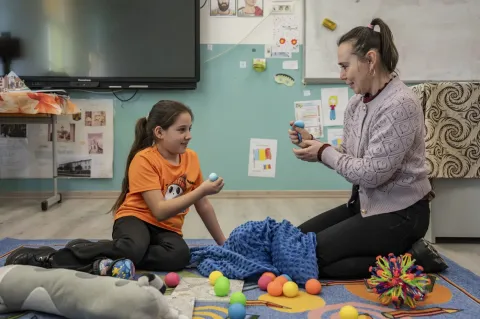
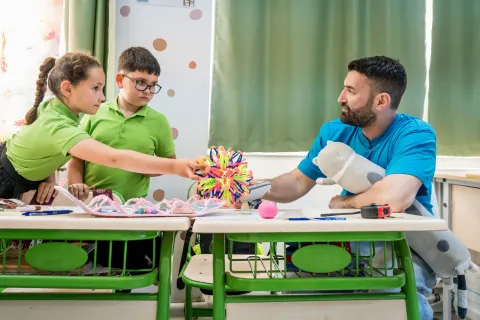
UNICEF’s support helped fill an important gap: the lack of therapeutic activities in the afternoons, once the regular medical program ended. With this funding, three psychotherapists began running afternoon group sessions for adolescents dealing with anxiety, depression, or behavioral challenges, as well as for their parents. Over time, the initiative has expanded to include daily personal development workshops where young people can gain and practice essential life skills.
“Group activities held outside regular hours are extremely important for children, not only for the sessions themselves, but also for the connections they build with others, and for realizing they are not alone, that others are facing similar difficulties,” emphasizes Dr. Rad.
Building on these results, the team now aims to strengthen and expand the workshops for parents, so that the support offered to adolescents is reinforced by lasting changes at home, in a family setting.

A team prepared for the future
In 2024, the medical staff benefited from six training sessions led by university experts and psychotherapy professional trainers. All professional categories within the pediatric psychiatry ward took part, from orderlies and nurses to psychologists and psychiatrists, strengthening both team cohesion and the quality of care offered in the ward.
“It made a real difference to have every professional group involved, because when we think of the team, it’s essential that everyone communicates the same message and knows their role and procedures. The training sessions focused on integrated approaches in mental health care, as well as targeted interventions for eating disorders, anxiety, and depression,” explains Dr. Rad.

Virtual reality therapy
Perhaps the most innovative investment has been the introduction of a virtual reality (VR) therapy system. Unlike standard VR video games, adolescents don’t explore the virtual world on their own, but the experience is rather guided by psychotherapists, who design and control the virtual environment, shaping it into a safe and therapeutic space. Within this setting, young patients can be gradually exposed to and helped to overcome specific phobias, such as fear of heights or public speaking. They can also practice emotional regulation techniques through relaxation scenarios and mindfulness exercises.

“This is a therapeutic procedure that we are now working to adapt to the specific conditions of the adolescents who come to us. Not all existing programs are suited to the hospital setting, where stays are short, but we are adjusting the content to create as many therapeutic opportunities as possible. The teenagers are very enthusiastic,” explains Dr. Florina Rad.
The introduction of VR technology also marks a shift in perspective for the public health system. A tool often associated with entertainment is being transformed into an engaging form of treatment for children and adolescents. For the hospital, it opens the door to a wider range of child-friendly methods and approaches tailored to a generation for whom the digital world is already a familiar space for learning and exploration.
Welcoming spaces and modern assessments
Part of the UNICEF-supported project focused on transforming the hospital environment. One medical office was converted into a group activity room, furnished with child-friendly furniture, games, books, and materials for leisure activities. At the same time, the ward was equipped with new standardized collections of psychological tests, many in digital format, that allow doctors and psychotherapists to carry out complex evaluations. These tools provide a more detailed and objective picture of each child and adolescent’s needs, supporting more accurate diagnoses and better-tailored treatment plans.

“We had the opportunity to acquire a wide range of assessment tools validated for use with Romania’s population. This means our multidisciplinary team of psychiatrists and psychologists working together can now assess a broad spectrum of mental health disorders specific to children and adolescents using the proper instruments,” says Dr. Rad.
“UNICEF’s support has brought major benefits for our patients and for the activities we carry out in the hospital,” emphasizes Dr. Florina Rad. The results are already visible in the more welcoming, child-friendly spaces, in the modern assessment tools, in the innovative technologies and in the therapeutic activities that complement medical treatment. These positive changes at “Prof. Dr. Alexandru Obregia” Hospital have been made possible thanks to the financial contribution of Austrian donors, through the Austrian National Committee for UNICEF. For the adolescents admitted to Obregia, these changes mean more than improved treatment: they offer the chance to gain new skills, return home with greater self-confidence and look ahead with the support of a stronger safety net and the hope of a better future.