How to become a better parent through education and communication
A program that develops solidarity between parents
- English
- Română
A parenting program developed by UNICEF and its partner, HoltIS Association, and implemented in nurseries and kindergartens in Romania, aims to help parents by reducing the stress that families experience, teaching parents to communicate better and reduce the isolation they often find themselves in, by putting them in touch with other parents in similar situations. The program, "How We Train Appreciative Parenting", promotes a positive approach to raising and disciplining children and is implemented with the support of the LEGO Foundation.
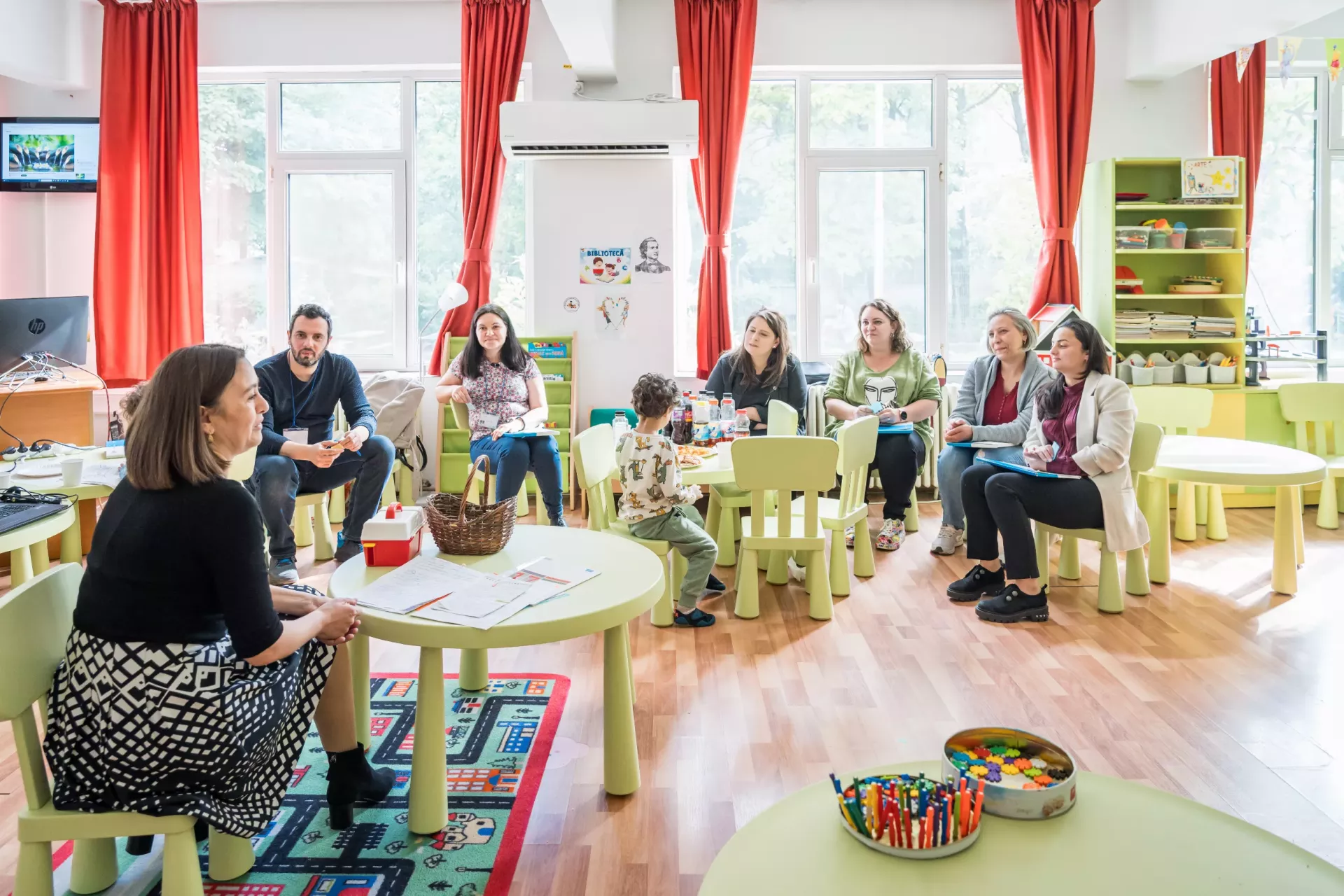
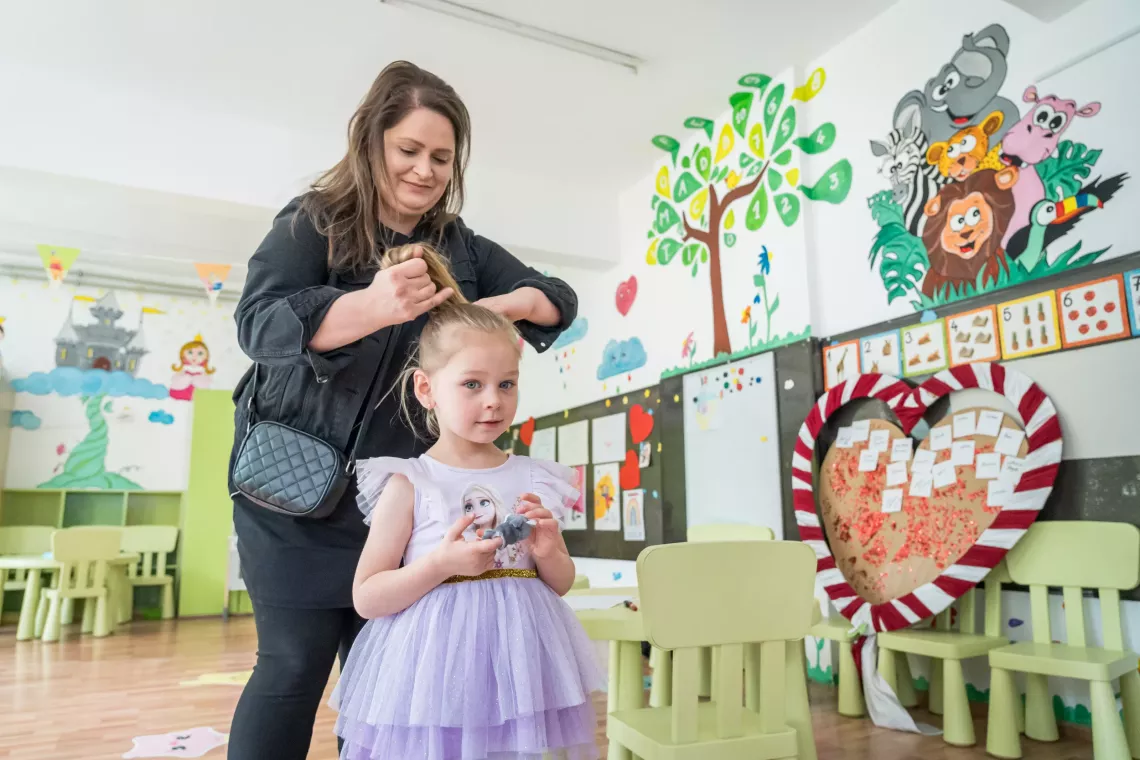
At the Kindergarten no. 16 in Iasi, educator Claudia Mihaela Murărașu is getting ready to welcome parents in the classroom for a new parenting education meeting. It is a moment she describes with the word "joy". "I am very excited to have the joy of working with parents, to share what I have been able to learn," she says.
The educator is one of 650 Romanian and Ukrainian professionals trained as parent educators. The program these professionals follow involves two training components - theoretical and practical. Theoretical training consists of going through a parenting education curriculum consisting of ten modules in online format, using the platform www.qie.ro, and one physical meeting. The practical component is organizing, by each participant in the theoretical training, of a parenting education course (ten meetings) with parents who have children enrolled in the educational establishment where the professional works.

The program has helped educator Claudia Murărașu to understand the needs of parents and "to come to the aid of parents who failed to understand their child". "I'm starting to see how some parents have adjusted to their child, they have leaned in a little bit. That was the goal - to bring them closer," says Claudia Mihaela Murărașu.
How we train Appreciative Parenting is a positive program built on strengths and does not labels on participants. The program does not advocate one single parenting model and does not insist on the idea that there is only one way to be a parent.
"One effect we have seen is a huge increase of parents' confidence in their ability to care for and educate their children. On the other hand, it greatly improves the relationship with the child," says Prof. Dr. Stefan Cojocaru, president of HoltIS. "The advantage of parenting education as a form of organization is that the group runs with a larger number of meetings, so that within the group, a solidarity develops between parents that they do not find outside the group. Basically, they train each other from each other's positive experiences, and the parent educator is just a facilitator of the group," he says.

The program helped Natalia's mother Roxana understand why the little girl had such a hard time settling in at the kindergarten, unlike her older sister, who adapted immediately. "We understood a lot from the experience Mrs. Claudia shared with us. Every session she delivered was meaningful. I understood that every child is different," she says.
"I found the course very well structured. It helped me with some of the things that I hadn't dealt with as a parent that I wouldn't have been able to overcome. But it also helped me in better understanding that our little people can't regulate their emotions. I would recommend this program to all parents," Adina also says. Her son, she says, is more tolerant now, more communicative and speaks up when he is happy or sad.
"I liked that it was a balanced dialog. Mrs. Claudia told us a lot, but she also gave us space to talk. The materials were very valuable. We say this based on the fact that we have attended many parenting courses and this one - I was saying to my husband - is super valuable. It should reach everyone," said Estera and Adrian, Abi's parents, who attended the course together.
Fathers, according to Ștefan Cojocaru, are getting more and more involved and taking part in such courses: "The national average of fathers' participation in parenting courses is 19.7%. That's not low, compared to 5.9% worldwide. This shows with hard data that Romania has developed extraordinarily. It is a major change in the attitude towards the child within the family".
UNICEF does not not endorse any company, brand, product, or service.