Ukrainian refugee children and the path to national exams in Romania
At the UNICEF-supported information point for Ukrainian children and parents, preparation becomes an essential step toward confidence and integration
- English
- Română
Education for refugee children arriving in a new country works like an ecosystem that is gradually built over time. School becomes a space of orientation, where the unfamiliar slowly takes shape, and the language, rules, and the school rhythm begin to connect step by step through daily experiences and constant interaction.
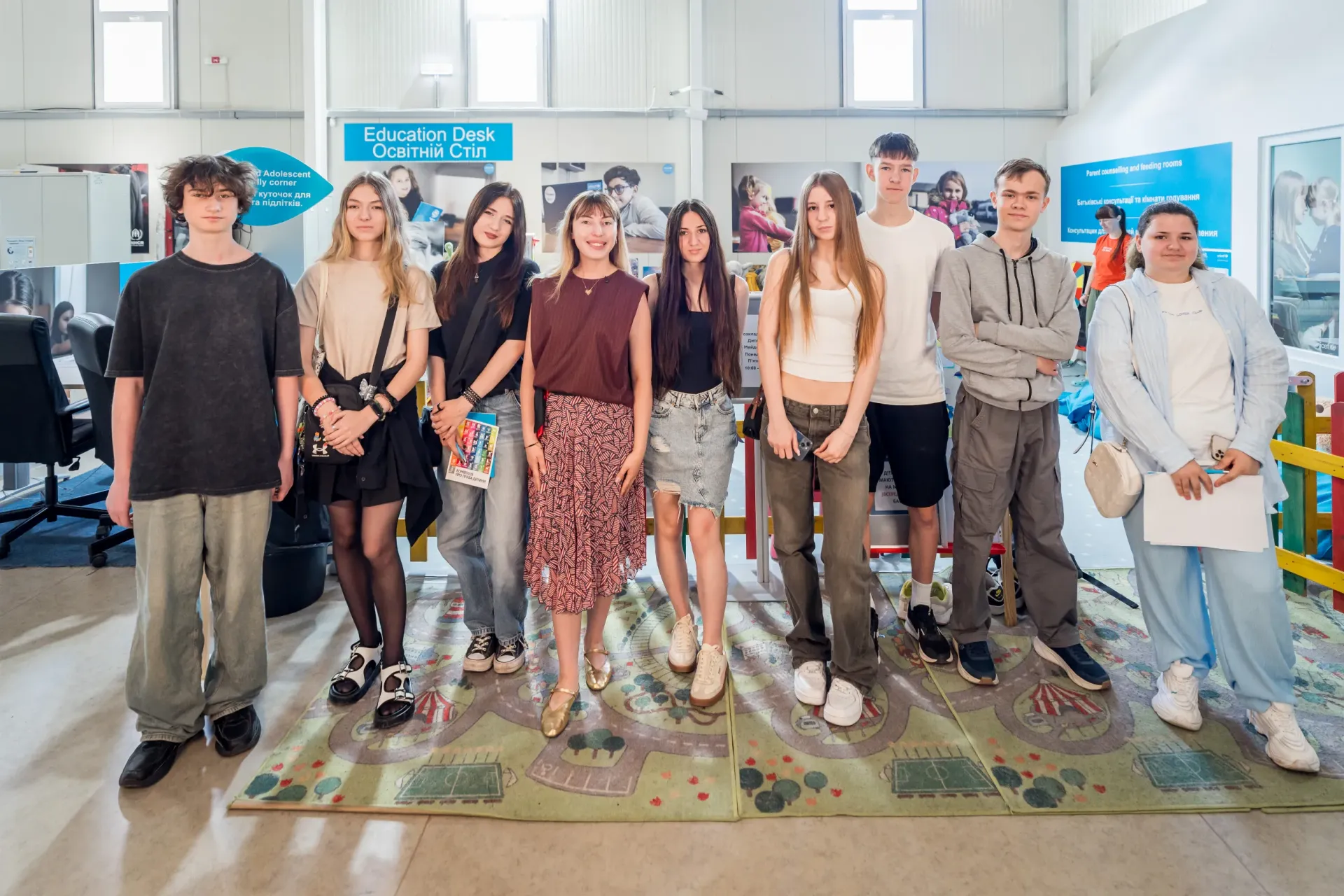
In Romania, this journey is supported beyond the classrooms, through information and support points such as the Education Desk at the Romexpo Community Center, a place where questions about exams and the educational pathway in Romania become clearer, and the next steps easier to navigate.
“The office at Romexpo is essentially a support system for Ukrainian children and their parents who are coming to our country for the first time,” says Maricica Ciubara, an educational integration counselor at the Education Desk. Every day, this support takes different forms. Sometimes it means answering questions about school enrollment. Other times, it means something even more important: preparing for national exams.
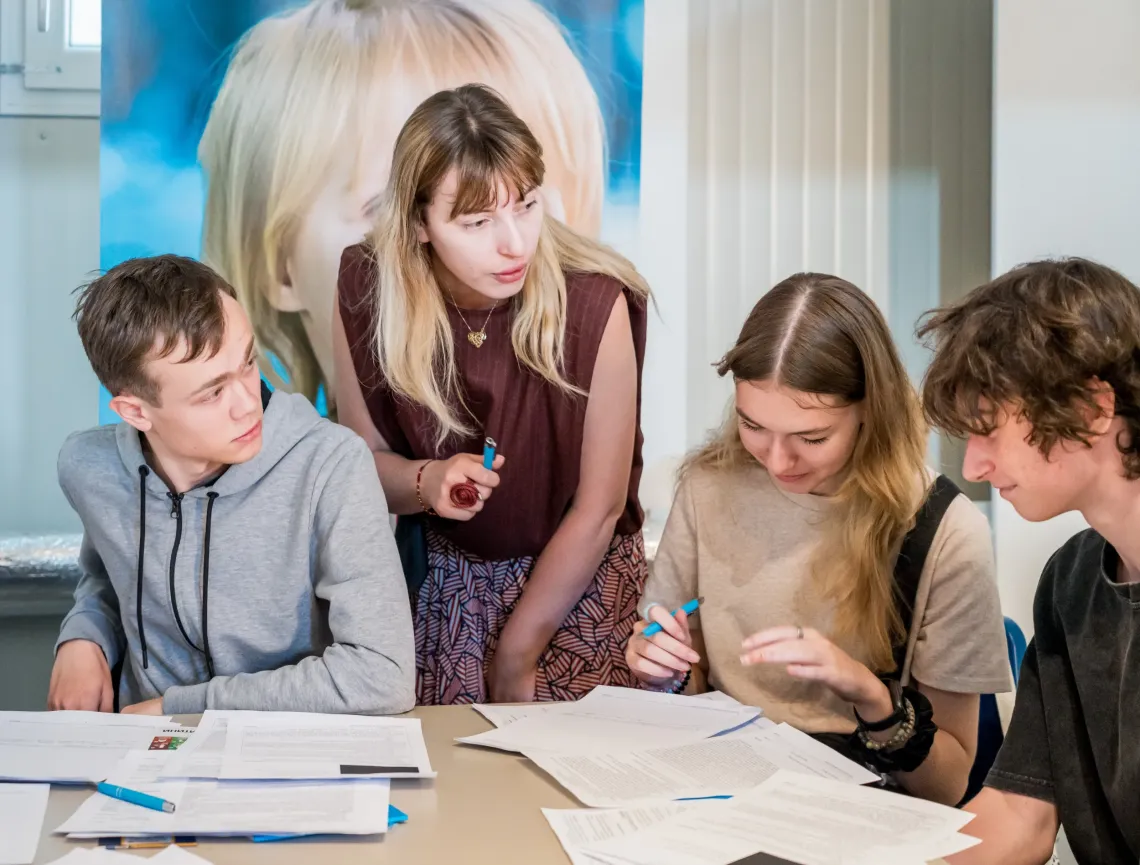
From April to the present, Romanian language exam preparation sessions have been organized at Romexpo for Ukrainian refugee children, helping them become familiar with the exam format, learn how to interpret the questions, and manage their emotions before exams that can open the door to high school or university.
“Their first challenge remains Romanian,” explains Maricica Ciubara. Even after years of living in Romania, the language continues to be negotiated daily: in classrooms, in hallways, and in homework assignments.
In school, teachers support them every day, but the fast pace of a class and limited time mean that each child’s needs are different. In a new system where every lesson is also a language exercise, children need time to ask questions, make mistakes, and try again. “Teachers provide this support, but it also depends on how much time they have, because we only have 50 minutes and a large number of children to accommodate in the classroom,” explains Maricica Ciubara.
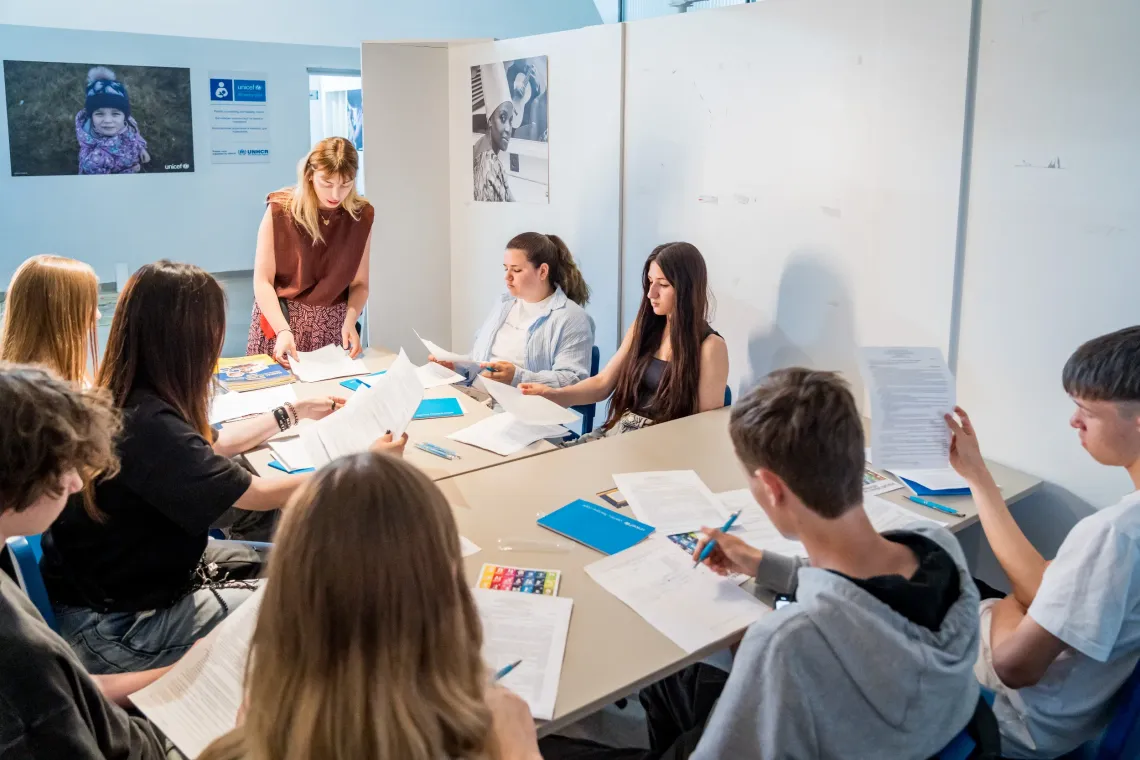
Thus, the preparatory sessions held at the Education Desk complement this effort, offering Ukrainian refugee children the opportunity to practice Romanian in a safe environment and to ask questions about national exam requirements until everything becomes clear. Each completed exercise becomes a step forward toward the confidence that they can continue their education and build a future in Romania.
This confidence is best reflected in the children’s stories.
For Tania, an 11th-grade student, the next step already has a name: the baccalaureate exam. Her journey to this point has been shaped with the help of the people around her. “My teacher says: ‘We speak Romanian with Tania because she needs to learn the language.’ She and my classmates have helped me a lot,” she says, as if language has gradually become a collective effort rather than an individual one.
For Maxim, integration began with a fear shared by many refugee children: the fear that he would not be able to keep up in a school and in a language he did not know. “I heard that Romanian school is difficult for Ukrainians, but when I arrived I was a bit shocked that it was actually fine,” he says. He remembers that in the first days, it was not the Romanian language that surprised him most, but the patience of the people around him. “I was afraid because I didn’t know Romanian, but my classmates and teachers were very patient.” Today, the language challenge remains at times constant, but it is no longer something he carries alone.
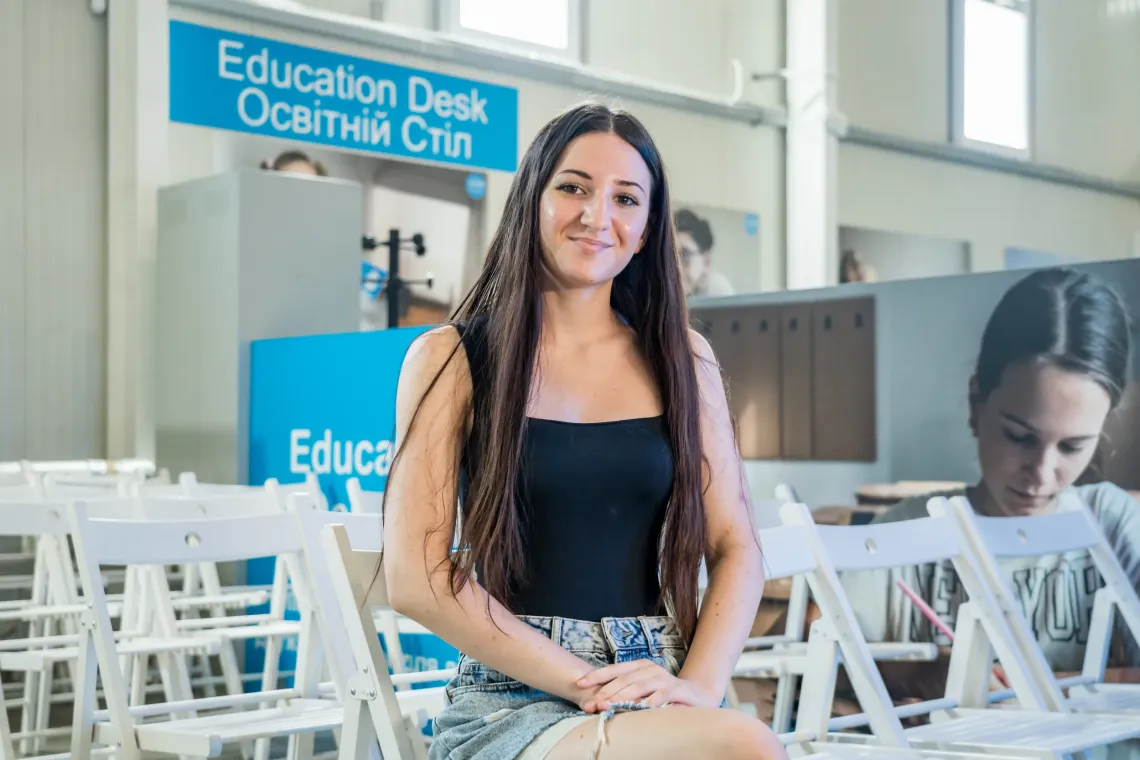
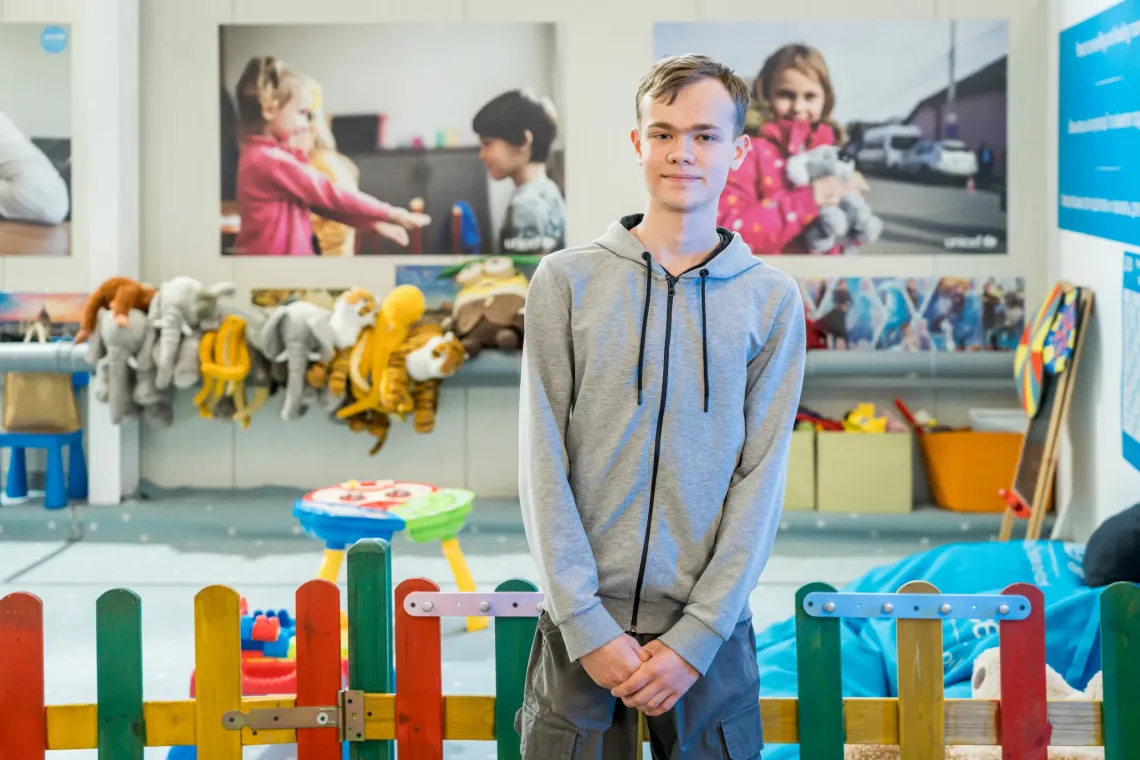
The integration of refugee children into Romania’s education system is not a linear process, but one built over time, through small steps that are sometimes visible only after months or years of consistent effort. “We cannot say that we have fully achieved their integration in the classroom, but compared to 2022 and even 2023, we now see growth and positive progress in this regard,” Maricica Ciubara explains. Beyond these improvements, what is taking shape is a more stable reality for the children, one in which they can continue their education with consistent support and navigate more confidently within a system that gradually becomes more familiar.
UNICEF has supported the integration of Ukrainian refugee children into the national education system from the very beginning, working closely with local and national public authorities, schools, partner organizations, and civil society. Measures implemented have included translation and counseling services for children and their families, as well as the involvement of a network of school mediators who facilitated communication between schools and refugee communities, contributing to equitable access to education and the integration of children into the school environment.