European Child Guarantee: Romania Supports the Republic of Moldova by Sharing Its Experience
Good practices for strengthening services dedicated to children.

- English
- Română
BRAȘOV, Romania – When a child with speech impairments begins to express themselves in complete sentences, and another child with severe mobility and balance difficulties succeeds in attending a mainstream kindergarten alongside other children, you know your efforts are truly changing lives.
Professionals from the Social Assistance Directorate (DAS) in Brașov have many such sharings from their daily work. These are stories of children, including from vulnerable communities, who receive support and confidence for a better future, children helping to build a more inclusive world, and children who, thanks to this support, have been able to remain with their families, preventing family separation.
A government delegation from the Republic of Moldova recently learned about these experiences directly from those living them every day. The purpose of the visit to Romania was to find out more about the neighbouring country’s knowledge in planning and implementing the European Child Guarantee. This experience sharing happened as part of an initiative co-implemented by UNICEF in Romania with the support of the European Commission, aimed at helping candidate and potential candidate countries develop and implement the European Child Guarantee.
Children’s stories came to life from the very first stop, to the DAS Day Center, which was created with UNICEF support under the project “Romania for Every Child” (2021–2024), for children with disabilities. Here, Moldovan officials immersed themselves in the energy of childhood. In a physiotherapy room equipped with colorful and child-friendly devices and equipment, they followed the physiotherapist’s instructions and joined children and parents in activities designed to develop motor skills and strengthen parent-child relationships.

Cooperation Between Social, Health and Educational Services
In rooms decorated with children’s favorite characters, toys, and photographs from important moments spent at the center, Moldovan authorities learned more about the free specialized physiotherapy and psychological counseling services, as well as the interdisciplinary approach involving health, education, and social assistance that is essential for the progress of children with disabilities.
“We saw how important cooperation and these intersectoral activities are in the implementation of the Guarantee (...). We saw practical examples of intersectoral collaboration and concrete services created at the local level,” said Vasile Cușcă, State Secretary at the Ministry of Labour and Social Protection of the Republic of Moldova.
“If we want to have an impact, that means intersectoral cooperation. Without the Education, Health and Social Assistance sectors, without this joint team and joint effort, absolutely nothing can be achieved,” emphasized Igor Chișcă, Head of the Child Rights Protection and Families with Children Policy Department, Ministry of Labour and Social Protection.
Romania began implementing the European Child Guarantee in 2022. The initiative, launched by the European Union, ensures children’s access to Health, Education, Care and Protection Services. The Republic of Moldova, a candidate country for EU accession, is currently at an earlier stage, developing its Action Plan for implementing the Guarantee.
“This experience is beneficial for the Republic of Moldova because our colleagues were very honest. They shared what worked well, less well, and what they would do differently,” explained Dorina Savoschin, Head of the Maternal and Child Health Service at the Ministry of Health.

In Brașov, the Social Assistance Directorate provides 16 types of social services and openly shared lessons learned and challenges encountered over time. DAS supports children with disabilities, children whose parents work abroad, it works to prevent school dropout and domestic violence, and supports teenage mothers as well as family reintegration efforts.
In a Roma community in Brașov, members of the delegation met children who had come to play and receive support at the Directorate’s Day Center for Counseling and Support for Parents and Children. For many, the center serves as a second home, offering psychological counseling, social counseling, and numerous educational activities.
“What we saw at every level was empathy. The empathy with which the specialists engage in solving the problems children face, and their desire to make a difference. In this way, even seemingly small things have an impact,” said Luminița Avornic from the Primary and Community Healthcare Policy Department of Moldova’s Ministry of Health.

Children’s Participation in Decision-Making
An important aspect of the Guarantee is ensuring children’s participation in decisions that affect them. Romania incorporated this principle into legislation in 2024, requiring all public authorities to include child consultation in decision-making processes.
Brașov is one of Romania’s pioneers in this area, having established the Brașov Children’s Council in 2022. The council was created through the “Romania for Every Child” project under the Child-Friendly Localities Initiative implemented by UNICEF in Romania. As a result, the children of Brașov naturally took part in discussions with the Moldovan delegation.
“The Brașov Children’s Council is an advisory structure functioning as a consultative organism with the Local Council of Brașov. Our goal is to represent the voices of children and adolescents in relation with the Brașov City Hall and other local institutions,” said Iustinian, a member of the Council.
Together with Deputy Mayor Lucian Pătrașcu, five Council members highlighted the role children play in finding innovative solutions tailored to their needs. They mentioned playgrounds adapted for children with disabilities, services and activities for vulnerable children, and the events and spaces tailored to children and young people.
“We hope that this year or next year Brașov will obtain the title of Child-Friendly City,” said the Deputy Mayor, highlighting several ongoing projects in this area.


Inspiration for the Next Steps
Because the visit covered all key areas of the European Child Guarantee, every Moldovan official was able to identify good practices and challenges relevant to their field of work.
In healthcare, the dedication of community nurses stood out, along with discussions on access to free health services.
“We learned about dental clinics in Brașov that provide free services for children and young people. We do not yet have such an experience in Moldova, and it would be a good idea to implement because oral health is extremely important,” emphasized Dorina Savoschin.
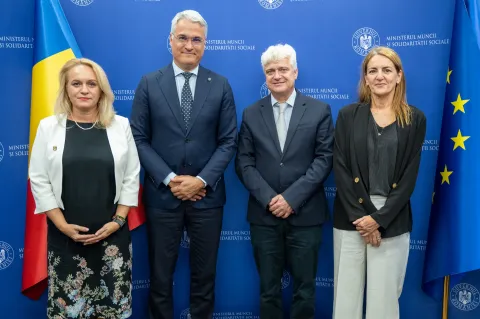
In addition to the visit to Brașov, the Moldovan delegation also met with Romanian central authorities, including representatives from the Ministry of Labour, Family, Youth and Social Solidarity, the National Authority for Child Protection and Adoption, the Ministry of Education and Research, the Ministry of Health, as well as county and local authorities, DGASPC Brașov, and the local administration of Berceni Commune in Prahova County.
“Both Moldova and Romania face challenges. These must be addressed through concrete actions related to costing, developing indicators, and intersectoral cooperation. We need to focus on these aspects while finalizing the National Implementation Plan for the Guarantee,” stated State Secretary Vasile Cușcă.
“It is an important commitment, but following this study visit and based on the experience we already have within the Ministry and in the Republic of Moldova, we will successfully finalize and approve this document and, certainly, implement it and achieve the desired results,” he added.
Among the actions inspired by Romania’s experience are the regular convening of working groups to ensure timely intervention when needed, as well as improvements in budget planning and the identification of external funding sources.
“This visit has enabled us to build a lasting partnership with our colleagues in Romania, one that can be used to its full potential,” said Igor Chișcă, mentioning the possibility of cooperating in attracting European funds through joint partnerships to strengthen the implementation mechanisms of the Guarantee in both Romania and the Republic of Moldova.

More About the Context of the Visit
The European Child Guarantee (ECG), adopted through Council Recommendation (EU) 2021/1004 in June 2021, is a flagship commitment of the European Union to combat child poverty and social exclusion. The Guarantee calls on Member States to ensure that every child has access to free or affordable essential services, including early childhood education and care, education, healthcare, adequate nutrition, and decent housing. It also identifies groups of children facing the greatest barriers to accessing these services, including Roma children, children in alternative care or lacking adequate family support, children with disabilities, children from migrant or refugee families, and children experiencing severe socio-economic deprivation.
The study visit, called “Leveraging Romania’s Experience to Support the Planning and Implementation of the European Child Guarantee in the Republic of Moldova”, took place from 20 to 24 July 2026 in Bucharest and in the counties of Brașov and Prahova. It was organized jointly by the Romanian Ministry of Labour, Family, Youth and Social Solidarity, the National Authority for the Protection of Children’s Rights and Adoption, and UNICEF in Romania under the European Commission-funded project “Leveraging the European Child Guarantee in Candidate and Potential Candidate Countries to the European Union,” implemented by UNICEF in Romania and UNICEF in Croatia.
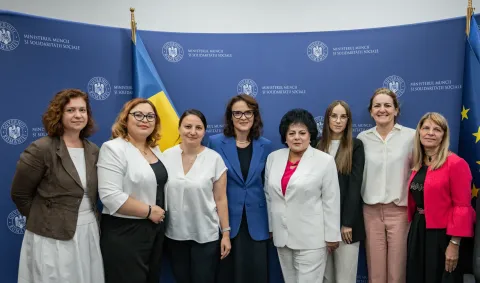
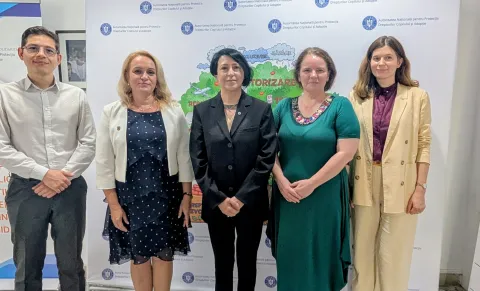
The delegation from the Republic of Moldova included representatives from the Ministry of Labor and Social Protection, the Ministry of Education and Research, the Ministry of Health, the Ministry of Finance, the Ministry of Internal Affairs, the State Chancellery, and UNICEF in Moldova.