Report: The digitization of social services must be matched with equitable investment in people, infrastructure, and system and tools integration
- English
- Română
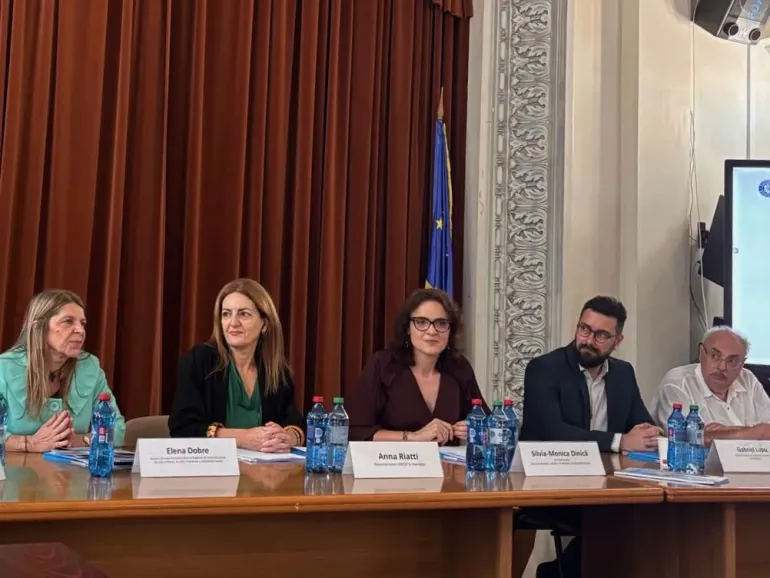
BUCHAREST, 22 June 2026. The Ministry of Labor, Family, Youth, and Social Solidarity (MMFTSS) and UNICEF presented the study titled “Mapping Information and Communication Technology (ICT) Resources Available in Romania’s Social Assistance System,” a report that provides an up-to-date picture of the digitization of social services at the national level.
The study highlights both the progress made in the digitization of the social assistance system and the gaps that may affect equitable access to essential services for vulnerable children and their families.
“Social assistance in Romania is undergoing institutional transformation, and the digitization of public services is a fundamental prerequisite to ensure rapid and personalized interventions for the most vulnerable groups. Through this mapping effort, which drew on a representative sample of over 1,100 completed questionnaires from SPAS and DGASPC, we are able to examine both the existing barriers and the opportunities within the system with honesty and scientific rigor. Our priority is to build a system that works for everyone, a system that is faster, more accessible, and better adapted to the needs of vulnerable children and families,” stated Silvia Dinică, State Secretary at the Ministry of Labor, Family, Social Protection, and Solidarity (MMFTSS).
Key findings of the report show that:
- IT infrastructure is uneven, with major disadvantages for services in rural areas, where equipment is insufficient and outdated.
- Access to funding is uneven, with many institutions relying exclusively on limited local budgets, while access to non-budgetary resources remains unequal.
- Human resources are insufficient and lack digital skills, particularly in small institutions, where a small number of employees manage complex systems.
- IT applications are used in a fragmented and inefficient manner due to a lack of interoperability, training, and adequate infrastructure.
Among the recommendations and urgent courses of action included in the report are:
- Creating an integrated and interoperable national system to reduce the administrative burden and streamline services.
- Prioritizing investments in vulnerable communities, particularly in infrastructure and staffing for public social assistance services in rural areas.
- Developing digital skills through a national training program tailored to assessed needs.
- Strengthening inter-institutional coordination to ensure coherent digital governance.
- Simplifying and standardizing IT applications to ensure efficient and accessible use.
“The findings of the report released today highlight a key message: without coordinated action and strategic investments, digitalization risks widening existing disparities between communities, rather than reducing them. The digital transformation of social services is essential to responding more quickly and effectively to the needs of children and families. UNICEF remains a long-standing partner of the MMFTSS and the Government in advancing the digitalization of social services,” said Anna Riatti, UNICEF Representative in Romania.
The study was conducted in 2025 as part of the partnership between the MMFTSS and UNICEF in Romania by a research team comprising Cult Market Research, Reality Check, and DIS++. The analysis is based on data collected from 1,121 public social assistance institutions across the country, providing one of the most comprehensive overviews of the system’s digitization at the national level.
Media contacts
About UNICEF
UNICEF operates in Romania and 190 other countries and territories to promote the survival and development of children from early childhood through adolescence. In Romania, UNICEF works with key stakeholders such as the Government, Parliament, local authorities, civil society, the private sector, national and international partners, and the media to ensure that all children have access to quality early childhood education and schooling, to protect adolescents and monitor children’s rights, to provide social protection, and to mobilize resources for the benefit of children. For more information about UNICEF and its work, visit https://www.unicef.org/romania/ro.
Follow UNICEF in Romania on Facebook, Instagram, TikTok, X, and WhatsApp.