Early Childhood Education and Care: Achievements, Challenges, and Future Plans in Moldova, Romania, and Ukraine

- English
- Română
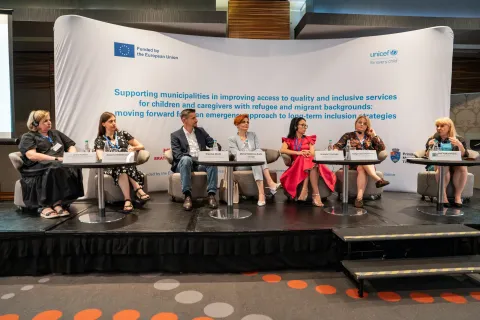
Chișinău, 24 September 2024 – Government leaders, international development partners, education experts, academic representatives, and parents gathered in Chișinău to attend the interregional conference "Building bright futures beyond borders: investing in Early Childhood Education and Care." The event was organized by the UNICEF offices of Moldova and Romania, the UNICEF Regional Office for Europe and Central Asia, in collaboration with the Ministry of Education and Research of the Republic of Moldova, the Ministry of Education of Romania, and the LEGO Foundation.
The conference focused on the importance of early childhood education and care, with the goal of strengthening existing partnerships in this field. It also facilitated an exchange of experiences and views on the achievements, challenges, and lessons learned by Moldova and Romania in ensuring equitable access to early childhood education and care for refugee children while simultaneously strengthening national systems in this regard.
"Today, we are talking not only about financial investments but also about human ones, involving the dreams, hopes, and future of every child. That is why we rely on our collaboration with organizations such as UNICEF, the LEGO Foundation, development partners, and friendly countries like Romania and Ukraine. Together, we can create a safe, inclusive environment full of opportunities for all children, including those who have suffered from war and conflict or come from vulnerable backgrounds," stated Dorin Recean, Prime Minister of the Republic of Moldova.
In recent years, the governments of Moldova and Romania have made considerable efforts to develop the early childhood education and care sector, with a focus on equity and inclusion.
"We are one of the few countries that provide free access to kindergartens starting at age two, fully funded by the state budget—an impressive achievement not widely seen globally. Our early childhood education enrollment rate for children aged 2 to 3 is 70%. For younger children, local authorities can fund access, and for the past two years, we have had a targeted program for opening nursery groups. We encourage local authorities to apply for funds to set up these groups, as there is significant demand from parents. Moreover, most kindergartens in the country operate for 9-10 hours, even in rural areas. Currently, 66% of educators hold higher education degrees; while we aim for 100%, this is a strong start. This year, we launched a continuous training program for educators, 'Investing in Educators,' which is currently available to about 25% of them," said Minister Dan Perciun.
"Early education is the cornerstone upon which the future of every child is built, and efforts to develop this segment represent the best investment we can make for our children. In Romania, we have made constant efforts to integrate children from vulnerable backgrounds, including those fleeing the war in Ukraine, into the education system, and we have demonstrated that access to quality education for all children is a priority for us. I believe in the exchange of good practices, and I was pleased that this conference provided the right opportunity for us to find, together, solutions to common challenges," said Ligia Deca, Romania's Minister of Education.
"I would like to extend my sincere gratitude to the Moldovan and Romanian people for welcoming Ukrainian children and families. Unfortunately, in Ukraine, a part of our kindergartens remains online due to the war, with staff sometimes evacuating children during air raids. Our preschool institutions provide social and emotional education, addressing the specific needs of children. Pilot projects are underway to expand preschool access in remote areas, including mountainous regions, ensuring that every child is motivated to attend kindergarten despite geographical/phisical challenges. Our responsibility is to ensure that every child, regardless of their background, has access to education, with a focus on teachers, learning spaces, and teaching methods," said Yevheniia Smirnova, Deputy Minister of Education and Science of Ukraine.
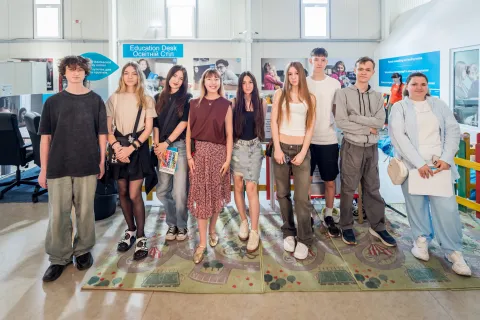
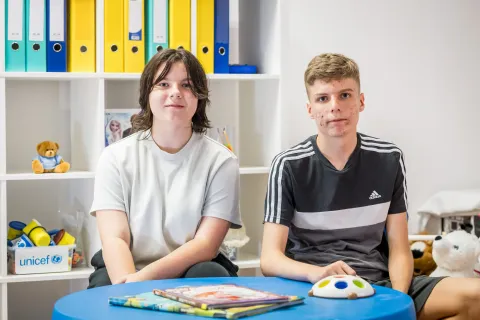
According to recent statistics, of the more than 120,000 refugees in the Republic of Moldova, approximately 44% are children, while in Romania, out of nearly 162,180 refugees, more than one-third are children. To help integrate them into the educational systems of the host countries, UNICEF, in partnership with government leaders and with the support of the LEGO Foundation, has established 58 Play and Learning Hubs in the Republic of Moldova and Romania. These hubs provide educational and psychological support to refugee children, ensuring continuity of learning in a safe and friendly environment.
“The Ukrainian Ministry of Education and the LEGO Foundation have collaborated closely for more than 14 years and together we have brought learning through play to more than four million children in Ukraine. With the war putting everyday life as we know it on standby, we wanted to contribute to the support for general humanitarian aid for the Ukrainian people as well as education and protection of children, and we are grateful to our colleagues and partners who have worked tirelessly, before the war and particularly during the war, to support Ukrainian children’s mental wellbeing and development," mentioned Michael Stahl, Teamlead, Lego Foundation, Denmark, Greenland, and Ukraine.
During the conference, special emphasis was put on the importance of investing in early years for children's long-term development, as this is the period when foundations for cognitive, social, and emotional skills are laid.
"Early childhood education and care are essential for strengthening equity and inclusion among all children, with a particularly significant impact on those from marginalized groups. Expanding quality early learning opportunities for both refugee and host communities ensures that all children have the chance to reach their potential," stated Octavian Bivol, UNICEF Deputy Regional Director for Europe and Central Asia.
Thanks to projects supported by the LEGO Foundation in Moldova and Romania for almost two years, UNICEF, together with government and non-governmental partners, has facilitated refugee children's access to early childhood education and care, while also strengthening national systems in this field. In addition to establishing play and learning hubs, over 1,000 kindergartens in both countries were equipped with LEGO® and DUPLO® sets, teaching materials, books, toys, and educational games and more than 6,000 educators were trained in playful learning. The Bebbo app was launched for parents and caregivers with children under six years old; and social cohesion activities were organized for Ukrainian and local parents and children, among others.
"The collaboration and insights shared today by representatives from different countries, governments, and organizations have highlighted a simple yet powerful reality: while the contexts may differ, the challenges and opportunities we face are shared. Whether we are addressing the immediate needs of refugee children, supporting children affected by poverty, or working to ensure that every child, regardless of their background, has access to high-quality early education, our goals are aligned," said Maha Damaj, UNICEF Representative in Moldova.
"This conference has been a powerful reminder of the critical importance of Early Childhood Education and Care. We've seen how investment in quality ECEC is not just about providing services, but about shaping the future of our societies. Whether through innovative initiatives like the Play and Learning Hubs supported by the LEGO Foundation, the steadfast efforts of governments in Moldova, Romania, and beyond, or the collaborative frameworks put forth by organizations like European Commission, OECD, UNICEF, ISSA, Global Partnerships for Education and the World Bank, it's clear that we are making strides towards ensuring every child has the opportunity to thrive," said Anna Riatti, UNICEF Representative in Romania.
Media contacts
About UNICEF
UNICEF works in Romania and 190 other countries and territories to promote the survival and development of children from early childhood through adolescence. In Romania, UNICEF works with key stakeholders such as the Government, Parliament, local authorities, civil society, the private sector, national and international partners and the media to ensure access to quality early childhood education and to school for all children, to protect adolescents and monitor children's rights, to provide social protection and to mobilize resources for the benefit of children. For more information about UNICEF and its work, visit https://www.unicef.org/romania.
Follow UNICEF in Romania on Facebook, Instagram, TikTok, X și WhatsApp.