

World Children’s Day 2023 – Kids Takeover the Assembly
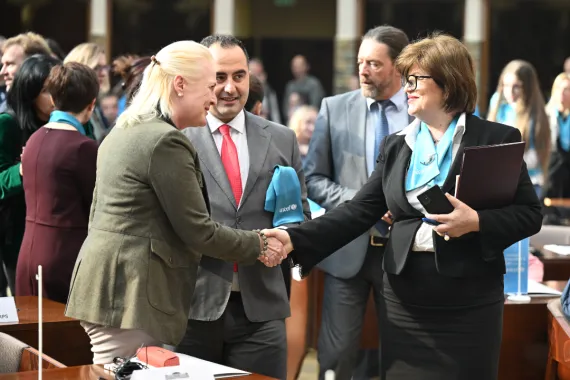
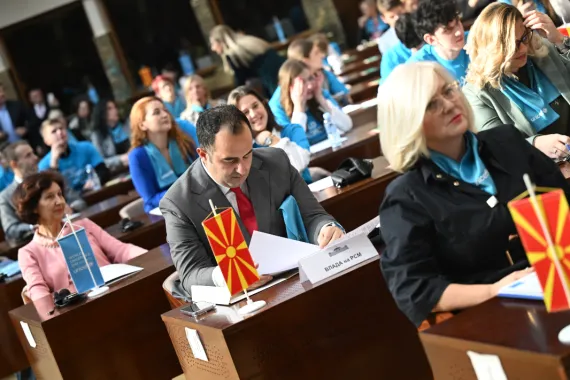
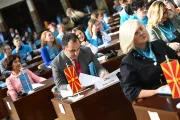
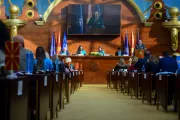
UNICEF and the Assembly of North Macedonia organized a high-level event “Kids Takeover the Assembly” where parliamentarians heard directly from children and young people about their most pressing issues, needs and concerns.
- English
- Македонски
- Shqip
World Children’s Day is UNICEF’s global day of action for children, by children, marking the adoption of the Convention on the Rights of the Child (CRC). Taking place every year on 20 November, World Children’s Day highlights critical issues affecting children’s lives and supports the engagement of children and young people as advocates for their own rights.
To mark 30 years since North Macedonia ratified the Convention on the Rights of the Child, UNICEF and the Assembly organized a high-level event “Kids Takeover the Assembly” where parliamentarians heard directly from children and young people about their most pressing issues, needs and concerns.
The event was also an important opportunity for the Assembly to reaffirm its cross-party commitment to work towards advancing child rights and addressing the recommendations outlined in the most recent Concluding Observations of the Committee on the Rights of the Children
Conclusions of the Parliament session 'Kids Takeover the Assembly'
Children and young people took over the Parliament session opening discussion on three topics that they have identified themselves as a priority. The topics included quality of education, the situation with the mental health of children and young people and participation in decision making that affect children’s life.
Learn more about the conclusions that children presented and adopted at the Parliament session.
The Commission for education, science and sports represented by group of children - MPs presented the following Conclusions:
- We, children MPs think that financial support for education needs to be increased. This includes investment in infrastructure, teacher trainings, and provision of modern teaching aids.
- We, children MPs , think that the educational system need to be tailored to support diverse learning styles and needs of children as well as to ensure critical thinking and creativity during classes.
- We, children MPs, believe that education should be inclusive. Thereby, every student, including students with special needs, are entitled to quality education.
- We, children MPs think that teachers need to be provided with support and training that highlight fostering of creativity in engaged learning.
- We, children MPs think that students should be enabled to directly participate and be part of an educational process that ensures their individual needs are heard and understood, thereby developing their critical thinking.
The Commission of Health represented by a group of children MPs presented the following Conclusions:
- We, children MPs think that increased promotion and outreach with schools and parents is needed (campaigns, programs etc. focusing on public awareness raising).
- We, children MPs think that pedagogical professional development for teachers and recruitment of more professionals is needed in every school in order to tackle the problem related to availability, thus ensure that every child can access such support.
- We, children MPs think that mandatory mental health classes should be introduced in the curricula.
- We, children MPs think that help line for child and youth support is needed at all times, that is, 24/7, to ensure enhanced digital safety and mental wellbeing support for children and youth.
- We, children MPs think that registered psychologist should be provided for young people.
The Commission for Political System and Relations between Communities represented by a group of children - MPs presented the following Conclusions:
- We, children MPs think that the Law on Youth Participation and Youth Policies should be amended to provide obligation for every educational institution to introduce high school students and 9th grade primary school students with all possible methods of youth organization, thus ensure they learn how to become active citizens. Specifically, we request changes in the civic education curriculum (9th grade in primary school, I year in secondary vocational school, one topic/modul each); changes in the subject sociology in gymnasiums (one module) and inclusion of more youth participation topics within the life skills curriculum – class council;
- We, children MPs request full implementation of the Law on Youth Participation and Youth Policies that stipulates the definition and requirements for establishment of National Youth Assembly that will work on setting priorities and policies for youth advocacy (youth advocates), and will coordinate and monitor their work.
- We, the children MPs request that more rigorous timeframe is stipulated and applied for implementing the law, as well as sanctions for bodies that fail to implement this obligation.
- We, children MPs request bigger share of the Gross Domestic Product to be allocated for projects targeting youth and youth participation at national level, and especially at local level.
- We, children MPs think that that the establishment of Youth Office is necessary within the Assembly where young people can directly approach the responsible individuals.
- We, children MPs think that youth quota should be established in the Assembly, because young people are best familiar with their needs and will therefore best represent themselves and their voice.
- We, children MPs think that the Law on Secondary Education needs to be aligned and every school should be required to establish a youth organization/student parliament.
Photo gallery












Takeover of the role of UNICEF Representative
Social media highlights


