Healthy Eating Starts with a Splash of Color
Teaching healthy eating habits in pre-school is crucial for children's long-term health.

- English
- Македонски
- Shqip
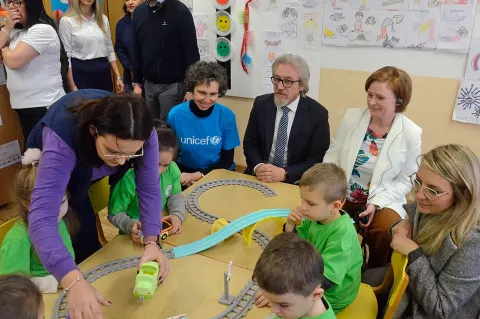
At the “8th of March” kindergarten in Skopje, today’s learning through play activity is called “Rainbow”. Educator Maya brought in a huge plate overflowing with colorful fruits. She invited the children to name each one, identify their colors and shapes. They learned about the importance of having a variety of colors on their plates and how each color represents different nutrients that help them grow strong and healthy. The children eagerly engaged, and afterwards, had fun making and eating their own fruit salad.


This engaging activity is one of many play-based learning activities included in the "Handbook for the Development of Healthy Eating Habits Among Preschool Children for Kindergarten Staff" developed with support from UNICEF.
In partnership with the Ministry of Social Policy, Demography and Youth, UNICEF has supported kindergartens throughout the country, training over 3,100 staff members, including directors, professional associates, kitchen staff, caregivers, and educators on establishing healthy eating habits among preschool children. It's part of a broader, cross-sectoral initiative to tackle childhood obesity.
As part of these efforts, kitchen staff collected and shared recipes for healthy meals with parents, ensuring that the lessons learned in the classroom extend to the home.

Teaching healthy eating habits in pre-school is crucial for children's long-term health. Encouraging children to eat a variety of whole fruits, vegetables, whole grains, and lean proteins from a young age can help them develop a positive relationship with food and make healthier choices throughout their lives.
This is especially important considering the rates of childhood obesity in the country. Almost one third of children aged 7 to 9 years are overweight and around 15 per cent are children with obesity, with boys more affected than girls.
Children who are above a healthy weight are at higher risk of developing serious health conditions like type 2 diabetes, cardiovascular and respiratory problems. They are also more likely to experience poor self-esteem and lower quality of life. These consequences often persist into adolescence and adulthood, generating significant health risks. That’s why UNICEF is working with partners to address these issues from multiple fronts. Teaching healthy habits in the early years is just the start.

Using a systems thinking approach, UNICEF collaborated with partners in the spheres of health, education, and social policy to identify barriers and priorities for improving childhood nutrition. By considering the overall environment, nutrition education, policy, business practices, and intersectoral cooperation, the partners also pinpointed the need to address access to unhealthy food in and around schools as a top priority.
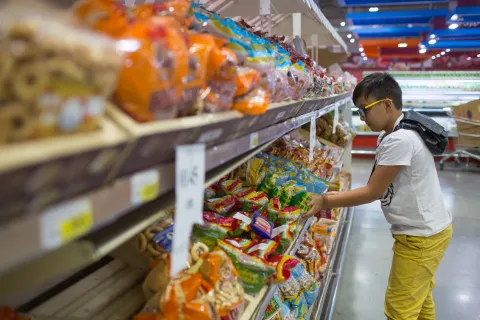
Easy and affordable access to snacks, fast food, and sugar-sweetened beverages in and around schools significantly undermines efforts to promote healthy eating and increases the risk of obesity among children and adolescents.
UNICEF is working with partners to strengthen policies to help children make healthier food choices. We are advocating for nutritional standards for school meals that incorporate local, seasonal products, reducing the availability of sugar-sweetened drinks and snacks in schools and regulating the types of food that can be marketed in nearby shops.
Creating a supportive environment is essential to ensuring children have access to healthy food options. By limiting access to unhealthy snacks and promoting nutritious choices, kindergartens and schools can influence children's eating habits. This proactive approach can reduce the prevalence of childhood obesity and ensure that every child has the opportunity to grow up healthy and reach their full potential.