Yakaka: A Mother Who Refused to Believe the Myths
From personal experience to painful memories, a mother affected by conflict is choosing facts over fear to protect her children from cholera in northeast Nigeria.

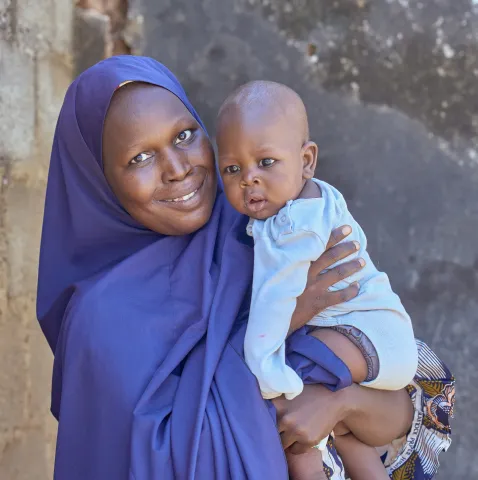
Twenty-nine-year-old Yakaka Muhammad could hardly keep still.
Pregnant with another child, she stood by the window of her home in Gamboru, Maiduguri, peering down the dusty street every few minutes before pacing slowly across her living room. She had heard the vaccinators were coming. Now she was waiting for them.
"When will these people arrive?" she wondered.
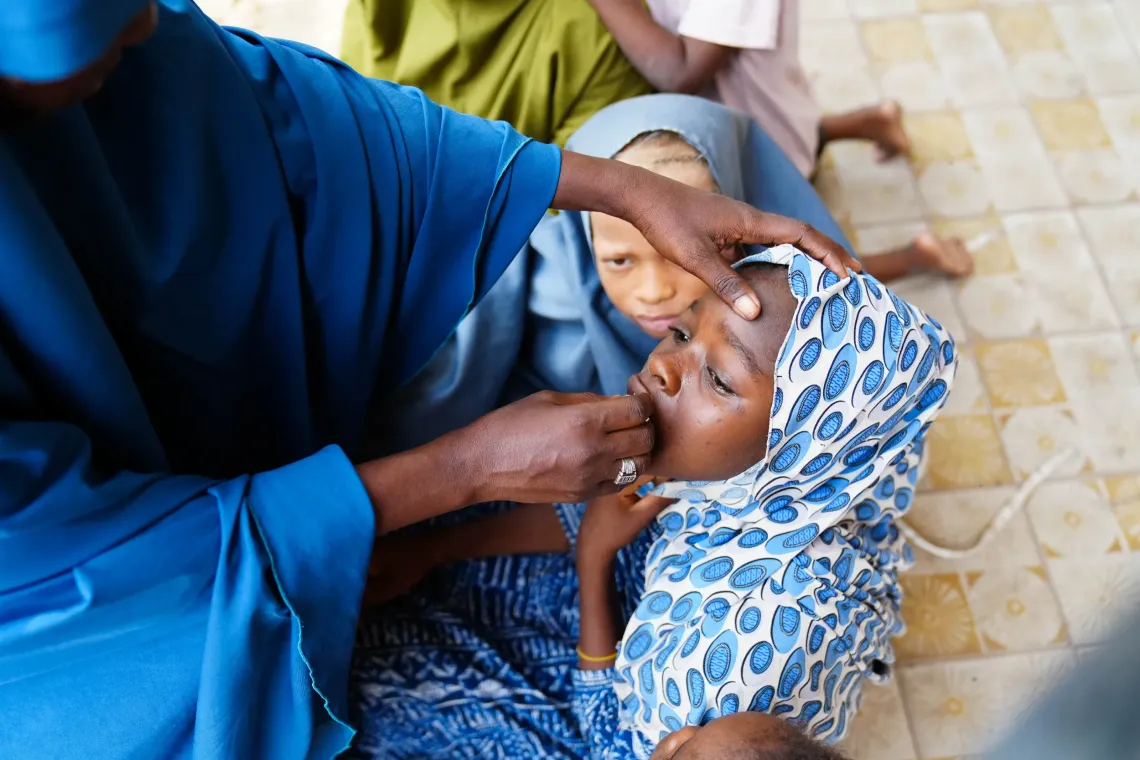
By the time the vaccination team reached her doorstep, Yakaka had already gathered her children. They stood patiently in a line, ready to receive the oral cholera vaccine (OCV).
For Yakaka, there was never any hesitation.
"My children have been vaccinated against polio and other diseases, so why should the cholera vaccine be any different?" she said. "Whenever health workers come to our community, I am always among the first mothers to come out. The vaccines are free and they protect our children."
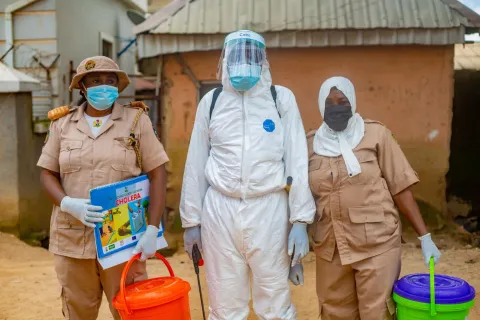
The vaccinators were among hundreds of health workers deployed across Maiduguri in July as Borno State battled a rapidly growing cholera outbreak. Since the state government declared the outbreak in June, more than 35,000 cholera cases and about 150 deaths have been recorded.
Cholera remains one of the world's deadliest waterborne diseases, affecting up to four million people every year, according to the World Health Organization. In Nigeria, outbreaks continue to thrive in overcrowded communities where conflict, displacement and poor access to safe water and sanitation leave families especially vulnerable.
Supported by the International Coordinating Group (ICG) on Vaccine Provision, the oral cholera vaccination campaign forms part of a wider emergency response to contain the outbreak. The vaccine, administered to everyone aged one year and above, provides vital protection against severe illness and preventable deaths.
Working alongside the National Primary Health Care Development Agency (NPHCDA) and the Nigeria Centre for Disease Control and Prevention (NCDC), ICG partners, UNICEF, WHO, Gavi, Médecins Sans Frontières (MSF) and the International Federation of Red Cross and Red Crescent Societies (IFRC), are supporting emergency response efforts across high-risk communities in Borno State.
For Yakaka, accepting vaccines has become second nature. But it was not because she never heard the rumours. She grew up surrounded by frightening stories that questioned the safety of vaccines. The voices were loud, persistent and often convincing.
Like many communities across northern Nigeria, misinformation travelled quickly, feeding fear and distrust. For children already living through years of conflict and displacement, those rumours carried dangerous consequences.
Yakaka listened, but she also watched. She looked at her own life.
She had been vaccinated as a child. She grew up healthy. She got married. She became a mother. Nothing the rumours predicted ever happened.
"They said vaccines would stop you from giving birth. But I have my children," she said with a smile.
"They said children who are vaccinated will not grow well, and when they become adults they will not be able to have children. None of that happened.
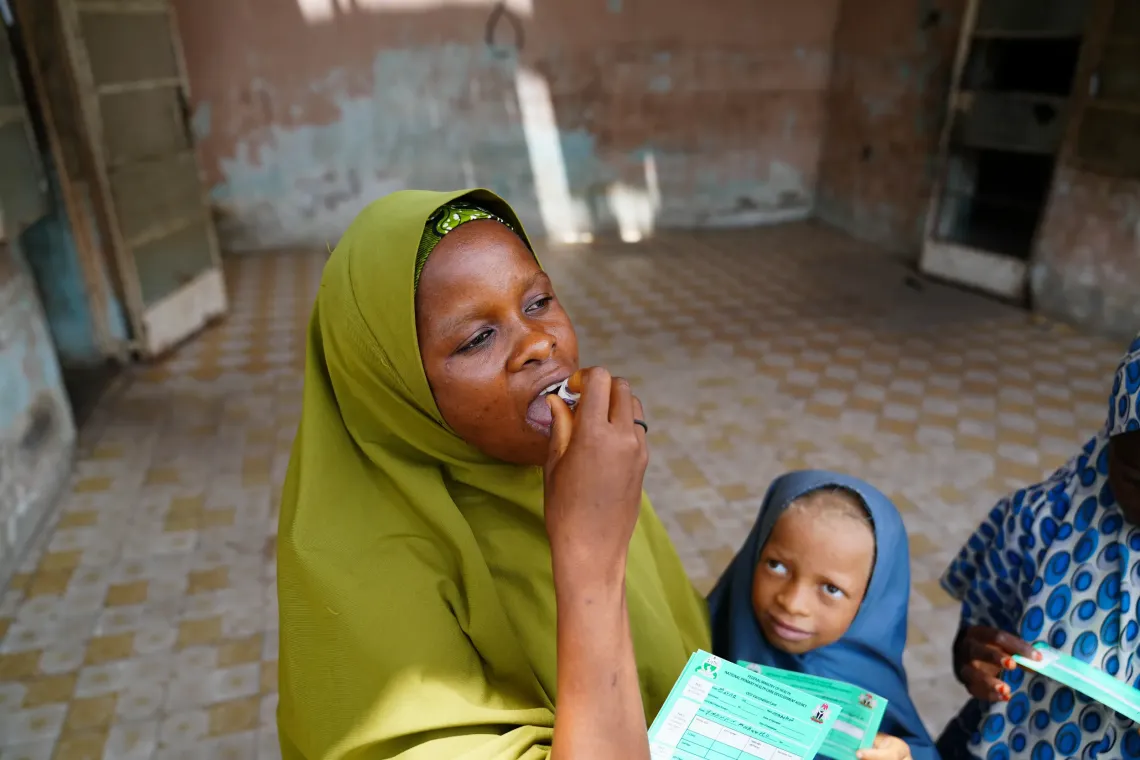
"People also said vaccines would cause serious complications. I was vaccinated and nothing happened to me. In fact, I became healthier afterwards. I didn't believe those stories because I had already seen the evidence with my own life. If I was vaccinated as a child, why shouldn't I vaccinate my own children?"
Today, Yakaka is among the growing number of mothers quietly pushing back against vaccine myths in northeast Nigeria. Their confidence is helping to reduce vaccine hesitancy at a time when every child protected can mean another life saved.
"I have heard all the rumours," she said. "But protecting my children will always come first."
Her understanding of cholera has also grown beyond vaccination.
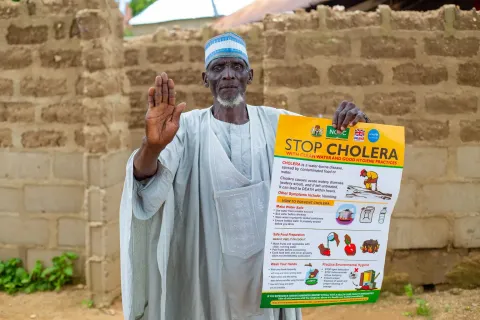
Through awareness sessions led by UNICEF-supported hygiene promoters, Yakaka has learned how simple everyday habits can stop the disease from spreading.
"I know cholera is mostly caused by poor hygiene," she explained. "Sometimes people leave food uncovered. They don't wash their children's hands before eating. They don't keep their toilets clean. Flies move from the toilets to the food, and that spreads disease."
The lessons do not end with her. Every day, she passes them on to her children.
"Even when they go to school, I tell them not to buy food just anywhere. I remind them to wash their hands all the time. I can proudly say I have taught my children how to protect themselves. Even when I am no longer here, they will know how to take care of their health."
For Yakaka, protecting her children begins with a simple decision: choosing evidence over rumours, and hope over fear.