Every minute is crucial in the fight against cholera.
Over a decade after witnessing a cholera-related death, a first responder is leveraging the collaboration between UNICEF and the Plateau state government to protect families from the deadly disease and make sure there is no repeat.

Fourteen years later, Isa Mohammed can still remember the moment. He and his colleagues were in the community conducting an active case search during a cholera outbreak when they came across someone suspected of having cholera. They quickly advised moving the person to a health facility for treatment. “Before they could put everything in place to take the person to the health facility, the person died,” Isa recalls.
It was one of the most harrowing moments of his nearly three decades of working in the health and water, sanitation, and hygiene (WASH) sector in Plateau State. Today, Isa, as a WASH Surveillance Officer, is once again at the forefront of a cholera response. However, that experience imparted an unforgettable lesson: with cholera, every minute is crucial.
And it counted again in August 2026. In Plateau State, cholera was once again threatening families. The State recorded fatalities during the outbreak, bringing back for Isa the familiar fear that comes whenever the disease begins to spread. “Unfortunately, we have had fatalities,” he says, with visible grief.
But there was something different this time. Isa and other frontline responders had new skills, new tools, and crucial support that enabled them to respond faster.
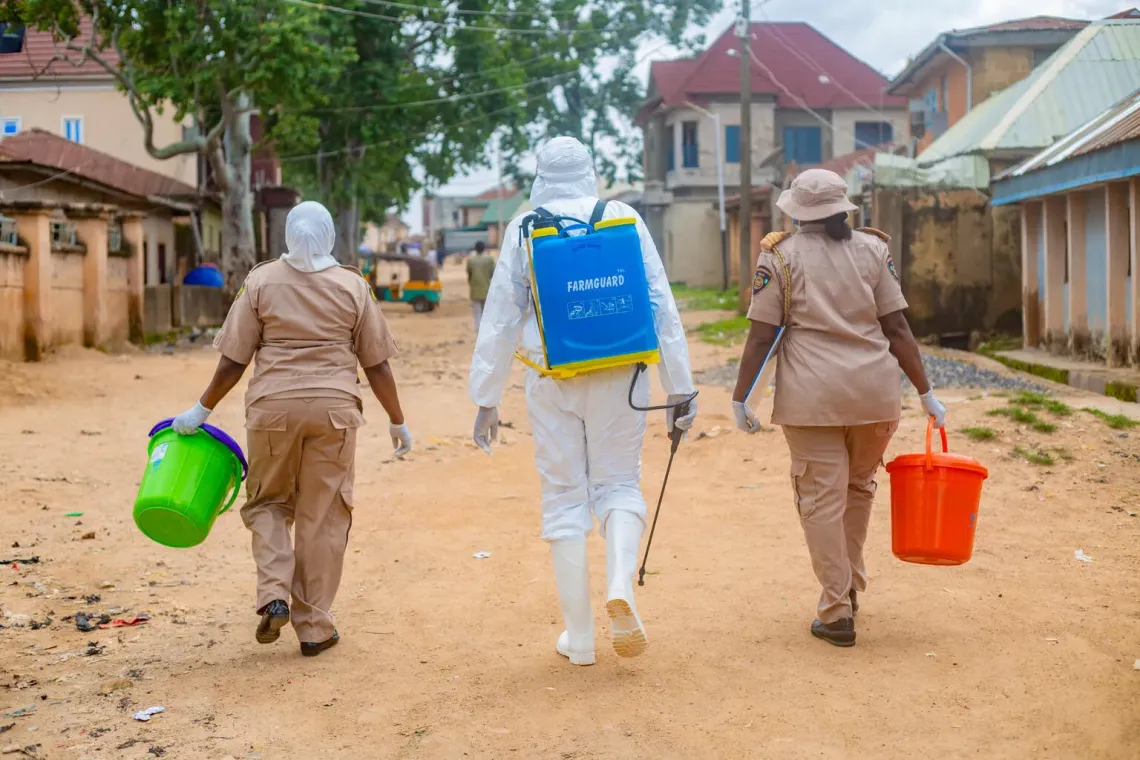
The Plateau State Government, with support from UNICEF, quickly activated a cholera response aimed at containing the outbreak and preventing further loss of life.
“The support we received from UNICEF came at a very timely moment,” Isa says. “It enabled us to swing into action and respond quickly before it could do even more damage.” Among the most important components of that support was Case Area Targeted Intervention (CATI) training for Isa and other relevant first responders. CATI is more than just another training programme. It changed the way they approach an outbreak. Trained teams go directly into affected communities, where they conduct active case searches, identify people who may have cholera or may have been exposed, provide households with essential information and prevention materials, and take immediate steps to reduce the risk of further transmission.
In a cholera outbreak, that speed is critical. “The CATI training was very exciting and motivating for me,” Isa says. “It strengthened us with the skills we need to respond to affected families and provide them with the right support.”
Isa says the training on active case search has also strengthened his team's ability to identify suspected cases early and respond appropriately.
He describes cholera as a disease in which behavior can determine whether a family remains safe or becomes infected.
Cholera is a disease where behavior matters,” he says. “If families know what to do and understand how to protect themselves, they have a better chance of staying safe.
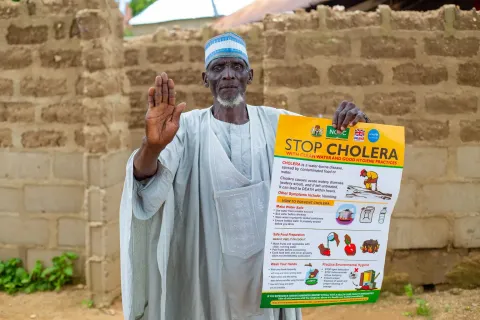
So, the response goes beyond identifying and managing cases. That's why Isa and his team are going door to door, talking to families about cholera, its spread, warning signs, and prevention.
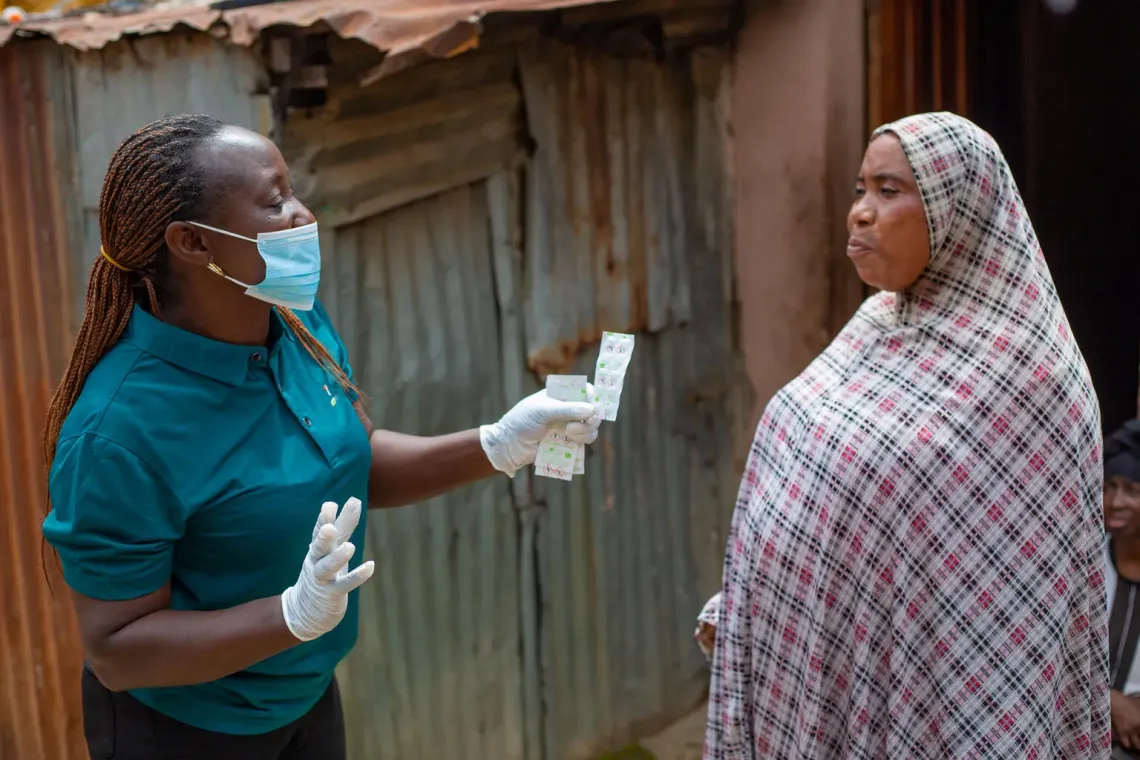
They are distributing Aquatabs to help households make their water safer. They are also chlorinating wells to reduce the risk of contaminated water becoming a source of further infection.
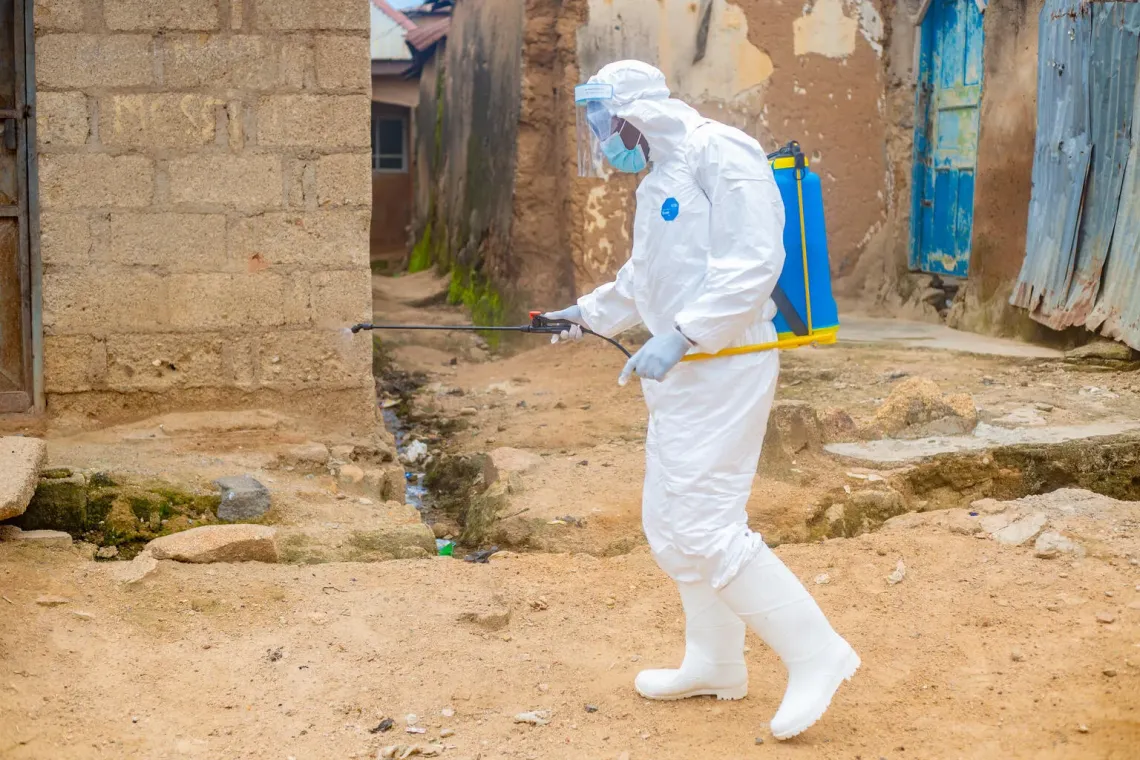
But the work does not stop there. In affected households and communities, the team also fumigates homes and surrounding areas to help control the risk of transmission. Clad in protective fumigation gear, he leads the team into communities where cholera has been detected.
Isa says he understands that behind every cholera fatality statistic is a family. And within those families are children who depend on adults and communities to keep them safe. Protecting children from the disease is vital, as unsafe water and poor hygiene can have dire effects on them. “We want to protect families, especially children,” he says.
He knows that the difference between information and action can be the difference between infection and safety and sometimes, between life and death.
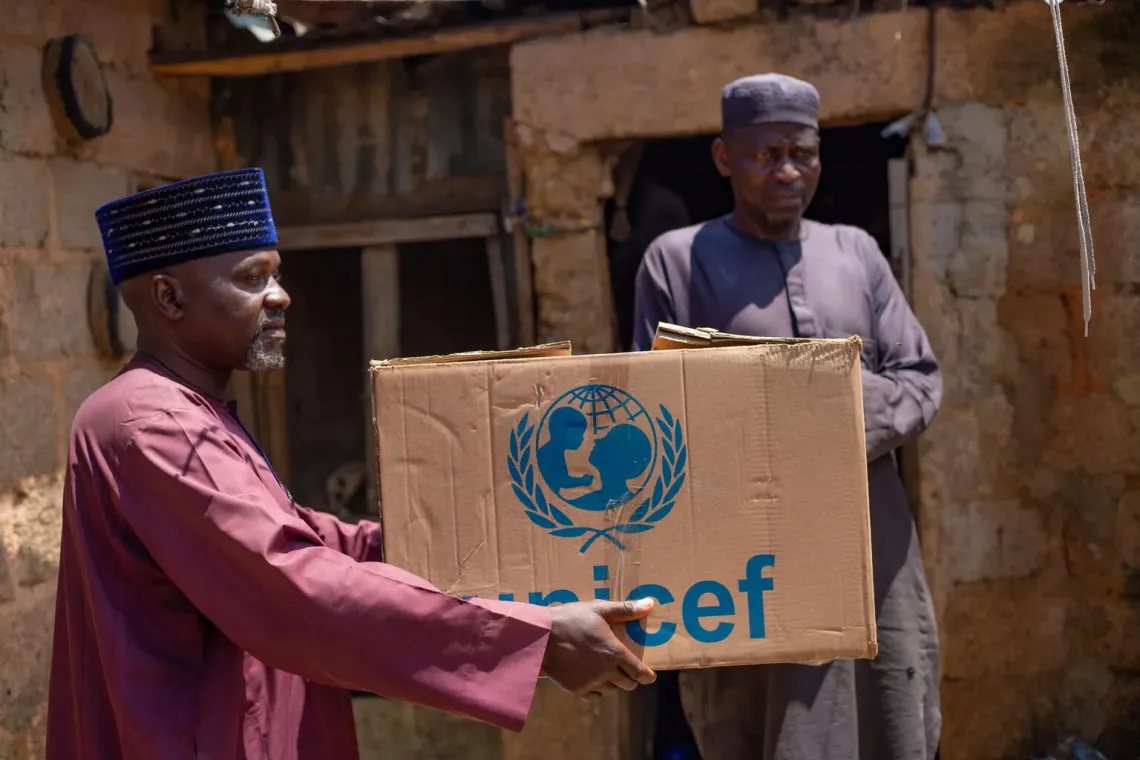
Fourteen years ago, Isa witnessed a person die from cholera. Today, he is determined that the same story should not be repeated. “When I hear that there is a cholera case somewhere, sometimes, I remember what happened years ago,” he says. “It reminds me that we must act quickly. We cannot afford to wait until it is too late.”
He pauses before reiterating the fact that has come to define his work: the urgent need to prevent cholera deaths. “We cannot afford to keep losing lives to cholera.”
And as he dons his fumigation gear and trudges across at-risk communities, the memory of the person he could not save is still with him. But this time, it is not stopping him. It is pushing him forward. And, hopefully, towards a future where the next knock on a family's door brings prevention instead of mourning.