Three Days That Changed Everything
With support from the United Nations Central Emergency Response Fund, UNICEF and its partners are helping children survive cholera and protecting families from facing it again.

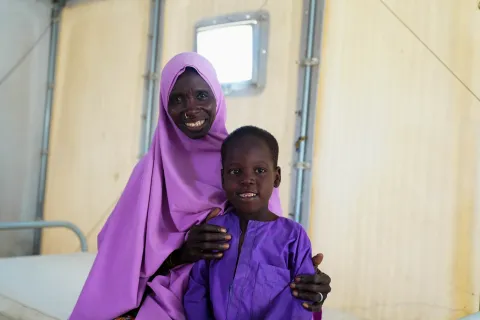
For three days, Wandala Manye hardly slept.
She sat beside her two-year-old daughter, Hauwa, at the Cholera Treatment Unit in Dikwa, watching every movement, every breath, hoping each hour would bring her child closer to life.
"It started like something that did not even seem serious enough to go to the hospital," Wandala recalls.
Within hours, everything changed.
Hauwa began vomiting and passing severe diarrhoea. The episodes came so quickly that her mother stopped counting. The little girl's cheeks became sunken, her skin changed colour, and she grew too weak even to look at her mother.
"I became frightened because she had never been like this before," Wandala says. "A neighbour told me about the Cholera Treatment Unit, and we rushed her there."
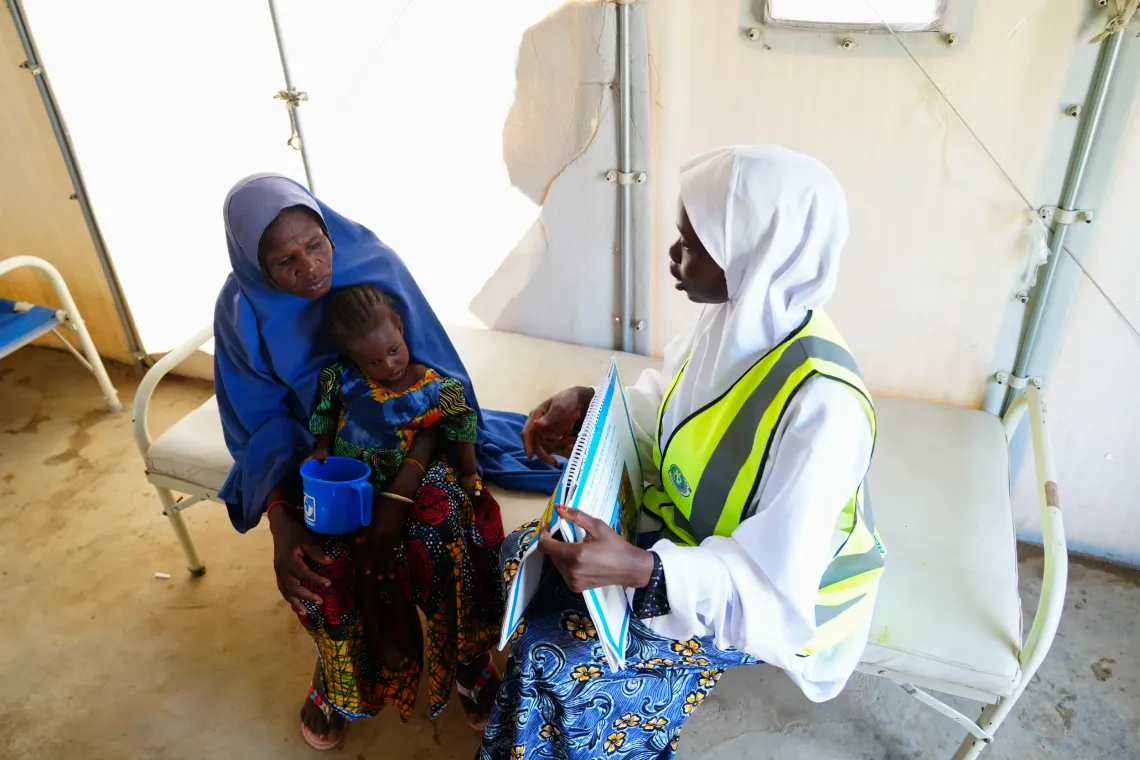
When they arrived at the treatment centre inside Dikwa General Hospital, health workers acted immediately. Hauwa was admitted, given Oral Rehydration Solution (ORS), intravenous fluids and other lifesaving treatment while staff closely monitored her condition.
Slowly, her strength returned.
"The vomiting and diarrhoea stopped," Wandala says with a smile. "By the afternoon of the second day, she had started playing again. That was when I finally breathed a sigh of relief. It is not easy watching your child lose strength minute by minute."
For Wandala, those three days felt like a lifetime.
For the health workers, they were another reminder of how quickly cholera can strike and how quickly treatment can save a life.
Supported by UNICEF, the Lindii Peace Foundation and the Borno State Government, with funding from the United Nations Central Emergency Response Fund (CERF), the Cholera Treatment Unit in Dikwa was established in early June to respond to the growing outbreak across Dikwa and neighbouring communities.
In less than two months, the facility has treated 192 patients.
Most of them have been children.
"The majority of our patients are children," says Philip Amos, one of the frontline health workers at the facility. "Yesterday we admitted fourteen patients, and only three were adults. The number of cases has been increasing."
The outbreak has been devastating across Borno State.
More than 20,000 people have been infected, and over 140 lives have been lost in just two months. For children already growing up amid conflict and displacement, cholera has become yet another threat to survival. Health workers are also looking beyond treatment.
"Dikwa is surrounded by bodies of water where children often go swimming," Philip explains. "We are working with community leaders to discourage swimming during this period and reduce their exposure to cholera."
Stopping the outbreak means more than treating patients after they arrive.
It means preventing the next child from becoming sick.
That is why support continues even after families leave the treatment centre.
With CERF funding, UNICEF and its partners provide essential medicines, health personnel, ambulance services, household disinfection and hygiene kits containing everyday items such as soap, detergent, towels, kettles and jerry cans. Families also receive practical advice on personal and environmental hygiene to help prevent cholera from returning.
As Wandala prepared to leave the treatment centre with Hauwa and return to their shelter at Kwaibe IDP Camp, she carried far more than a hygiene kit.
She carried the relief of taking her daughter home.
"I received soap, detergent, a kettle, towels and jerry cans," she says. "They also taught me how to keep my family and our surroundings clean. I feel happy, and I feel valued. But most importantly, I am grateful that my daughter survived cholera."
For Wandala, that is the only outcome that truly matters. After three days of fear, she is going home with what every mother longs for.
Her child.
Alive.