A Small Box. A Second Chance.
A simple hygiene kit is helping families in northeast Nigeria keep cholera from returning, one household at a time.

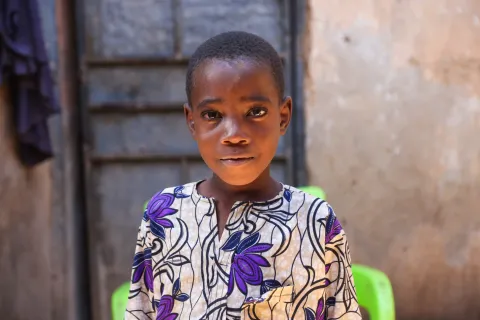
Six-year-old Mohammed Ibrahim cannot stop smiling.
Sitting on a mat outside his family's thatched shelter at Fulatari IDP Camp in Dikwa, Borno State, he is completely absorbed in a game with his older brother, Gujja. Their laughter fills the compound as their hands clap against each other in playful competition.
Just a few days ago, nobody knew if Mohammed would ever laugh again.
"They are celebrating their reunion," says their grandmother, Tata Yande, watching the boys with quiet relief.
Only five days earlier, Mohammed had been fighting for his life.
He had been vomiting continuously, suffering severe diarrhoea and losing dangerous amounts of fluid. His tiny body had become so weak that his grandmother feared the worst.
"His mother died while giving birth last year," Tata says softly. "When he became sick, I thought the evil spirit that took his mother had come back for him."
Like many people in her community, she first turned to traditional remedies.
"I mixed herbal medicine for him, but nothing worked. The vomiting continued, the diarrhoea became worse and by the second day, his eyes had almost rolled back."
As Mohammed's condition deteriorated, UNICEF-supported hygiene promoters visiting the camp learned about the case. An ambulance, funded by the United Nations Central Emergency Fund (CERF), was immediately dispatched to take him to the Cholera Treatment Unit in Dikwa.
"My heart was pounding," Tata remembers. "My other grandson was crying and my husband hardly spoke. It felt as though we were saying goodbye."
But this was not goodbye.
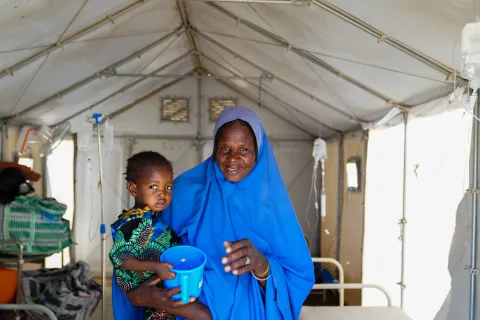
At the Cholera Treatment Unit, managed by humanitarian partners with support from CERF, health workers moved quickly to rehydrate Mohammed and stabilise his condition.
Slowly, the little boy recovered.
Mohammed is one of more than 20,000 people affected by the cholera outbreak in Borno State. Nearly 150 people have lost their lives to a disease that is both preventable and easily treatable.
For families already displaced by years of conflict, cholera has become yet another burden.
Mohammed and his brother fled their village after attacks by non-state armed groups. They have been out of school for almost a year. Now they face another threat, one that spreads rapidly where overcrowding, unsafe water and poor sanitation are part of daily life.
Recovery, however, does not end when patients leave the treatment centre.
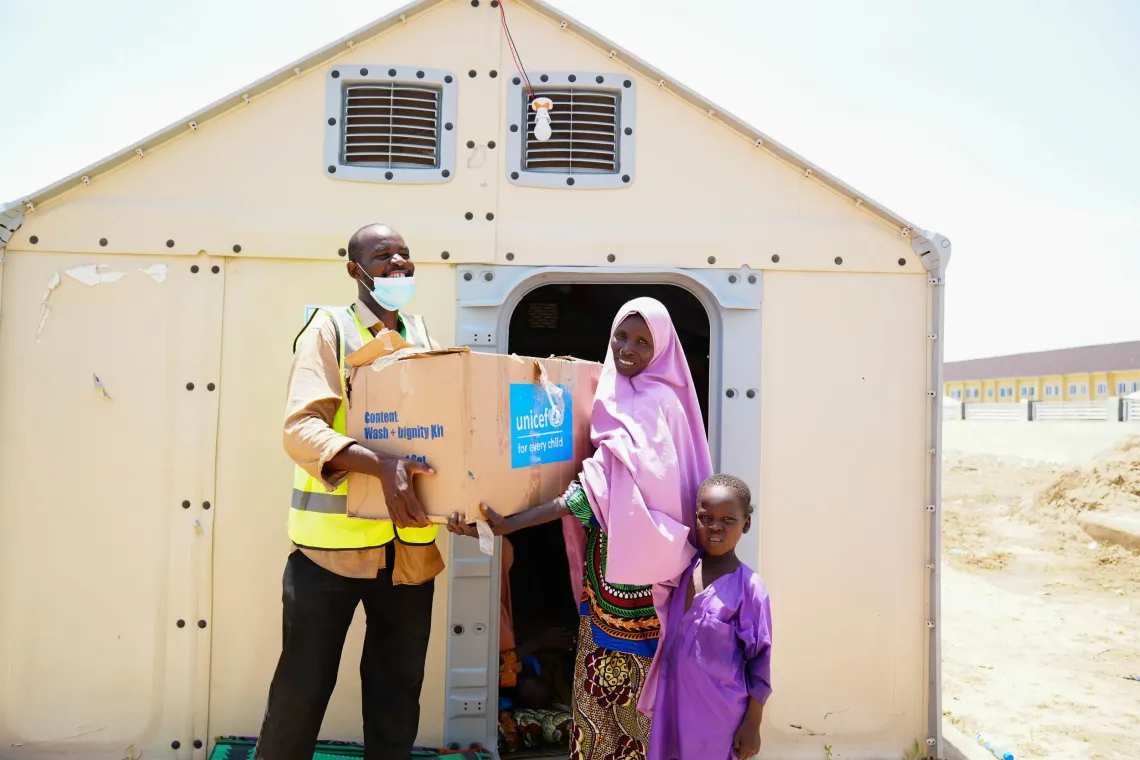
Before Mohammed and his grandmother returned home, they received something unexpected.
A simple box.
Inside were everyday items: jerry cans, a kettle, towels, detergent, cups and other basic hygiene materials. Modest household items, yet powerful tools in preventing cholera from returning.
UNICEF, working with the Borno State Government and Lindii Peace Foundation, provides these hygiene kits to recovered patients with support from CERF. At the same time, hygiene teams disinfect homes and continue promoting safe hygiene practices across affected communities.
"I was not expecting the kit," Tata says. "But it will help us. The ambulance brought us home, which saved us money, and when we arrived, people had already disinfected our shelter. We are barely surviving here, so this support means a lot."
Today, Mohammed is back where every six-year-old belongs.
Playing. Laughing. Arguing with his brother over a game.
Sometimes, saving a child's life begins with emergency medical treatment.
Sometimes, it continues with a simple box that helps keep disease from finding its way back home.