Taofikat's Story
How a life-threatening experience became a celebration of life

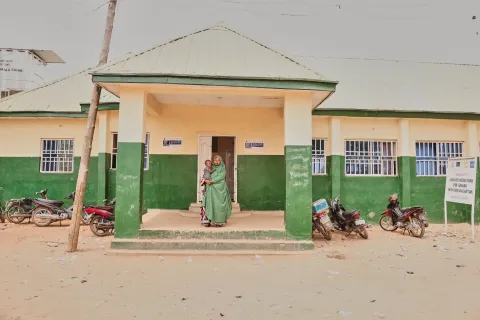
Three years ago, Taofikat (Mama T) and her husband walked into the labour ward of Kwara State Teaching Hospital, Ilorin, full of hope after waiting seven years for their first child.
What followed were hours of excruciating labour that stretched into a blur of pain. She was alone and denied food throughout the process. At the height of her agony, she tore off her clothes and tried to flee the ward, desperate to escape the pain. Eventually, she delivered her son, Abdulhafiz, through a caesarean section. It took more than a month before she was discharged, and the experience stayed with her.
Ten days ago, Mama T gave birth again. Another caesarean section in the same hospital. A beautiful daughter, Rahamat. But this time, her experience was very different.
She received pain relief before the pain became unbearable. Her mother and husband stayed by her side throughout labour and delivery. Four days after surgery, she walked out of the hospital with her daughter in her arms.
"I still can't believe the difference. Everything was seamless," she says, looking down at her daughter.
Her husband, Ismaila, remembers arriving at the hospital with just seven thousand naira in his pocket. Having spent more than a hundred thousand naira on the previous surgery, he knew it was barely enough for admission, let alone an operation.
He braced for the worst.
Instead, as an indigent patient, Mama T was immediately enrolled in the state health insurance scheme, supported by funding from the European Union (EU). Every cost was covered, including the surgery, medication and four days of care.
He still struggles to find words for the change.
"She is healthier today than she was after a month in the hospital the last time," he says.
"I don't think my wife would have survived if we had been turned away. I can't believe I didn't spend a kobo. I am very grateful for the care we received," he adds in a husky tone.

For Ismaila, the difference is clear. He watched his wife go through the same procedure twice. The first experience left her physically and emotionally exhausted. The second allowed her to recover with dignity and support. The difference was not chance. It was access to quality care and financial protection when it mattered most.

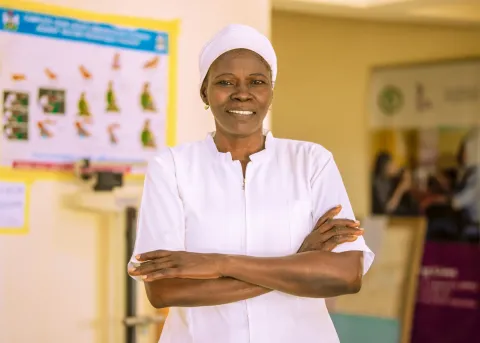
Dr Mariam Abdulbaki, a consultant obstetrician and gynecologist at the facility, has witnessed this transformation firsthand. She is among the facilitators cascading training in Basic and Comprehensive Emergency Obstetric and Newborn Care for doctors and nurses across the state.
According to her, some of the changes may seem simple, "allowing a companion in the labour room, permitting oral feeding, and using analgesia as standard practice" but when combined with structured mentorship for health workers, they have significantly improved both the quality of care and the confidence of healthcare providers.

Nurse Hannah Adewale, one of the mentees, describes the change in simple terms:
"Gone are the days when nurses and mothers would be fighting in the delivery room. Now both health workers and mothers are happy after a successful delivery."
Mama T's experience is not an isolated success. It reflects what is possible when quality healthcare and financial protection come together at the point of need.
Funded by the European Union and implemented by UNICEF and UNFPA in partnership with the Kwara State Government, the Strengthening Access to Reproductive and Adolescent Health (EU-SARAH) initiative continues to improve health outcomes for women, adolescents and children by removing barriers to care and addressing harmful social norms.
Taofikat's story is one of many being rewritten through the initiative. Every safe delivery, every mother who returns home healthy with her baby, and every family protected from the financial burden of healthcare reflects a health system that is becoming more responsive to the needs of women and children.
For Mama T, that change means being able to hold her newborn daughter and look to the future with hope. For Kwara State, it is a reminder that when women have access to quality care delivered with dignity and compassion, childbirth can be what it should be: a celebration of life.