Hand washing, key to delivering quality healthcare services to Nigeria’s children and women
We go to our patients with clean hands, so we don’t spread infections in the clinic

Mrs. Helen Alumunku joins colleagues across the globe to celebrate the Global Handwashing Day, she smiles confidently as she goes about her daily routine as a Chief Nursing Officer in charge at the Primary health care clinic in Ankpa/Wadata ward, Makurdi, Benue state. Nurse Helen said, “we go to our patients with clean hands, so we don’t spread infections in the clinic”. She always washes her hands with soap and water before and after attending to each patient at the clinic.
“I have worked in the health care sector for twenty-seven years. As the chief nursing officer in the clinic, I issue daily duty schedules to staff under me, monitor & supervise them, ensuring their welfare is guaranteed, making sure patients are well attended to and cared for”.
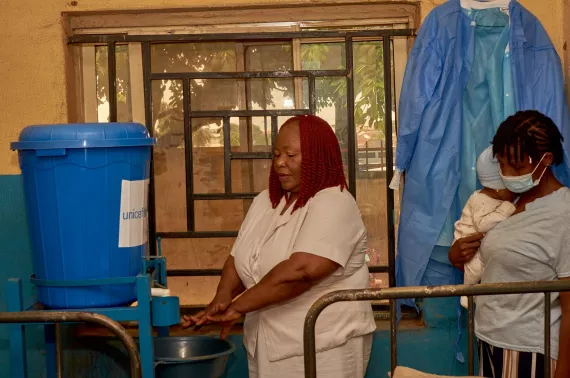


At each clinic day, I educate pregnant and nursing mothers and other patients on personal hygiene practices with emphasis on regular handwashing with soap and water to avoid spread of disease such as diarrhea, typhoid and other childhood illnesses
Handwashing with water and soap is the most cost-effective health intervention to reduce both the incidence of diarrhea and pneumonia in children under five. It is most effective when done using water and soap after visiting a toilet or cleaning a child, before eating or handling food and before feeding a child.
Global evidence has shown how such practices lead to improved health and nutrition, which is essential to the growth and development of children.
With the COVID-19 pandemic persisting, hand washing remains key to reducing the infection rates and trends. Global response efforts to the COVID-19 pandemic have created an unprecedented time for hand hygiene. Yet progress remains far too slow for the most vulnerable, underserved communities with poor access to water for hand washing.
Further long-term investment in water, sanitation and hygiene can help prevent most health crisis. It also means fewer people falling ill with respiratory infections, fewer children dying from diarrheal diseases, and more pregnant mothers and newborns protected from preventable conditions like sepsis.
The latest data show that some progress has been achieved since 2015. For example, the global population with access to basic hand hygiene at home has increased from 5 billion to 5.5 billion, or from 67 per cent to 71 per cent. However, if current trends persist, 1.9 billion people will still not have access to basic hand hygiene by the end of the decade.
Nigeria’s MICS 2021 reports revealed that only 29.7 percent of its populace have handwashing facilities where water and soap are also present, with only this proportion of households likely to meet the SDGs criteria for a “basic” handwashing facility.
Nurse Helen said “the facility plays host to children, pregnant women, adults and an entire population of 31,666 people yearly with all of them having regular access to hand washing facilities provided by Benue State Rural Water Supply and Sanitation Agency (BERWASSA) and UNICEF.
"We hardly run out of hand washing supplies such as soap, as UNICEF, other NGOs and the Government regularly provide some of the materials as well as commodities needed for hand washing, just as we recently took delivery of a hand washing station from UNICEF through BERWASSA. We don’t run short of supplies ,hence, no challenges”, Helen said.
UNICEF has worked over many years with the Government of Benue State, Nigeria on cost effective interventions to develop and promote better water, sanitation and hygiene (WASH) practices, integrating same in other State’s related health care services to help curb the spread of diseases and deliver better health outcomes for improved child survival and development.