Clean Water for the Flood Displaced
Displaced by flood and stripped of their livelihood, UNICEF activated its rapid response mechanism to enable a community in northeast Nigeria to regain their dignity and a sense of normalcy.

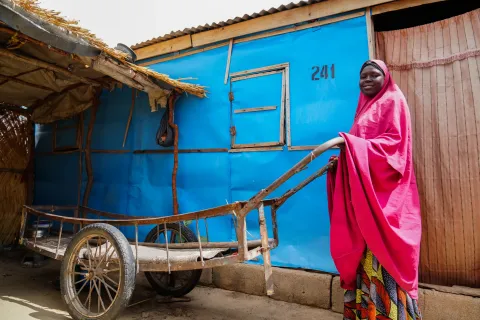
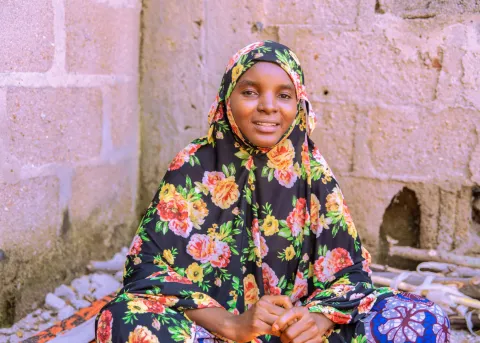
A fatigued group sits huddled together by the bank of the Chikuriwa Dawasa road, camped in small white tents on an expansive patch of hurriedly cleared land. This is where over 2,000 people displaced by the recent floods, from Garin Kolo their ancestral land in Jakusko, in northeast Nigeria, now live since August.
For the displaced population, the flood was a terrible hand dealt by fate.
“We did not see it coming at all. It was the first time we experienced flooding in our community,’’ said Ibrahim Zakariya, the Camp Secretary.
The roaring floodwaters overwhelmed houses and submerged farmlands, destroying crops and entire households in its wake.
“We have nothing left,’’ added Zakariya. A tall lanky man, he waved his hands around the camp, revealing the desolation that the community has been reduced to.
Harmattan, the dusty north easterly winds were in the offing, and the community was preparing for harvest right before the flooding incident occurred.
Now, food is a luxury at the camp with over 1,000 children.
In northeast Nigeria, a region already battling protracted armed conflict and its lingering impact on economy of locals, the effects of climate change have been even more devastating.

UNICEF, with funding support from the Swedish International Development Cooperation Agency (SIDA) has activated its Rapid Response Mechanism (RRM) protocol to provide prompt support to people displaced by emergencies.
This is helping to complement efforts by the Yobe State Emergency Management Agency (SEMA) to provide relief for displaced persons at the camp.
“We need food and more drugs. We are hungry because our farmlands are all gone. We need more support. We have been managing here since August 16,’’ Zakariya added.
By design, the RRM bypasses established humanitarian approaches to ensure quick and sufficient support for children, women and households affected by natural and man-made disasters.
UNICEF RRM
Between January and October 2025, UNICEF and partners activated RRM in 18 local governments across Adamawa, Borno and Yobe states.
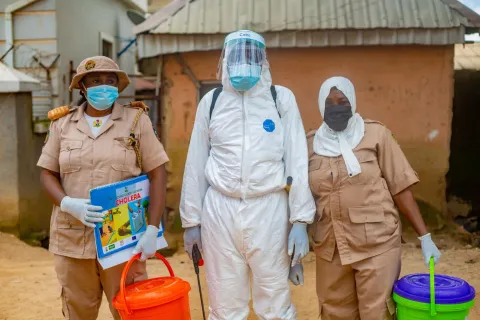
- Covering nutrition, sanitation and multipurpose cash assistance, the response has been largely triggered by flooding and cholera outbreaks.
- In 10 months, the RRM has supported nearly 120,000 affected people in northeast Nigeria.
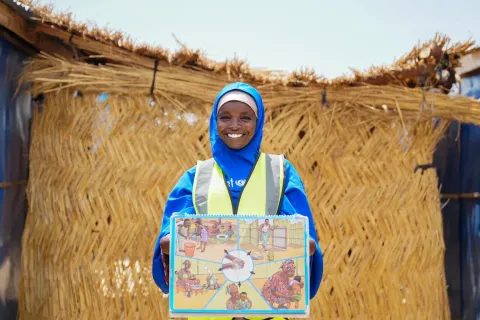
- In collaboration with a local partner, Water Supply and Sanitation Initiative (WASSI), UNICEF is providing daily water trucking to facilitate sanitation and basic hygiene.
- Over 80 emergency latrines and showers have also been constructed to prevent open defecation and contamination of water sources.
- The latrines are particularly protective of women and girls – it is helping to preserve their dignity and reduction of gender-based violence.
- Through SEMA, UNICEF is also providing drugs for the treatment of illnesses such as malaria, typhoid and common cold.
- In collaboration with local partners, UNICEF has also commenced education classes with funding from Education Cannot Wait (ECW).

Across Nigeria, climate change and harsh weather conditions are resulting in displacement, loss of livelihood and subsequently, protection issues for children, adolescents and women.
For UNICEF such urgent relief responses have become the new normal.
“There are many organizations that have been coming to help us. Now we have toilets and water.” Zakariya shares with great hope.
Though UNICEF continues to play a pivotal role in building capacities towards such local collaborations in meeting the growing demand for humanitarian aid, clearly this transition for a sustainable future in this region needs a wider net of cooperation, funding and timely interventions from each stakeholder.