Temporary learning spaces restores hope for children after Myanmar earthquake
Nine-year-old Mg Zaw can’t wait to return to learning — and to one day build homes that won’t fall.
- English
- မြန်မာ
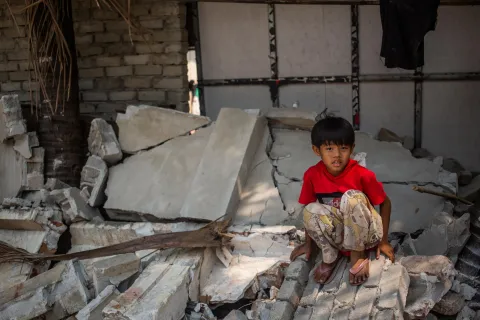
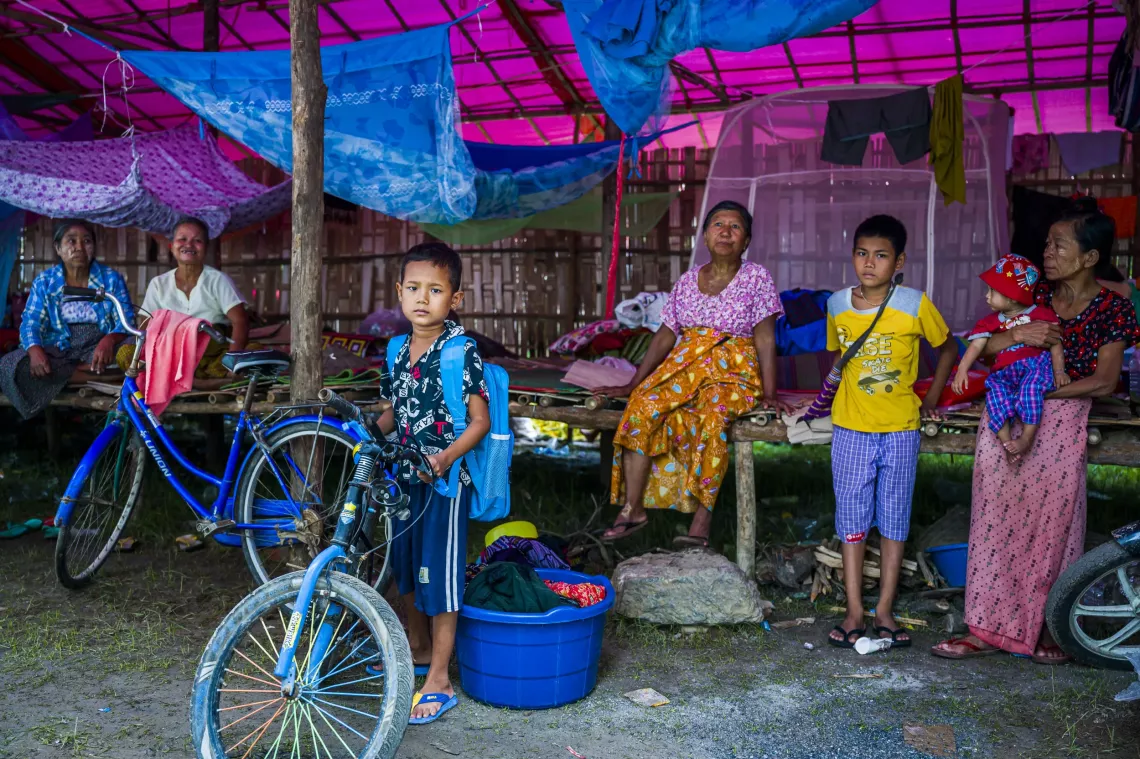
Rain clouds gather over a temporary shelter in a monastery compound in central Myanmar. The concrete road leading into the area bears deep cracks from the earthquake. Along the way, muddy streets are lined with half-collapsed homes and leaning wooden structures. Inside the monastery’s crowded grounds, children play cautiously under the watchful eyes of their parents.
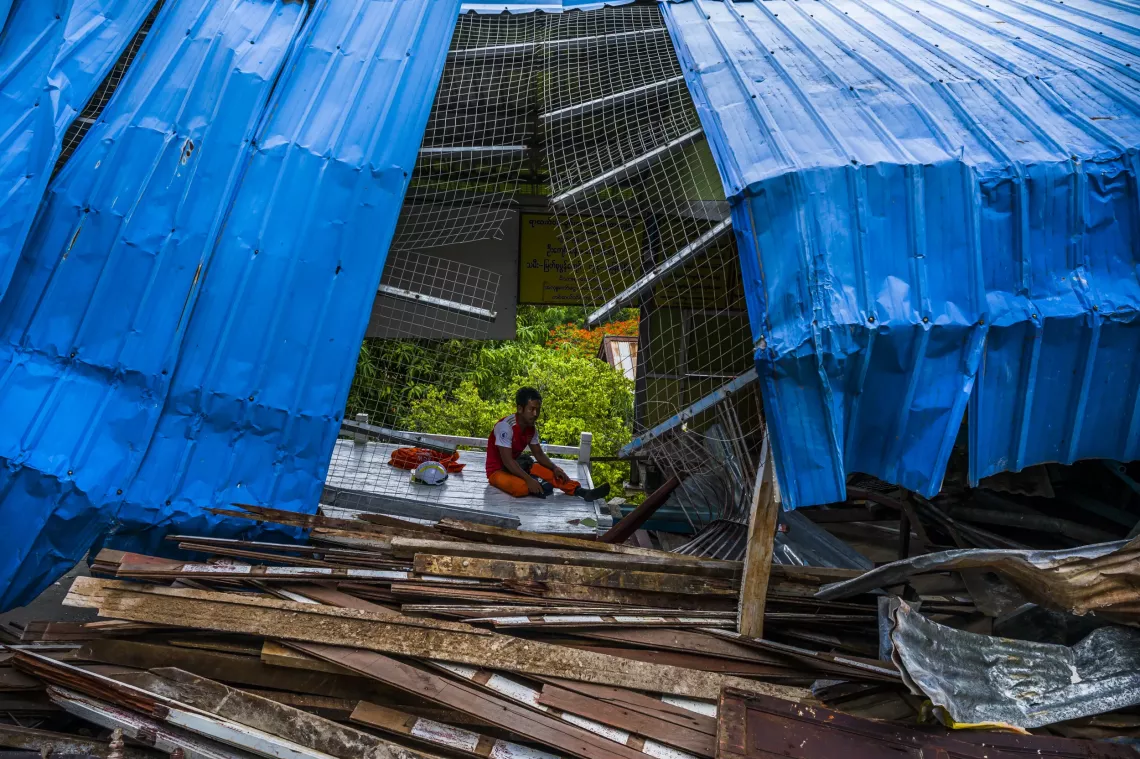
Just two months ago, nine-year-old Mg Zaw 1and his family lost their home in the devastating 7.7 magnitude earthquake – the worst in over a century – that struck central Myanmar on 28 March. “I was playing with my friend,” the boy recalls. “We were getting onto a bicycle when everything suddenly started shaking. We both fell off. I was very scared – it was the first time I felt an earthquake. I didn’t know what to do.”
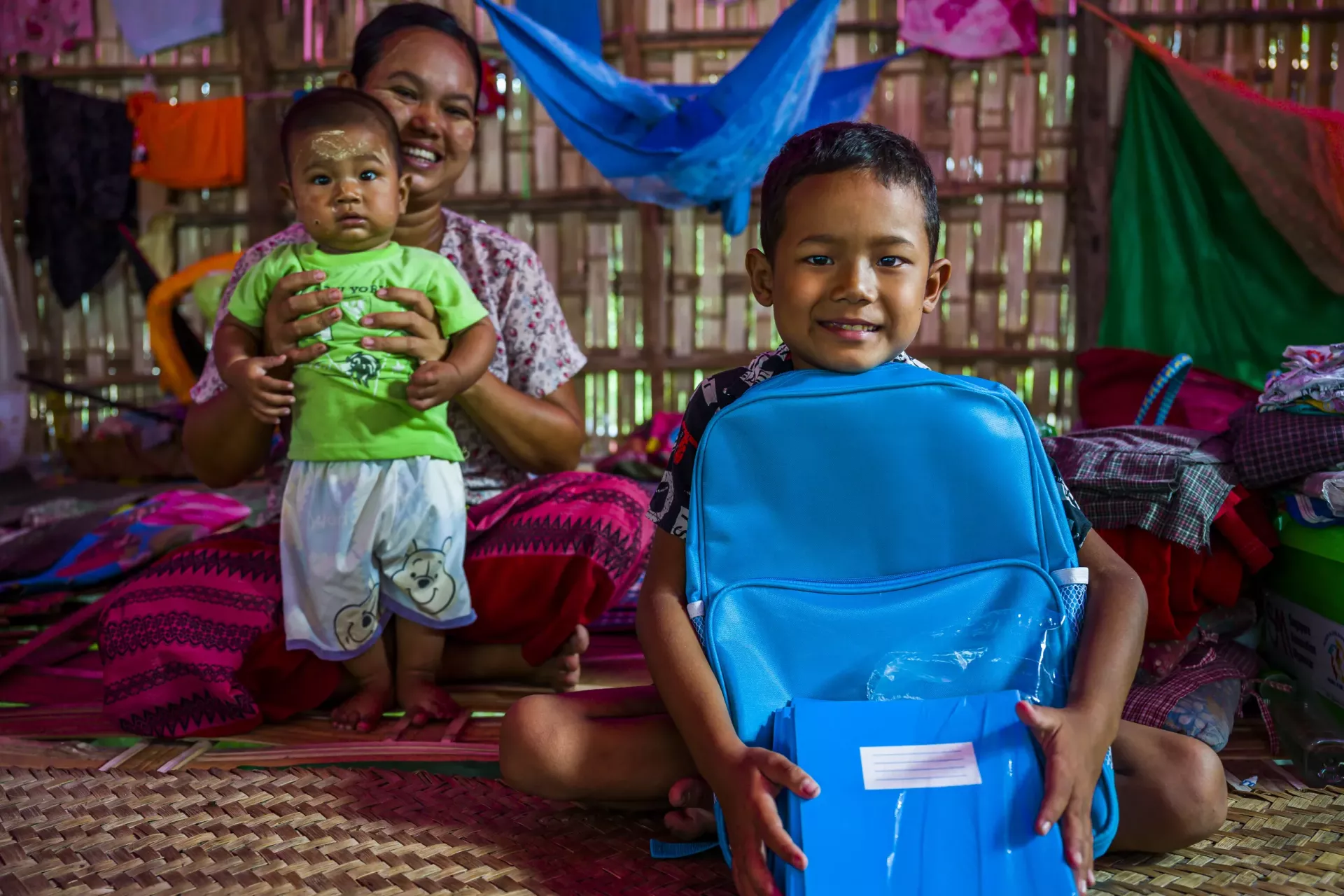
His mother, Ma Thida, 32, sits nearby on the bamboo floor of the crowded shelter, holding her youngest child, a 7-month-old baby. Her voice is steady, but her exhaustion shows.
“Our house was too damaged to live in safely,” she says. “We are staying here with about 30 other families. The toilets are far away, and it is not easy to get clean water here. We still cannot sleep well at night because of the aftershocks.”
Before the disaster, Ma Thida worked as a daily-wage labourer, sometimes foraging bamboo shoots for extra income. Her husband, Ko Htun, was a house painter. But after the earthquake, collapsed bridges and broken roads made transport impossible and painting jobs dried up.
“Now he works as a labourer in a mango plantation,” she says. “But it’s temporary. After mango season, we don’t know what will come next.”
Life in the crowded shelter has been especially hard on Mg Zaw. His mother says he’s become withdrawn and moody since the earthquake — quiet at times, restless at others.
“He used to play happily with his friends every evening,” Ma Thida says. “Now he sits alone or clings to me. We had hoped that when learning restarted, it would help him reconnect with his friends and feel a little more normal again.”
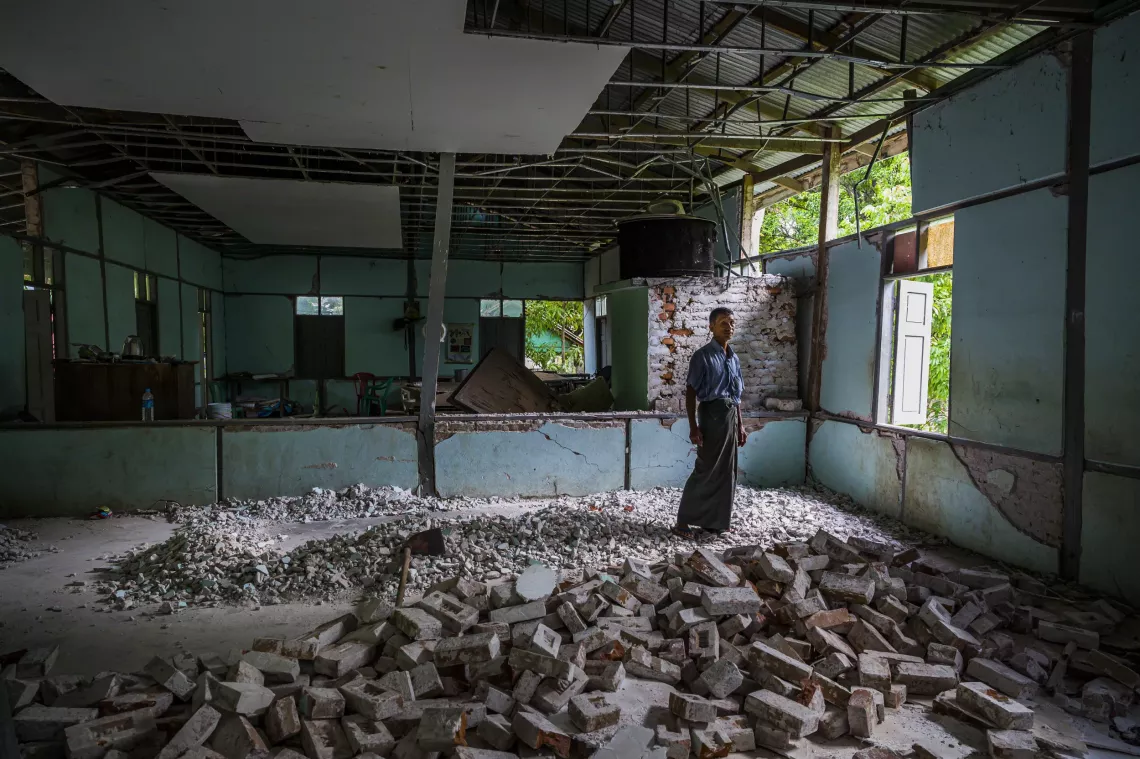
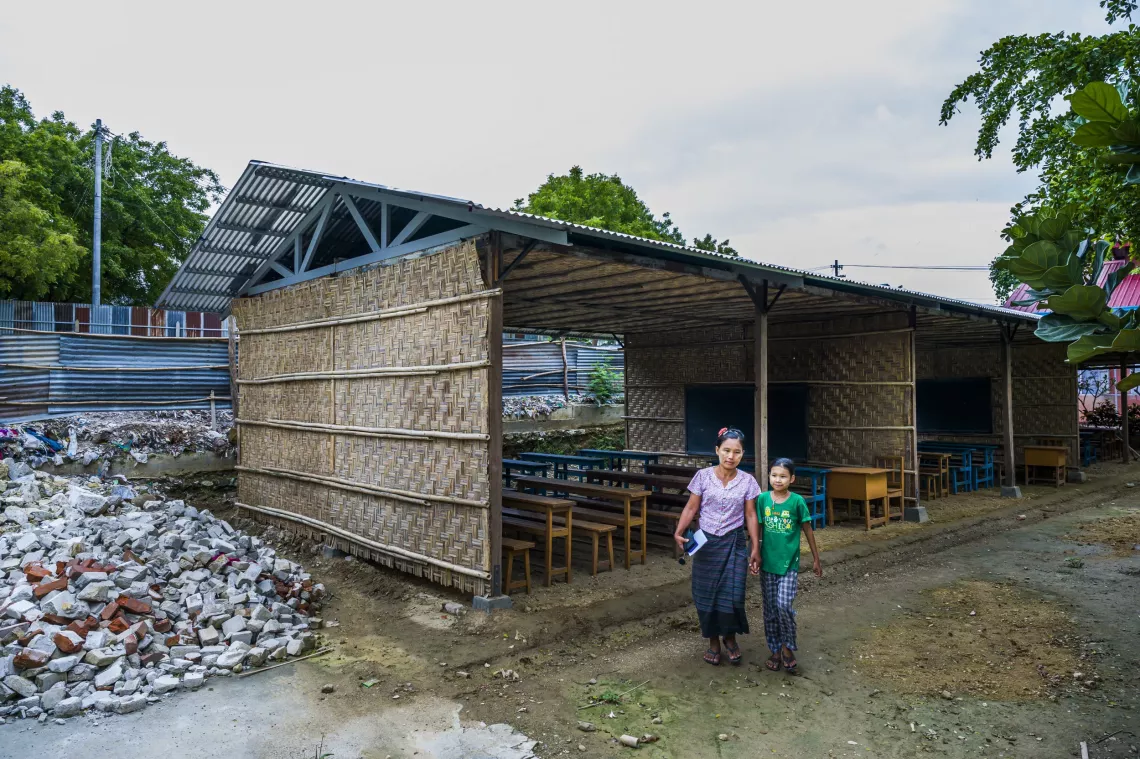
Despite the upheaval — and with many learning facilities in the area damaged or destroyed by the earthquake — Mg Zaw’s family has found a way for him to continue learning through a temporary arrangement at the nearby monastery.
“I will start Grade 3 next week. I am very excited to return to learning and see my classmates again,” he says, “our school building was damaged. They said the ceiling fell. But we’ll have temporary classrooms now.”
“This year will be very difficult to support our son’s learning because both my husband and I are struggling to find work,” she said. “We wanted to buy him books and other supplies, even a new bicycle to go to class. But with our income cut, we can only repair the old one and make do with what we have.”
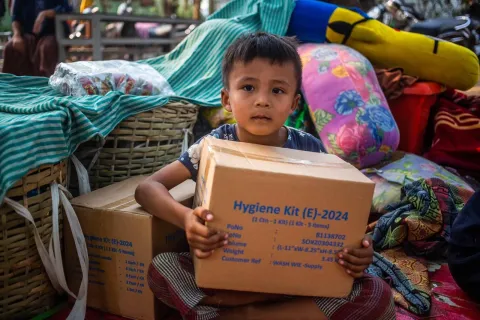
But UNICEF's Essential Learning Package has equipped Mg Zaw with the tools for him to return to learning: books, pencils, crayons, a ruler, and his prized blue schoolbag.
"Blue is my favourite colour and I love my new schoolbag,” Mg Zaw shared proudly, “I even have a blue bicycle.”
“This support has taken a big burden off our shoulders,” added his mother. “It means our son can go back to learning with the tools he needs — and with hope.”
For now, a teacher visits the monastery to give lessons, but the road to recovery will be long, with the family’s most urgent need being a safe place to live.
“Despite the difficulties, we are relieved that my son can continue learning. That’s what matters most for me,” Ma Thida says. “But we still need help to rebuild our home. We hope to find jobs so we can stand on our own again. Until then, we hope for more support.”
When asked of his future dreams, Mg Zaw’s eyes brightened, “I want to become an engineer. I will build houses that don’t collapse.”
In the aftermath of devastation, dreams like his become the foundation for recovery. The road ahead is long, but with sustained support, families like Mg Zaw’s can begin to rebuild.
With the support of donors, UNICEF teams are working closely with local partners and community networks to ensure that children can continue learning despite the disruption — offering not just supplies, but a sense of stability, routine, and hope.