Protecting children from violence in their homes
Keeping children safe
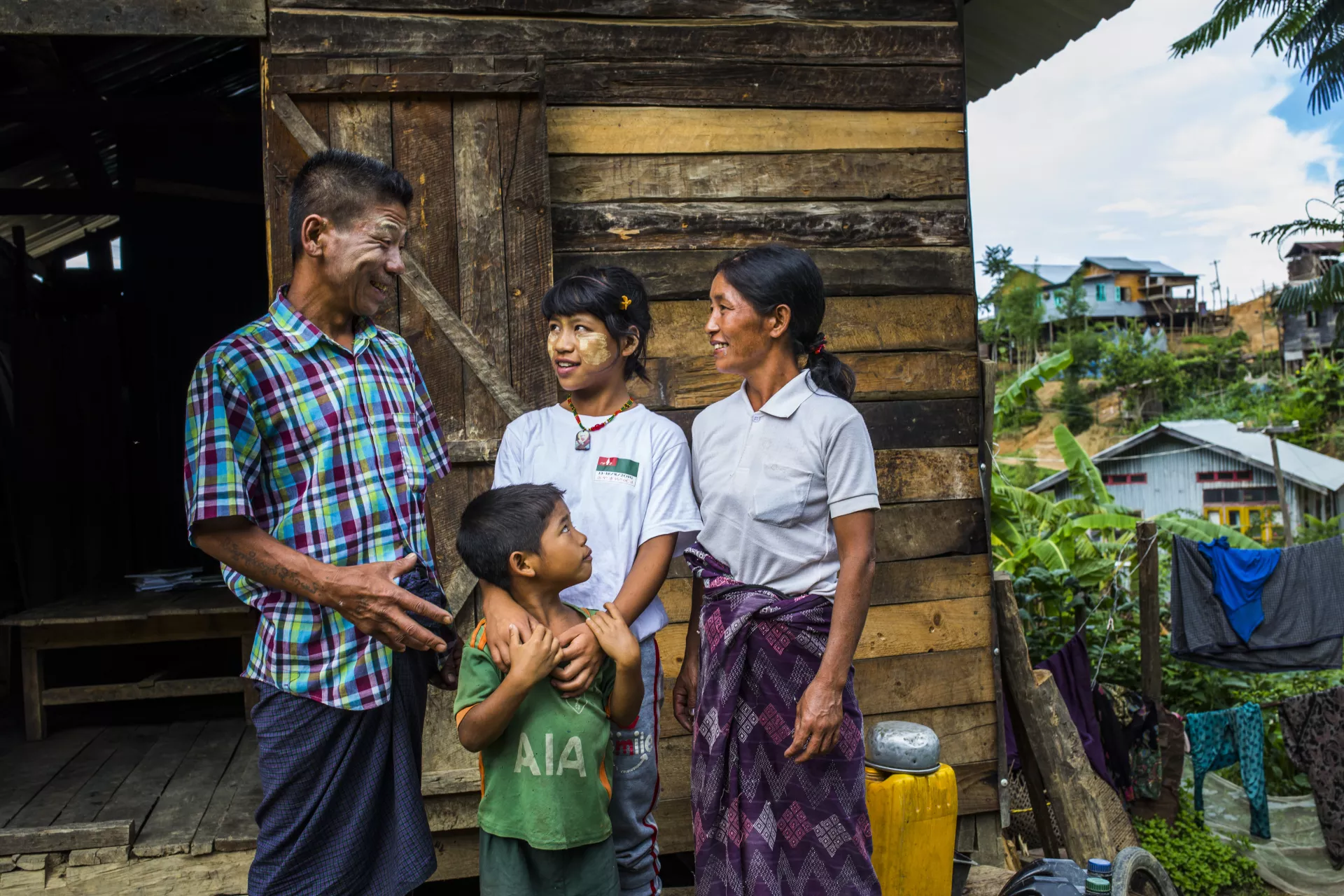
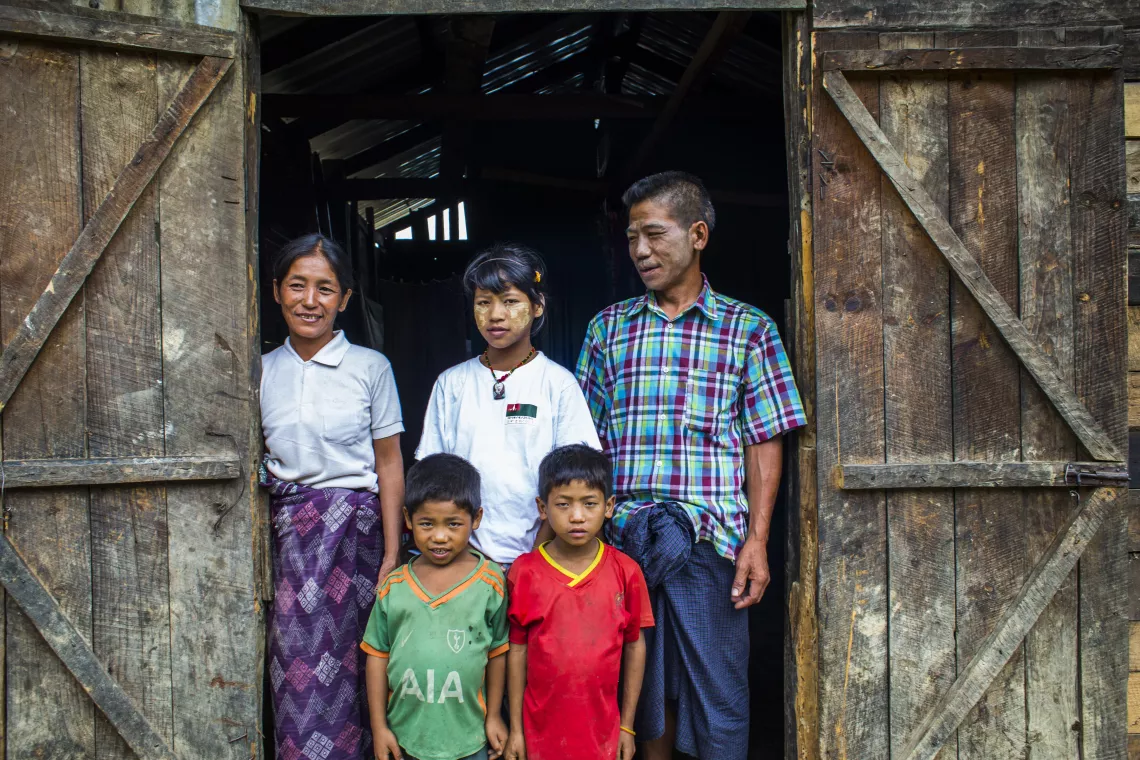
All their lives Man Lam Cing, 13, and her two little brothers, 6 and 8, have been living in a violent situation.
Every afternoon around 3pm, their father Hau Sian Mung, 42, would start drinking, either at a shop in the village or at home. A few hours later, he would inevitably start fighting with their mother, beating her and punching the walls. Their mother would leave the house angrily and not return for the night. At those times, Man Lam Cing felt terrified of her father and was unable to sleep. She had to soothe her two younger brothers who would be sobbing in their dreams.
“Once my father was about to throw an axe at my mother. Neighbors stepped in and stopped him,” Man Lam Cing recalled. “All because he was drunk. I asked him to quit drinking but he said he couldn’t.”
After losing their home in a fire, the family is now living in a small wooden house the community helped to build for them. Man Lam Cing and her brothers go to the Tonzang Middle School close to the village in Tedim Township in northern Chin State. Their alcoholic father and mother struggle to make ends meet and can’t afford to buy school uniforms.
Concerned about the violence the children were witnessing on a daily basis, one of the family’s neighbours informed Martha San who works for Karuna Mission Social Solidarity (KMSS), a Catholic social network.
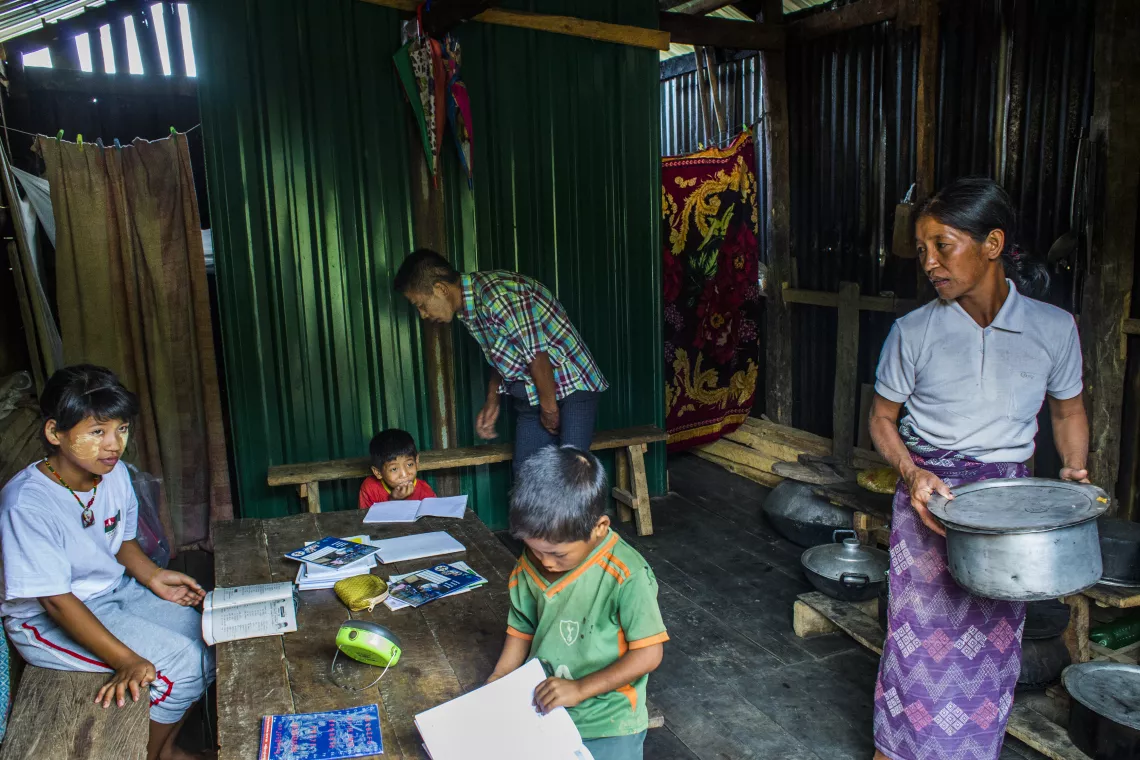
Trained by UNICEF working for child protection in Myanmar, Martha San started engaging with the parents, discussing their behaviours and the impact on their children’s life. Hau Sian Mung told her that drinking helped him to forget about his exhaustion from working in the fields all day.
“I drank alcohol everyday because I was so tired. Then I’d lose control and do things to my children’s mother. Once my daughter got terrified and left the house. I didn’t know where she went,” remembers the remorseful father.
Violence against children includes physical, sexual, and emotional abuse, as well as neglect and deprivation. Children are vulnerable to rights violations in homes, schools, communities, and at work. There are often several underlying and interconnecting complex risk factors that threaten children’s safety and wellbeing. Many vulnerable children in Myanmar live in the contexts of poverty, conflict and/or disaster.
UNICEF advocates for building comprehensive child protection systems as the best way to address the full spectrum of complex risk factors that children experience. This means taking action and creating the necessary links across key sectors like health, social welfare, education and the justice system.
Working to generate robust evidence to gain informed understanding of social norms that drive violence, exploitation and abuse, the aim is to promote positive behaviour change and bring an end to harmful practices.
According to Man Lam Cin, her father’s alcohol consumption has reduced significantly since her parents started counseling sessions with Martha San.
“Nobody, not even our relatives, has shown such care towards us. I felt kindness from Martha San and wanted to change,” revealed Hau Sian Mung.
Eint Eint Htoon, UNICEF’s child protection officer in Chin State, says that between December 2015 and June 2019 her office identified more than 300 cases of children suffering or at risk of rights violations, most in Hakha region. To strengthen the public’s awareness of preventing violence, exploitation, neglect and abuse, UNICEF staff and partners are attempting to engage with all communities in the region.
“If we did the awareness raising sessions in the village communities only, we wouldn’t get to speak with the children because many of them are at school,” explained Eint Eint Htoon. “So we also organize sessions at schools, to explain to children what their rights are and who they should inform if something happens.”
Man Lam Cing is hopeful about her father’s promise to give up alcohol.
“I want to see my parents being loving to each other. I’d like my father to completely quit drinking and live with us happily,”