The price of survival
A family’s struggle for paediatric HIV care in southern Myanmar

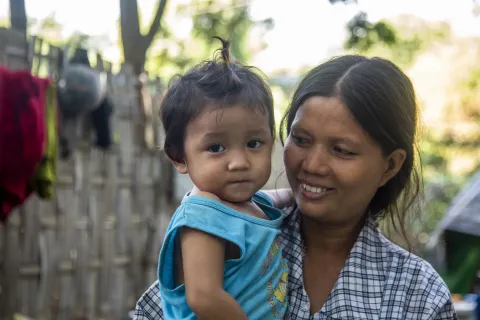
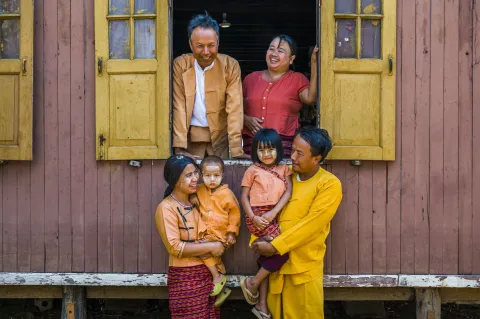
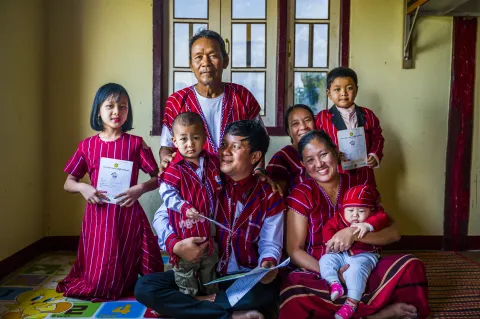
At sunrise in Tharyawaddy Township, Bago Region, dew hangs over the rice fields as Ko Oo prepares his fishing traps, his hands trembling slightly from the stroke that changed his life ten years ago. His wife, Ma Win, boils rice porridge while their daughters get ready for school. Before any breakfast is served, their eldest daughter, Su, age eleven, swallows her antiretroviral tablet — a tiny pill that decides the rhythm of their lives.
“We can miss many things,” said Ko Oo quietly. “But not her medicine in the evening.”
The family lives in a simple bamboo home. Nothing about it hints at the resilience held within its walls. Su was diagnosed with HIV when she was a baby, and when Ma Win became pregnant again, she received care that prevented HIV transmission to her two younger daughters. Today, both girls are HIV-free. Their family proves what access to proper care can achieve. Yet, what keeps Su alive is not only medicine — it is their relentless ability to reach it.
Although adult HIV treatment is now available much closer to communities, children still need specialized paediatric services, provided only at a handful of centres. For Su, the nearest qualified facilities are three hours by road to Yangon or more than three and a half to Pyay. Each trip costs at least 150,000 kyats just for transport. Su misses class; her father loses a day’s income from fishing; and the entire family holds its breath, hoping there is enough cash left for meals.
“It’s not the illness that is hard,” Ma Win explains. “It’s the road to reach the medicine.”

Sometimes, the process itself adds another layer of difficulty. In many clinics, children are required to be accompanied by an HIV-negative guardian when collecting ART, a precaution intended to protect them and maintain their privacy. For families like theirs, where both parents and the child are positive, this means finding someone outside the home who understands their situation and is willing to travel.
“It’s harder than asking for money,” Ma Win says. “You need someone who knows our story, and who will keep it private.”
Not every child has parents who can make the trip. Some are cared for by grandparents or other relatives who may struggle to travel long distances or may not fully understand why the treatment must continue without delay.
“We can make the trip,” Ma Win says. “But not every child has someone who will go that far for them.”
Across the township, Ko Ko, now twenty-one, remembers taking the same journeys as a child. He grew up on ART after being infected at birth. He recalls sleeping against bus windows, missing exams, and watching his mother borrow money just to afford transport — not the medicine itself, just the transport to get it.
“I don’t feel different from other young people,” he says. “But children get scared. They blame themselves. They blame their parents. They think the medicine means they did something wrong.”
Ko Ko now supports younger children as a peer volunteer. He once spent weeks comforting an eleven-year-old boy who refused to take his pills. “He didn’t need a doctor that day. He needed someone who had lived the same life,” he says.

Across many villages, volunteers and peer supporters trained with UNICEF support are helping families stay connected to care. They accompany children to clinics when parents cannot travel, explain treatment patiently to caregivers, and check on children who miss appointments. “Sometimes the medicine is the easy part,” one volunteer shared. “The struggle is helping families stay confident enough to continue.”
For parents like Ma Win, this support matters just as much as the treatment itself.
“They encourage us when we feel tired,” she says. “It helps to know someone is walking with us.”
UNICEF works with health workers and partners to help children and pregnant women access HIV testing, treatment, counselling, and early infant diagnosis even in difficult circumstances. These services protect both newborns and older children — but families like Su’s remind us that access is more than medicine.
“Su is healthy because she can reach her treatment,” her father says. “If it were closer, many more children could be healthy too.”
Their hope is simple: that paediatric care can be close enough for every child to reach it. With continued support to strengthen community services, more families in Myanmar can keep their children on treatment without long journeys or difficult choices. When services are close to home, parents can focus on raising their children — not on how far they must go to keep them healthy.
*Names have been changed to protect the privacy and safety of the individuals featured in this story.