Mother tongue helps learning in Chin State
Role of using local ethnic languages
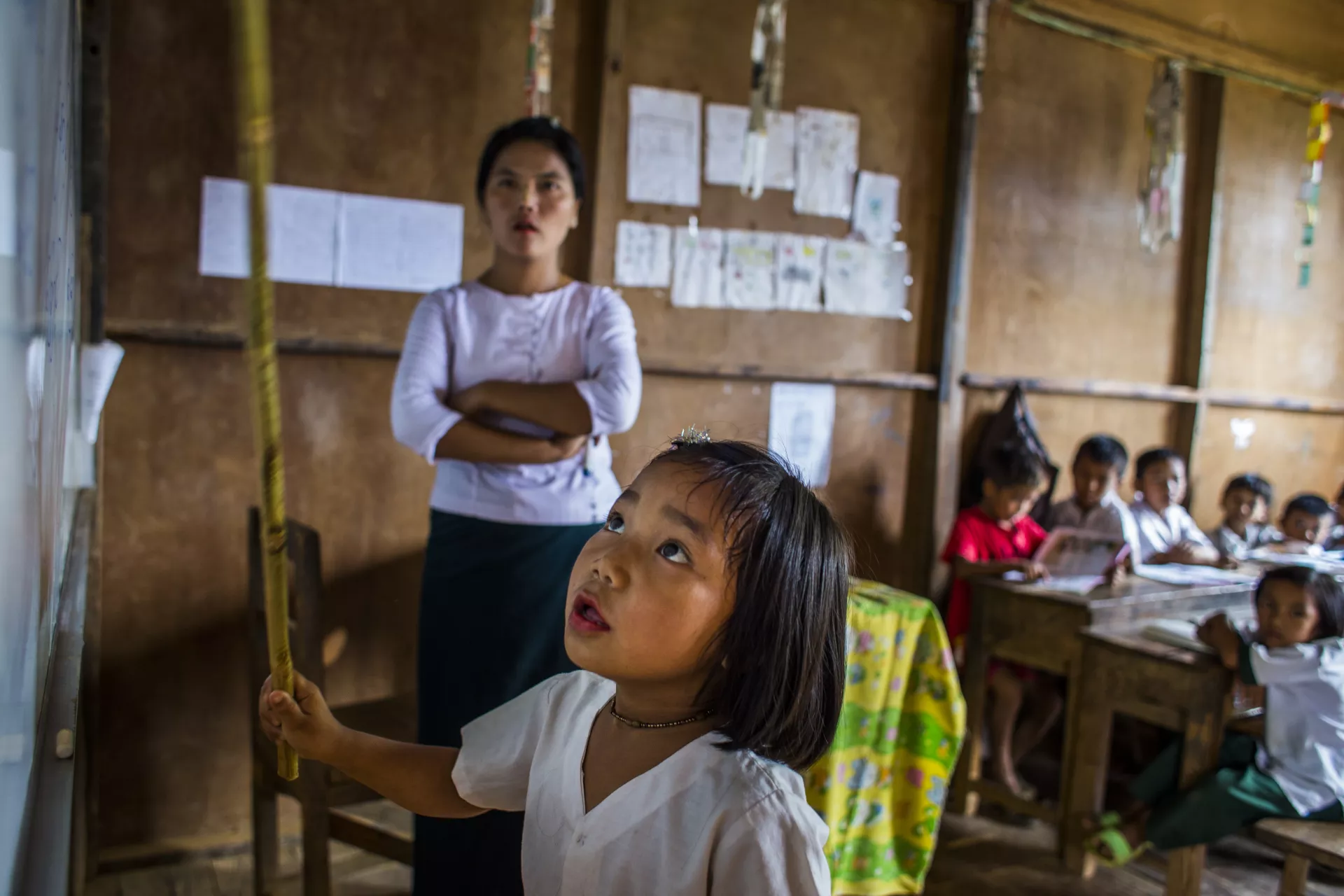
Amidst the thick clouds and steep mountains of Myanmar’s isolated northern Chin State, live people from more than 50 different sub-tribes speaking dozens of different dialects.
Throughout Myanmar, the national school curriculum is delivered in Myanmar language (Burmese), the country’s official administrative language. Until recently, teaching in ethnic languages was not possible.
Today, however, the use of local languages plays a significant role in education around Myanmar.
“When I was young many of my classmates dropped out after primary school due to language difficulties. They couldn’t understand the subjects being taught in Myanmar language, “explains Ning Za Man, 35, of Saizang village in Tedim Township, where the Zo people predominantly speak Tedim dialect.
When Ning Za Man became a teacher at Saizang High School six years ago, she realized she was able to develop close relationships with her students because she speaks their local dialect.
“Using the local language to explain and discuss the concepts and information helps the students understand the lessons which are written in Myanmar language,” said Ning Za Man.
Research suggests that children who attend a primary school that teaches in their mother tongue are less likely to drop out at secondary level.
“It’s a challenge to translate accurately certain Myanmar language words and terminology into the local Chin dialects, “explains Uk Cung, the headmaster of Saizang High School, which has 535 students, over a fifth of the village’s population.
“Sometimes teachers can’t find examples in the Chin context, to explain the meanings to the students,” said Uk Cung. “There are cultural, contextual and geographical differences between mainland and ethnic regions.”
UNICEF Myanmar supports the Ministry of Education and Ministry of Social Welfare to design and deliver various training programmes to in-service teachers so that they can engage more effectively with their students.
The training programmes focus on specific areas such as child-friendly school, school-based in-service teacher education, head teacher training, early childhood development training, primary life skills training, and non-formal primary education teacher training. The teaching and learning of Myanmar language for children whose mother tongue is not Myanmar is covered in the language enrichment programme

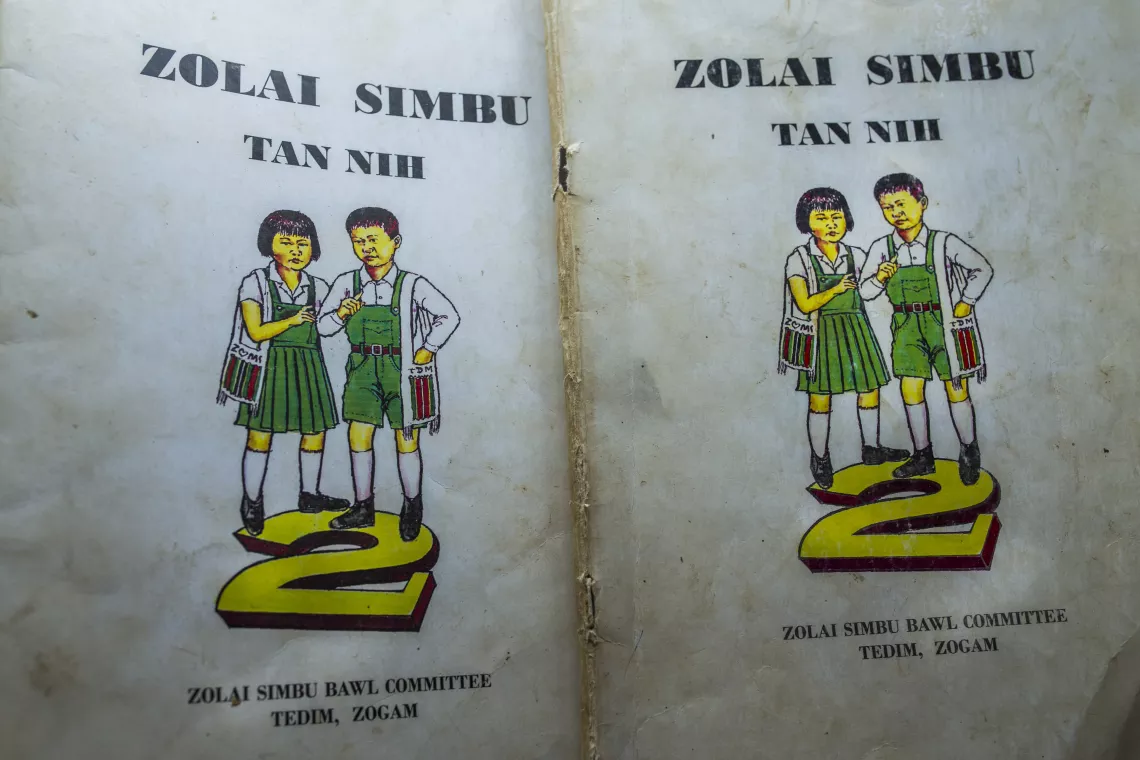
The latest government curriculum for primary levels in ethnic regions features daily sessions on the local culture, written in the local dialect exploring the region’s ethnic tales, songs and traditions.
Cing Lawh Man, 28, believes that including this local ethnic language and culture subject not only helps to sustain written ethnic languages, but also increases the communication and teaching in classrooms.
“My students seem to enjoy the local culture subject the most. They don’t need translations to understand what they read,” says this devoted teacher.

Teaching is not just a career for Ning Za Man and Cing Lawh Man, who experienced parroted rote-learning education. They are convinced that teachers today themselves need to obtain a better education to be able to share the learning with their students.
With accessible curriculum and qualified teachers, they believe, their students would elevate the school’s low rate of high school graduation.
As beautiful as it is remote, Chin State has the country’s lowest pass rates in high school matriculation exams.
Many children in Chin State give up education before finishing high school. Uk Cung says this is not because of the students themselves but is due to the scarcity of resources, like libraries with relevant books, the poor road and transport conditions, a lack of positive role models and, basically, insufficient support in every aspect of the students’ environment.
“These days, more children are wanting to attend and stay at school. Fewer are dropping out. Our challenge is to keep the students actively engaged with valuable learning until they finish high school,” suggests Uk Cung.