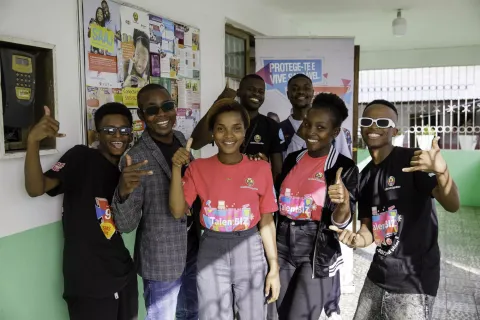
Young People Commit to Demystifying Taboos Around Menstrual Hygiene
UNICEF and its partners have been working with the government to reduce the stigma associated with menstruation through a variety of initiatives.

Cabo Delgado, Mozambique - World Menstrual Hygiene Day is celebrated on 28 May. To mark the occasion, the United Nations Children’s Fund (UNICEF), in partnership with IOM, UNFPA, Helvetas, BGIRL, and other NGOs, organised a webinar and community activities at the Secondary School of Pemba to engage young people in discussions on menstrual hygiene.
The two events—attended by both girls and boys—provided a platform to explore how menstruation is perceived within families and communities. Many participants shared personal experiences, revealing that taboos surrounding menstruation persist in communities across Cabo Delgado. Among these misconceptions is the belief that “menstruation is a disease.”
Experts present at the events addressed the participants’ questions and clarified that menstruation is a natural biological process. They emphasised that during their menstrual periods, girls and women need privacy, proper hygiene materials—including access to clean water—and support from those around them. Boys, men, and entire communities have an essential role to play in supporting girls and breaking the silence around menstruation. Menstrual hygiene should be a shared responsibility, openly discussed and understood by all.
UNICEF and its partners have been working with the government to reduce the stigma associated with menstruation through a variety of initiatives. These include broadcasting awareness messages on menstrual hygiene via community radio, distributing dignity kits containing reusable pads, improving access to water in schools and communities, and building toilets equipped for menstrual hygiene management.