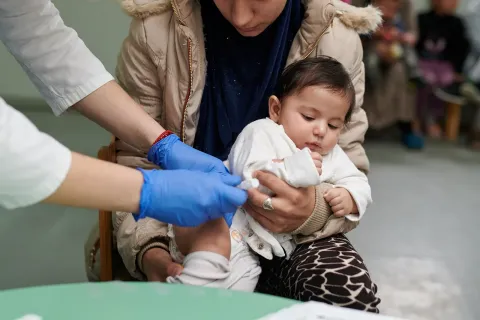
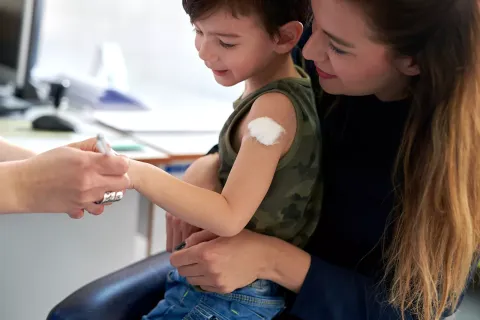
Growing support for vaccines in Montenegro
Almost every second citizen of Montenegro (42%) would get vaccinated against coronavirus if the vaccine were available

- Crnogorski
- English
- Shqip
PODGORICA, 25 December 2020 – Almost every second citizen of Montenegro (42%) would get vaccinated against coronavirus if the vaccine were available. This was confirmed by the latest Ipsos survey, which was conducted from 15 to 18 December on a nationally representative sample, with the support of the British Embassy in Podgorica and UNICEF.
During the past two months, the number of citizens who would get vaccinated against coronavirus has increased by 4%.
It’s good to hear that trust in vaccines is growing in this country. Well-tested vaccines approved by the WHO are the quickest route to get our lives and our economies back on track. Getting the vaccine couldn’t be more important in a country like Montenegro where the economy relies on public-facing services in the tourist industry. Personally I want to get on with my life too and I will have no hesitation in taking up a vaccine when it is offered.
In addition to this, compared to October, there has been a decrease in the number of citizens who are suspicious about vaccines. The percentage of those who disagree with the claim that vaccines are one of the best inventions in medicine and that many infectious diseases have been eradicated thanks to them has decreased from 22 percent in October to 17 percent in December.
The global COVID-19 pandemic is a reminder of what happens when there is no vaccine that protects people and communities from a highly infectious disease. The urgent need for the vaccine against COVID-19 indicates the crucial role of immunization in protecting lives and the economy.
Compared to October, the number of citizens who believe that a vaccine or medicine against coronavirus will soon be developed by pharmaceutical companies has also increased. Now seven out of 10 citizens (68%) think so, while two months ago this was the case with six out of 10 citizens (60%).
The fact that optimism among citizens is now higher is also indicated by an increase in the number of those who believe that the coronavirus outbreak has been curbed and will soon be over. Namely, 30 percent of citizens thought this in October, as compared to 37 percent now.
It is good that citizens’ trust in science and vaccines is growing, despite the large amount of misinformation and conspiracy theories that are accessible to everyone on this topic. Therefore, I urge citizens to check all the information with experts, i.e. doctors and reliable sources, such as the websites and social networks of the Institute of Public Health, the Ministry of Health, the Clinical Centre of Montenegro, local health centres, the World Health Organization and UNICEF.
Last year, the World Health Organization declared that indecision regarding vaccination – hesitation or refusal to be vaccinated despite the availability of vaccines – was one of the 10 biggest threats to public health.
The nationally representative sample for this survey consisted of 807 citizens aged 18 and over. Data collection was conducted through a telephone survey, with a questionnaire lasting an average length of 10 minutes, during the period from 15 to 18 December of this year. The key findings of this, as well as previous surveys on the knowledge, attitudes and behaviour of citizens regarding coronavirus are available on the UNICEF Montenegro website.