The deadly virus that causes paralysis in children
Vaccination has decreased the prevalence of polio by 99 per cent, saving more than 1.5 million lives. But outbreaks are a reminder that, until it is eradicated fully, the disease remains a risk to children everywhere.

- Crnogorski
- English
- Shqip
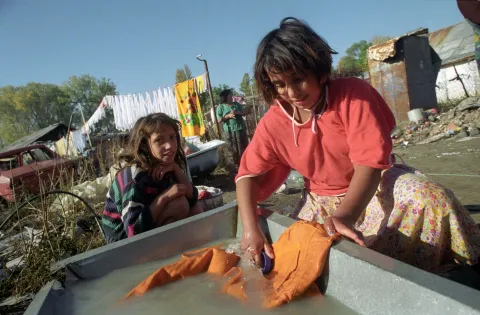
Poliomyelitis, or polio, is caused by a highly infectious virus. It is most often spread by the faecal-oral route, or through contaminated water or food. This is why polio cases are most often seen in areas that lack access to safe water and reliable sanitation, as well as those that have lower rates of immunization.
Anyone who has not been vaccinated can contract – and pass on – the polio virus. However, polio is most common in children under five years of age. There is no cure – only prevention in the form of the polio vaccine.
For around nine in ten people who contract polio, symptoms are mild or non-existent. This, along with an incubation period that can last for more than a month, makes it easy for the disease to spread. If they occur, symptoms can include fever, neck stiffness, fatigue, headache, vomiting, and pain. For around three in 100 people infected, polio can cause meningitis, or inflammation of the brain.
For around three out of every 10 people who contract polio, the symptoms of polio disappear, only to return years later – usually 10 to 40 years after the infection. This condition, called post-polio syndrome (PPS), includes the weakening and wasting (atrophy) of the muscles, fatigue, and joint and muscle pain.
For around one person out of every 200 infected, polio causes paralysis. This paralysis is irreversible and life-long. For up to one in 10 of those who are paralysed, this paralysis causes death. This is due to the paralysis of the breathing muscles.
By the mid-20th century, polio epidemics were becoming more and more common. Before the introduction of the polio vaccine, tens of thousands of people, most of them children, died or were paralysed by polio every year.
A vaccine success story
The first effective polio vaccine was created in the early 1950s – and the physician who developed it was so sure of its safety, he tested it first on himself and his family. In 1954, this inactivated poliomyelitis vaccine (IPV) was rolled out to more than 1.5 million children in Finland, Canada and the United States. These tests further proved that the polio vaccine was both safe and effective.
A few years later, a second type of vaccine, the oral polio vaccine (OPV), was created. Tests on more than 10 million children proved that the oral vaccine, too, was safe and effective.
While these vaccines saved thousands of lives, not every country had equal access to them and many children remained unvaccinated. Even in the 1980s, more than 350,000 people around the world, most of them young children and babies, continued to contract polio every year.
In 1988, partners including UNICEF, the World Health Organization, national governments and others came together to launch the Global Polio Eradication Initiative. Thanks to the alliance's global roll-out of the polio vaccine, global case rates dropped dramatically.
Since 1988, cases of polio have decreased by 99 per cent. Around 1.5 million lives have been saved and 20 million people have avoided paralysis.
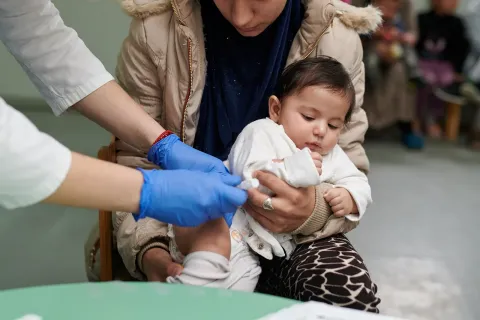
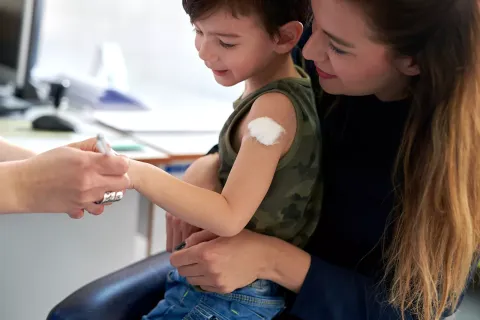
As a partner of the Global Polio Eradication Initiative, UNICEF helps vaccinate more than 400 million children against polio every year. It also manages the procurement and distribution of more than 1 billion doses of the vaccine annually – more than half of the global total.
Is polio still around?
Despite this extraordinary success, polio still exists. It is a particular risk in communities with low rates of immunization, such as those where healthcare services have been disrupted, and in areas that lack functioning water and sanitation systems.
This means that the risk of polio can be yet another threat for children who are experiencing war and conflict.
In Ukraine, polio returned shortly before the escalation of the war, with one child paralysed and 19 others testing positive for the virus by the end of 2021. To avoid further outbreaks, UNICEF has helped procure and deliver several million doses of the polio vaccine to children in Ukraine. As of 2023, the country had more than 80 per cent vaccination coverage. But 95 per cent coverage is required to prevent outbreaks from occurring.
Earlier this year, a 10-month-old baby was paralysed by polio in the Gaza Strip – the first registered case of a person contracting polio in Gaza in more than 25 years. Polio has also been found in Gaza's wastewater. In response, UNICEF and other partners have mobilized to vaccinate around 560,000 children in the Gaza strip.
Polio also remains endemic in Pakistan and Afghanistan, and there have been recent outbreaks in countries including Sudan.
However, polio is not just a risk to children in these communities. Until it has been eradicated 100 per cent, polio will continue to be a threat to children around the globe. This is especially true because of how quickly and silently it spreads, meaning one case can rapidly become hundreds – with some people experiencing life-long consequences.