Garlic, hot brandy and bacon are our body armour against coronavirus
Fact checking

- Crnogorski
- English
- Shqip
With the wealth of information on how the new coronavirus can be treated, UNICEF’s young reporters have decided to focus on similar misinformation by using the example of an article published by the regional portal Pink.rs.
This article itself is based on statements by citizens from the Serbian region of Sumadija. This is one of those claims:
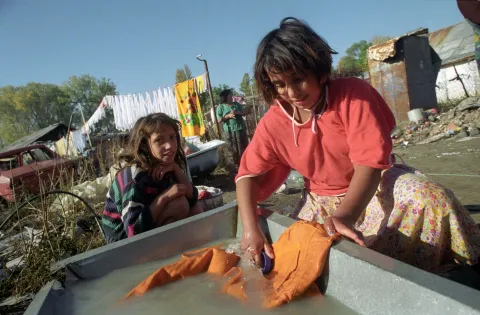
“Maybe the doctors say it doesn’t help, but garlic, hot brandy and bacon have always been our body armour. That’s why our cheeks are rosy, and we are so healthy. We are not afraid of a virus from that distant country of China ending up in our village – we rarely see any guests coming here,” says Milorad from the small town of Dragacevo, wearing a big smile.
The sensationalist headline of this article, “HOMEMADE AND MEDICINAL – Garlic, hot brandy and bacon are our body armour against coronavirus” leads the reader into thinking that this is a fact, and that experts have proven that coronavirus can be cured using these foods. Only after reading the whole text can we understand that it is based on statements by people from Sumadija.
The article, which has been shared by other regional media, such as the Pink.rs, Kurir, B92 and Alo web portals, does not offer the opinion of doctors or experts in this field.
UNICEF’s young reporters consulted official sources and found out the following:
- The World Health Organization says that drinking alcohol cannot protect us from coronavirus and that it can be dangerous. “Frequent or excessive alcohol consumption can increase the risk of health problems,” the WHO website states.
- The WHO also says that garlic is a healthy food that may have some antimicrobial properties. However, there is no evidence that consuming this vegetable can protect people from the new coronavirus.
Due to a large amount of misinformation about alleged coronavirus medicines, the WHO has announced that spraying the skin with alcohol and chlorine does not help if viruses have already entered the body, stating that chlorine, bleach, ethanol and chloroform-based products should not be applied to the skin.
More information on coronavirus myths can be found on the WHO’s website: https://www.who.int/emergencies/diseases/novel-coronavirus-2019/advice-for-public/myth-busters
UNICEF volunteers - young reporters are urging the citizens of Montenegro to check information whose accuracy they are not sure of, and to avoid using “drugs and medicines” that have not been recommended by professionals.
In an effort to contribute to preventing the dissemination of coronavirus misinformation and to promoting credible sources of information, UNICEF’s young reporters have decided to check the accuracy of information published on social media and in the media that has attracted public attention. In verifying the accuracy of information, they have followed the example of the Public Disclosure Platform “Raskrinkavanje“ and partly used its publicly available methodology.