Media literacy (launched in 2018)

Children are growing up with media since early childhood. What kind of impact does this have on their development?

UNICEF Montenegro
Media literacy campaign logo
UNICEF Crna Gora

Media literacy (2018)

Children are growing up with media since early childhood. What kind of impact does this have on their development?

There are numerous studies showing how violence in media can contribute to increased aggression in children, as well as how educational television, for example, can teach children important skills. Clearly, the impact that media have on children depends, in the first place, on the media content to which they are exposed.

According to the UN Convention on the Rights of the Child, children need to be protected from harmful media content. At the same time, the Convention says that children have right to participate in the media and have their voices heard. Therefore, media education and media regulation are not mutually exclusive.

For this reason, UNICEF is uniting efforts with Montenegro's Agency for Electronic Media, to, at the same time, protect and promote children in media. The aim of the campaign is to promote media literacy among parents and children, to improve the quality of media reporting on child rights issues and to raise the quality of media programs for young people in Montenegro.

Let's choose what we watch is the campaign key message, but using media is just one part of the story. This campaign is about helping children grow up into media literate citizens. This means that they will not only be able to choose what they watch every day, but also to analyze and critically assess what they are watching, as well as to produce different media contents and share them with others in a safe and responsible way. From this point of view, media literacy is an essential part of the “democratic citizenship“.

Parents, schools, media, NGOs and government need to work together to raise media literate citizens and build a more democratic, inclusive and healthy media environment. For this reason, the campaign has partners from all sectors of the society.
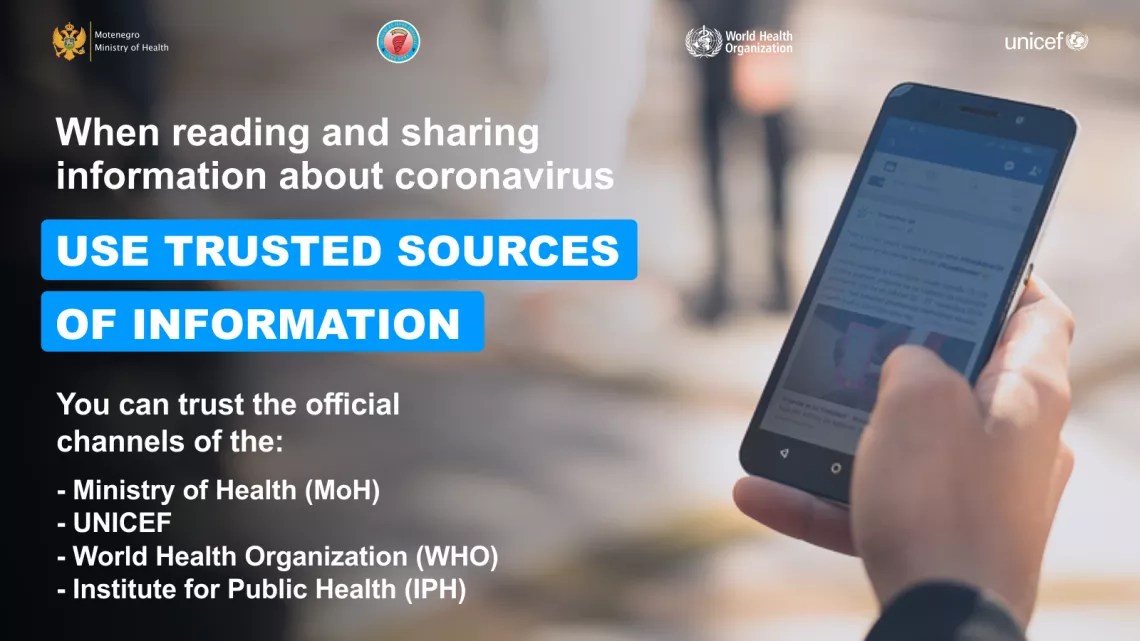
Visual about using credible source of information
UNICEF Montenegro

To celebrate CRC@30, young reporters takeover political TV talk show Nacisto

Embedded video follows

Media literacy campaign videos

Embedded video follows
UNICEF Montenegro

Media literacy campaign news and stories

Citizens choose what they watch

Citizens more likely to talk about it to their children

Read now

Rambo Amadeus: the society of tomorrow depends

on media literacy development today

Read now

Young reporters take over the Ministry of Culture

On the occasion of the 30th anniversary of the adoption of the United Nations Convention on the Rights of the Child, young reporters take over Ministry of C

Read now

Media literacy campaign publications and surveys

Parents, children and the media

This survey was conducted by Ipsos in December 2020, with UNICEF’s support.

Read now

Public opinion in Montenegro about climate change

Nationally representative survey among the 18+ citizens of Montenegro

Read now

Key findings - Children, parents and media in Montenegro

Media literacy – ability to differentiate facts from fiction

Blogs by young reporters of the media literacy campaign

Let's not betray our planet!

Let's listen to Greta and be like her – brave and determined – and follow true values. I believe in us!

Read now

How to bare one’s teeth?

Is violence the only response to the violence we want to end?

Read more

I choose to be a child, what about you?

Reality TV programmes were trending on YouTube in Montenegro throughout 2018.

Read more

Fighting for your own, whatever it takes!

One in every ten children aged 9–17 years in Montenegro has been present at a fight between peers recorded by one of their friends who then posted it online

Read more