World Hearing Day: universal screening for every newborn in Moldova
Every newborn in Moldova benefits from hearing screening before discharge from the maternity hospital, marking an important milestone in child health services
Since January 1, 2024, universal neonatal audiological screening has been mandatory and free of charge, enabling early detection of hearing impairments and fast access to life-changing treatment and rehabilitation.
With around 20,000-25,000 births each year, the reform has a nationwide impact on children’s development, communication skills, and social inclusion.
Following the screening and primary investigations of around 24,000 newborns, deafness was confirmed in 21 children with various forms of hearing loss. All these children have been included in prosthetic rehabilitation programs, either through hearing aids or cochlear implants, and are already benefiting from auditory-verbal rehabilitation.
For children with moderate hearing loss, hearing aids amplify sounds and support language development. In cases of severe or profound hearing loss, a cochlear implant directly stimulates the auditory nerve and allows the brain to process sounds. When implantation and rehabilitation are carried out early, ideally before the age of two, children can develop functional speech and language skills.
The program builds on an investment supported by UNICEF and the Government of Japan. In 2024, the Ministry of Health distributed 40 neonatal screening devices to perinatal centers across the country. The equipment, worth approximately 4 million lei, ensures that all public maternity hospitals can provide screening services.


From sustained intervention to national public policy
Based on this consolidated infrastructure, starting January 1, 2024, by order of the Minister of Health, universal neonatal audiological screening was introduced as a free and mandatory investigation for all newborns in the Republic of Moldova.
,,The early detection of hearing problems in children means real chances for future development and integration. The implementation of universal audiological screening is an important achievement for the healthcare system of the Republic of Moldova”, says Dorina Savoschin, Head of the Mother and Child Health Service at the Ministry of Health.

In 2024, the national coverage rate for neonatal audiological screening reached 95.3%, a result that aligns with the recommendations of the World Health Organization (WHO).

,,The goal of newborn hearing screening is to align ourselves with international standards: detection by one month, diagnosis by three months, and intervention by six months”, explains Anghelina Chiaburu, head of the Republican Center for Audiology, Hearing Aid Fitting, and Medico-Pedagogical Rehabilitation.
Why is early detection of hearing loss important?
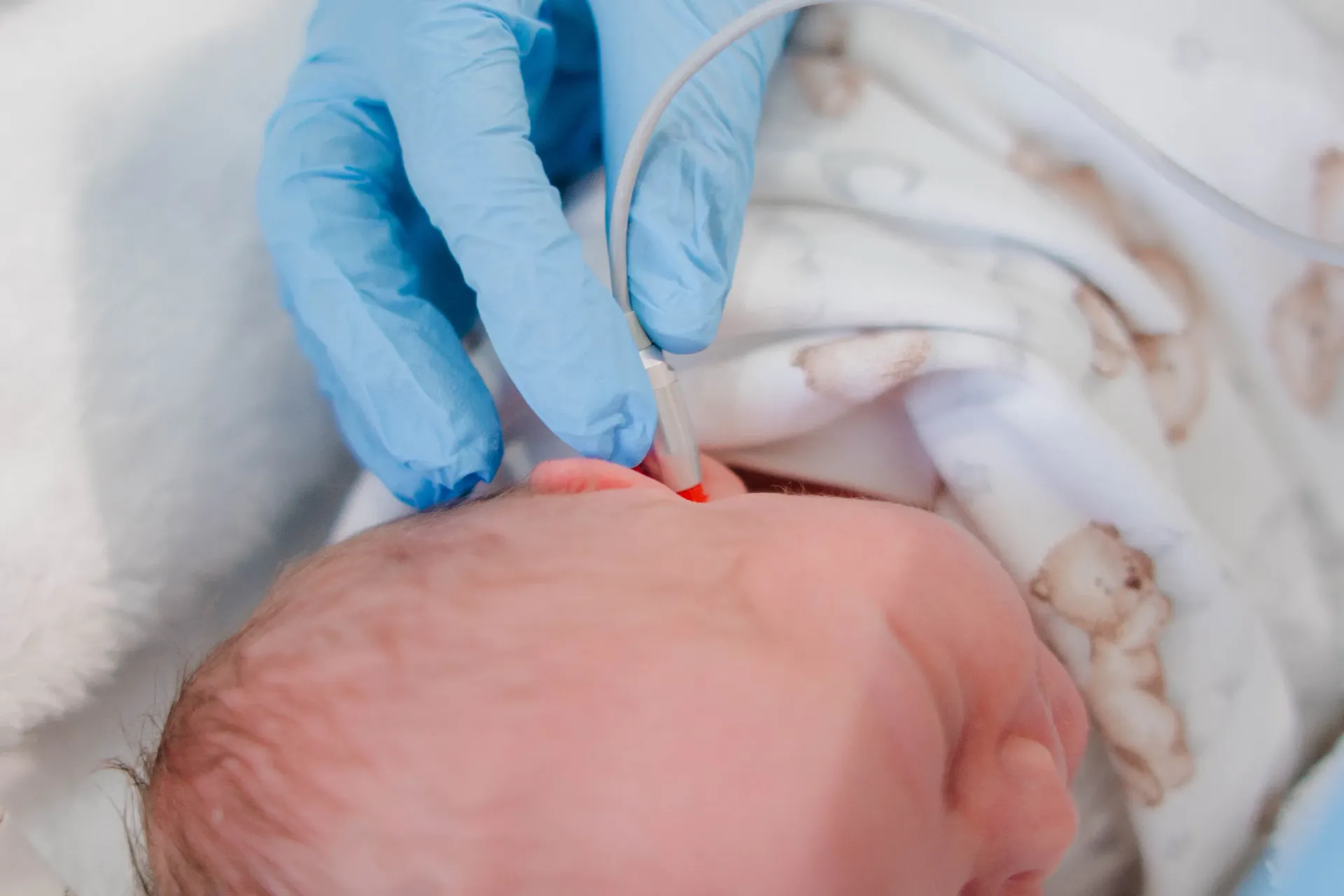
Audiological screening is performed in maternity wards, usually between 24 and 72 hours of life, before discharge. The procedure is painless, takes only a few minutes, and involves inserting a probe into the child's ear to record the auditory response.

,,The procedure allows us to identify possible hearing problems right from birth and quickly direct the child to specialists. Thus, we can intervene in time and completely change the child's developmental trajectory”, states Ludmila Oclanschi, head of the Newborn Department at the Mother and Child Institute.

All necessary investigations, hearing aids, and cochlear implants are free for children, covered by the National Health Insurance Company.
Hearing loss that is not diagnosed in time is associated with high public costs for special education, social services, and lifelong medical care. Through early detection and intervention, the Republic of Moldova reduces these costs and increases the chances of children becoming active and independent adults.
,,The earlier the intervention is carried out, the higher the probability that a child will develop speech in a natural way. UNICEF thus contributes to ensuring universal access to health services and the social inclusion of all children”, emphasizes Angela Capcelea, Health Specialist at UNICEF.
An important step toward European standards
The introduction of universal neonatal audiological screening aligns the Republic of Moldova with European Union standards and international best practices in child health. The program demonstrates how strategic investments and cooperation between the Government, UNICEF, and the medical system can generate sustainable structural changes with a direct impact on the lives of children and their families.
The implementation of universal audiological screening was made possible thanks to investments made in recent years with the support of UNICEF and financial assistance from the Government of Japan. All perinatal centers within public health institutions have been equipped with modern neonatal audiological screening devices and necessary consumables, while medical personnel received specialized training provided by the team from the Republican Audiology Center within the Mother and Child Institute.

Around 90 million children aged 5-19 years live with hearing loss. Over 60% of childhood hearing loss is preventable through simple, cost-effective public health measures. Among those living with ear diseases or hearing loss, early identification and care are crucial to prevent long-term impacts on development, education, and future opportunities.
About the World Hearing Day
World Hearing Day is observed on March 3.
The theme for this year is "From communities to classrooms: hearing care for all children", which aims to promote activities designed to prevent avoidable childhood hearing loss and ensure early identification and care for children with ear or hearing problems.