Mihail’s smile
Every child’s right to inclusive education
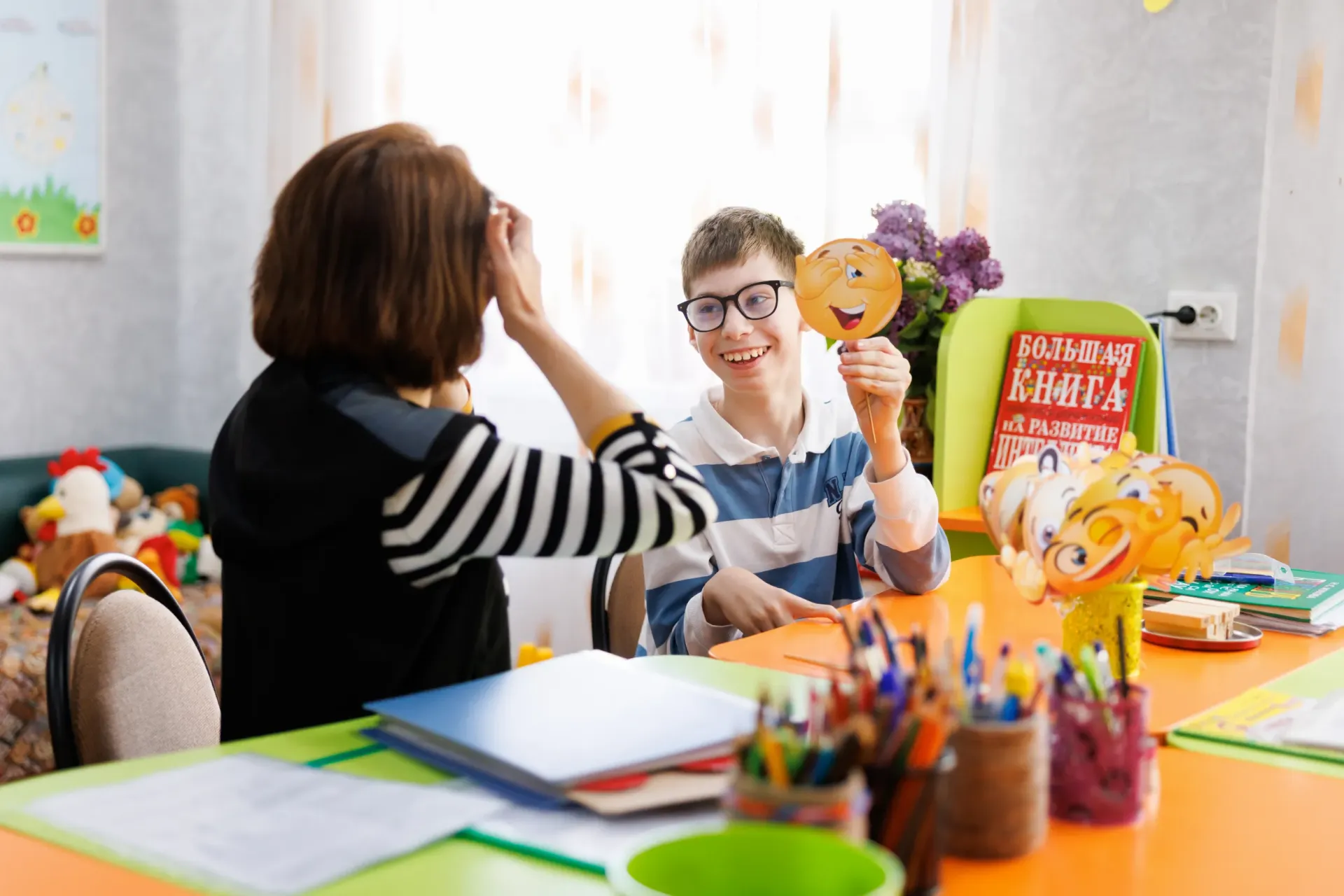
Every morning, Mihail sets off for school together with his mother. For him, it matters deeply to know that he is expected in class and that he feels safe there.
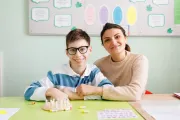
Mihail is 12 years old and is a fifth-grade student at “Piotr Cazmalî” Gymnasium in Ceadîr-Lunga. His classmates and teachers know him as an artistic boy who enjoys modelling with plasticine and loves colours - especially red.
Still, the first thing everyone mentions about him is something else: his open and contagious smile, which says more than dozens of words.
Like all children, Mihail has the right to quality education, to a safe environment, to participation and to a full life. Today, this right is being respected - not without effort, but through the genuine commitment of the school, the family and the community.


The right to education: a journey built step by step
For Mihail, school was a challenge at first. His disability affected his motor coordination, his ability to concentrate, and his endurance. Routine activities required more time and energy. At times, moments of anxiety or withdrawal would appear.
Yet Mihail was not left alone. The school took responsibility for creating the conditions he needed in order to learn, grow, and participate at his own pace.
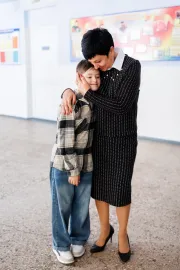
“The first weeks were difficult, but gradually, with the support of teachers and classmates, he began to feel more confident. Today, I see beautiful progress. Mihail has become more self-assured, he goes to school with pleasure, shows interest in activities and interacts better with his peers,” says Tatiana Radulova, Mihail’s mother, who is also his personal assistant.

Tailored support - because every child has their own needs
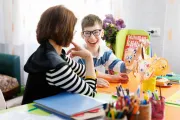
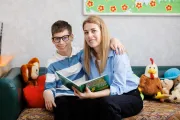
In the classroom and in the Resource Centre, Mihail is also supported by Tatiana Velcova, a support teacher who has been by his side since his first years of school.
“At the beginning, he had difficulties with coordination, got tired quickly and found it hard to maintain his attention. Today, he is actively involved in different tasks, maintains his concentration for longer and completes what he starts,” she says.
Her approach is based on three essential principles of inclusive education: adapting to the child’s individual pace, using visual and practical methods, and constantly encouraging every step forward, no matter how small.

Mihail’s progress is also visible at the socio-emotional level, as support continues beyond the classroom. The school psychologist, Alina Uzun, who has been working with Mihail for several years, has observed important changes both in his cognitive development and in the way he relates to those around him.
“His attention, memory and thinking have improved. His level of anxiety has decreased, and Mihail has become more sociable and more motivated to learn,” the psychologist notes.
Today, Mihail communicates more easily with his classmates, participates in activities, and feels more confident in the school environment.
“For us, the most important thing is that he comes to school with pleasure and always has a smile on his face,” she adds.

The right to participation: a child who is part of the community
Inclusion does not mean only being physically present in class. It means real participation. The change can also be seen in his relationships with others. Mihail is open, friendly, and easily connects with his classmates. He takes part in creative activities, and moments of success motivate him to try even more.
Twice a week, Mihail attends gymnastics classes, which have significantly improved his mobility and independence. While at the beginning he depended on constant support to move around, today he moves with greater confidence and autonomy.
“I can see that he feels more confident and calmer. What makes me happiest is that he shares his achievements,” says Mihail’s mother with a smile.

The school–family partnership: a right built together
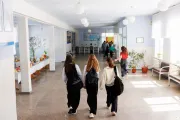
At “Piotr Cazmalî” Gymnasium, inclusion means collaboration. The school has 436 students, including 41 children with disabilities and special educational needs, eight refugee children from Ukraine and four Roma students.
“An inclusive school is a place where every child feels accepted, valued and supported to learn. Diversity is a value, not a problem,” says the school principal, Diana Riabaia.
The partnership between school and family plays an essential role. As part of the UNICEF project “Empowering children, parents, teachers and communities to promote inclusive education in the Republic of Moldova”, implemented by CCF Moldova in partnership with the Ministry of Education and Research and the Republican Centre for Psycho-Pedagogical Assistance, with financial support from the Government of the United Kingdom, teachers from the institution took part in trainings dedicated to strengthening this partnership.


The trainings helped them communicate more effectively with parents, better understand children’s needs and build relationships based on trust.
“We learned how to provide feedback without pressure and how to support parents during difficult stages. This way, the support offered to the child becomes better coordinated and more effective,” explains Tatiana Velcova.
For Mihail’s family, this collaboration has been essential.
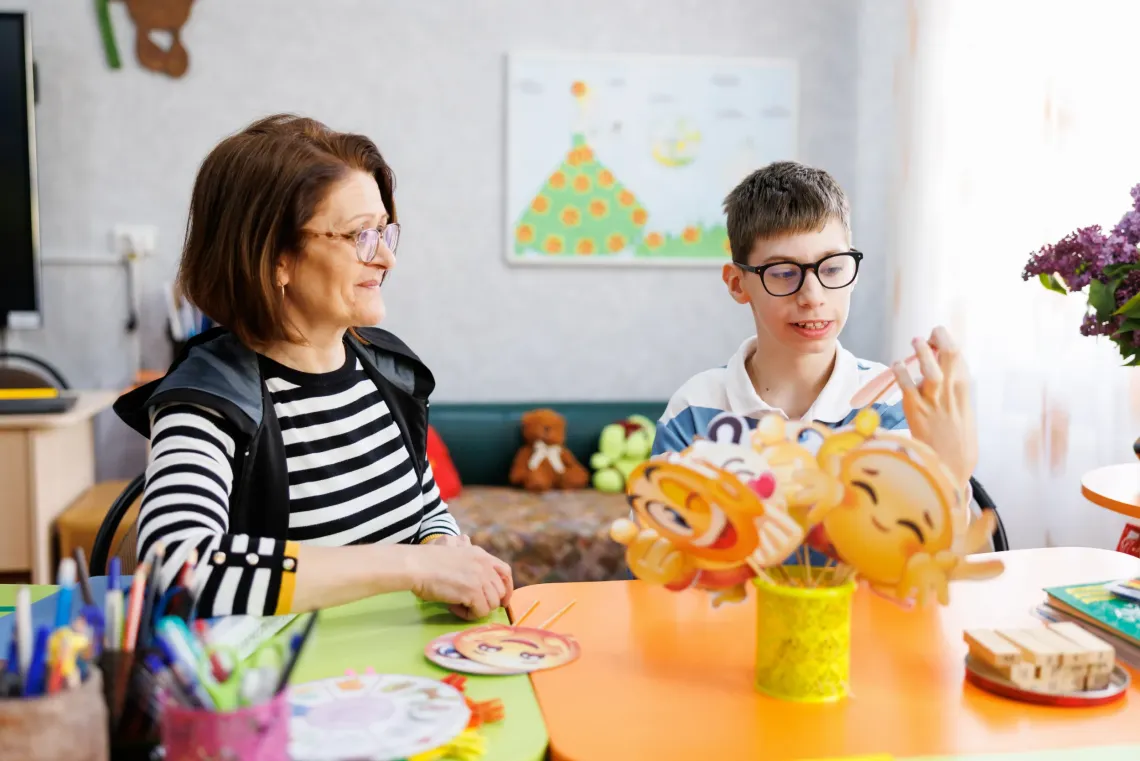
A smile that says it all
Today, Mihail participates, tries, and succeeds. He is growing at his own pace, in an environment where he is seen, heard and supported. His right to education is no longer just a principle - it is a reality.
And behind this smile stand people who chose to be by his side: teachers, specialists, parents, and partners. Because when the entire community gets involved and respects children’s rights, every child has the chance to develop and reach their full potential.