Launch of the Study: "Inclusion of children with special educational needs in the education system 2024"
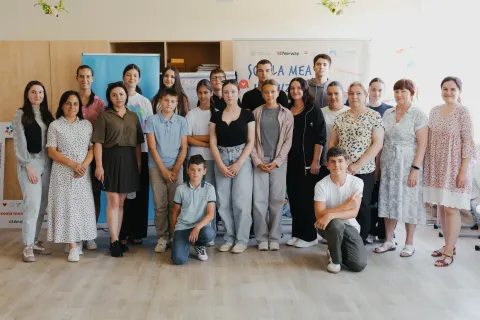
It brought together representatives of Parliament, relevant ministries, public institutions, school managers, teaching staff, parents, and children.
- Română
- English
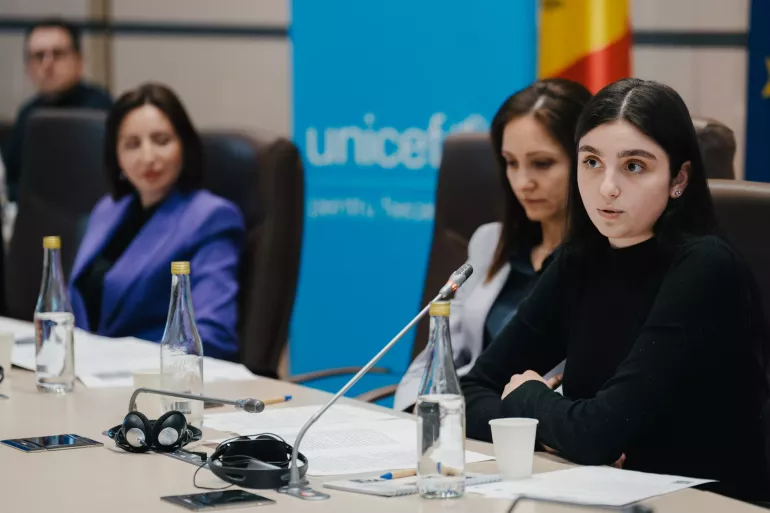
Chișinău, 16 December – UNICEF, in partnership with the Ministry of Education and Research, has launched the study "Inclusion of children with special educational needs in the education system 2024." The presentation of the study findings took place on December 13, 2024, in the Europe Hall of the Parliament of the Republic of Moldova. It brought together representatives of Parliament, relevant ministries, public institutions, school managers, teaching staff, parents, and children.
During the event, Marina Morozova, the Vice Chair of the Parliamentary Commission for Social Protection, Health, and Family, stated that: “The Commission for Social Protection, Health, and Family, together with the National Council for the Rights of Persons with Disabilities, has created eight thematic groups, including a group dedicated to education. Within this group, significant consultations have taken place, and moving forward, we aim to harmonize efforts and, together with partners, identify practical solutions for children with special education needs.”
The study highlights that public perceptions of the inclusion of children with disabilities remain predominantly exclusivist, with many respondents believing that these children should be cared for at home or in specialized institutions. However, there is a positive trend toward greater acceptance of their inclusion in mainstream schools.
"Nobody disputes the remarkable results achieved in recent years regarding the inclusion of children with special educational needs. However, we are all aware of the structural challenges that require intervention. Approximately $1.1 million will be allocated for assistive devices, a procurement to be implemented with the support of our partner, UNICEF. A significant milestone for the Republic of Moldova is the completion of the procurement of assistive devices for children with severe visual and hearing disabilities, worth $180,000.00. Another important development will be the distribution mechanism for these assistive devices, which will ensure clarity on how a child with special educational needs can access such a device in school," stated Dan Perciun, Minister of Education and Research.
The study aims to assess the progress and dynamics of educational inclusion for children with special educational needs and to compare current findings with data from similar studies conducted in 2009, 2012, and 2018 to highlight trends over time. It also evaluates existing policies, analyzes public perceptions of inclusive education, and identifies best practices for assessing educational outcomes.
"Just some five years ago, only 23% of caregivers supported the inclusion of children with special educational needs in general education institutions; today, that number has risen to 40%. Teacher support has also grown remarkably, from 41% to 60%. This progress is not coincidental. It reflects ongoing investments in advocacy, training, behavior change interventions, and resources that highlight the tangible benefits of inclusive education. Children with disabilities who learn alongside their peers are better positioned to socialize, build friendships, and prepare for full participation in society," highlighted Maha Damaj, Country Representative, UNICEF Moldova.
The study is part of the Digital Innovation of Moldovan Education System Programme, generously funded by the Global Partnership for Education.
"The Global Partnership for Education (GPE) reaffirms its commitment to improving education worldwide, with Moldova being a member of this partnership since its inception in 2005. Inclusive education and gender equality are core objectives for GPE. Throughout the collaboration, GPE has invested $25 million in educational projects in the Republic of Moldova, with a significant part of this amount allocated in recent years. Currently, Moldova benefits from active grants amounting to $11 million. We are proud to support Moldova and contribute to ensuring that every child has access to quality education,” said Mohamed Yassine, education specialist at the Global Partnership for Education.
Regarding inclusive education and her own journey, Emilia Teleucă, a 12th-grade student at "Pro Succes" Theoretical High School in Chișinău, shared the following thoughts: "I have had autism since birth. Many people told me I wouldn't succeed in finishing school, but now I can prove them wrong, as I'm in the 12th grade and preparing for my final exams. During school, I was a target of bullying just because I was different. I also felt ignored by teachers, who preferred to give more attention to other children, considered more capable. We, children with disabilities, have highly developed emotional intelligence and can be very creative, but unfortunately, we don’t always have the ability to express ourselves. However, I believe that others can learn a lot from us about empathy and kindness."
The findings and recommendations of the study will support efforts to enhance inclusive education by addressing current gaps and disseminating best practices. Additionally, the results will contribute to the development and
refinement of policies aimed at ensuring every child’s right to education.
Access the full study here
Media contacts
About UNICEF
UNICEF promotes the rights and wellbeing of every child, in everything we do. Together with our partners, we work in 190 countries and territories to translate that commitment into practical action, focusing special effort on reaching the most vulnerable and excluded children, to the benefit of all children, everywhere.
For more information about UNICEF and its work for children, visit www.unicef.org
Follow UNICEF on Twitter and Facebook