From a country I didn't know to a country I came to love
Reflections on five years in Moldova and thirty years of investing in children
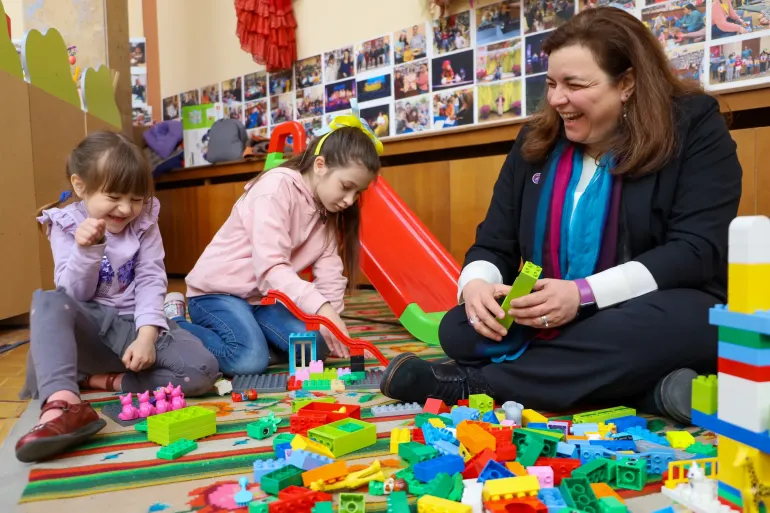
When UNICEF established its presence in Moldova in 1995, the children we hoped to support were newborns, preschoolers and schoolchildren growing up in a newly independent country.
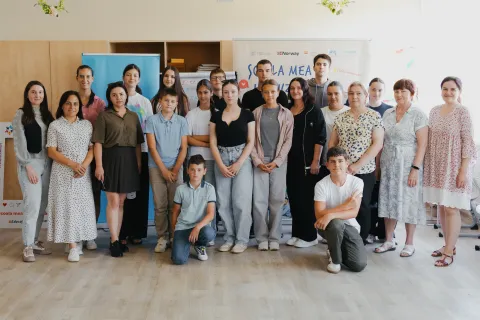
Today, those children are around thirty years old. Many are teachers, some are doctors and nurses, journalists, entrepreneurs, civil servants and parents raising children of their own. And some of those born in 1995, rather wonderfully, are now part of the UNICEF team in Moldova, shaping the future for the next generation of children.
As I prepare to leave Moldova after five years as UNICEF Representative, I find myself reflecting on this simple but powerful fact. For me, that is perhaps the most meaningful way to think about child rights.
One of the moments that stays with me most from the celebration of UNICEF's 30 years in Moldova was meeting adults whose stories brought those three decades to life. Grown-ups who, in a very real sense, might not be alive today had they not received specialized neonatal care as newborns. Others had found their voice as children through participation programmes and were now journalists and public figures. I met people who once received support as children and who are now raising families of their own, contributing to the same society that once invested in them.
Their stories reminded me that child rights operate on a different timeline from almost everything else in public life. Governments think in electoral cycles; organizations think in programme cycles or strategic plans.
But children grow up on their own timeline. The true impact of investing in children often becomes visible only decades later. Those outcomes rarely make headlines, yet they shape the future of a country far more profoundly than many of the debates that dominate public attention.
The stories of those young adults also made me think about Moldova itself.
When you meet someone who was once a premature baby supported through improved neonatal services and who is now a young adult, you are reminded that real change takes years, even decades.
Countries are not so different. Some of the most important changes happen quietly, over the years, until one day you realize that something fundamental has shifted.
I arrived in Moldova in 2021. One of my first public engagements was welcoming the first COVAX vaccine shipment to arrive in Europe. A year later, Moldova found itself responding to the largest refugee movement on the continent since the Second World War.
At the time, many people spoke about Moldova as a small country with a big heart. They were right, but looking back, I think those moments revealed something more.
Just as the children born in 1995 tell us what thirty years of investment in children can achieve, those moments of crisis revealed what more than thirty years of investment in people and institutions can achieve.
Neither happened overnight; both were built gradually, patiently, often invisibly. And both give me reasons to be optimistic about Moldova's future.
From my very first year here, I used to describe Moldova through the lens of a children's story: "The Little Engine That Could". The story of a small train climbing a mountain, repeating to itself, "I think I can. I think I can. I think I can".
Back then, Moldova often reminded me of that little engine: a small country with limited resources, yet a remarkable determination to keep moving forward.
Five years later, however, Moldova no longer feels like the little engine trying to convince itself that it can. It feels like a country that knows it can.
I have seen that confidence reflected in ambitious reforms across sectors that matter most for children: strengthening child protection systems, advancing disability inclusion, expanding early intervention services, developing Barnahus services for child victims of violence, modernizing education and investing in teachers.
Every discussion about economic growth, labour markets, demographic trends or European integration eventually returns to children. The future workforce is sitting in today's classrooms. Future entrepreneurs are growing up in today's villages and towns. Future ministers, scientists and artists are among the children whose opportunities we shape right now.
That is why investing in children is not separate from nation-building.
It is nation-building.
As I leave Moldova, there are many memories I will carry with me. But what I will remember most are the people. Over the years, I have often said that my favourite Romanian words are "dragii", "colegii", and "prietenii"; words that mean "dears", "colleagues", and "friends". This country welcomed my family and me with a warmth and generosity that are difficult to describe and impossible to forget.
There is another Romanian expression that has stayed with me: zice inima - "my heart speaks." If I listen to my heart as I conclude my mandate, it says something simple: thank you.
Thank you to the colleagues, partners and friends who dedicate themselves every day to improving the lives of children. And thank you to the people of Moldova for allowing UNICEF to walk alongside this country for the past thirty years.
The children born in 1995 are helping shape Moldova today.
The children growing up today will shape the Moldova of 2050.
I look forward to returning one day and seeing how far they have gone and how far this country that refuses to stand still has travelled.
Media contacts
About UNICEF
UNICEF promotes the rights and wellbeing of every child, in everything we do. Together with our partners, we work in 190 countries and territories to translate that commitment into practical action, focusing special effort on reaching the most vulnerable and excluded children, to the benefit of all children, everywhere.
For more information about UNICEF and its work for children, visit www.unicef.org
Follow UNICEF on Twitter, Linkedin and Facebook