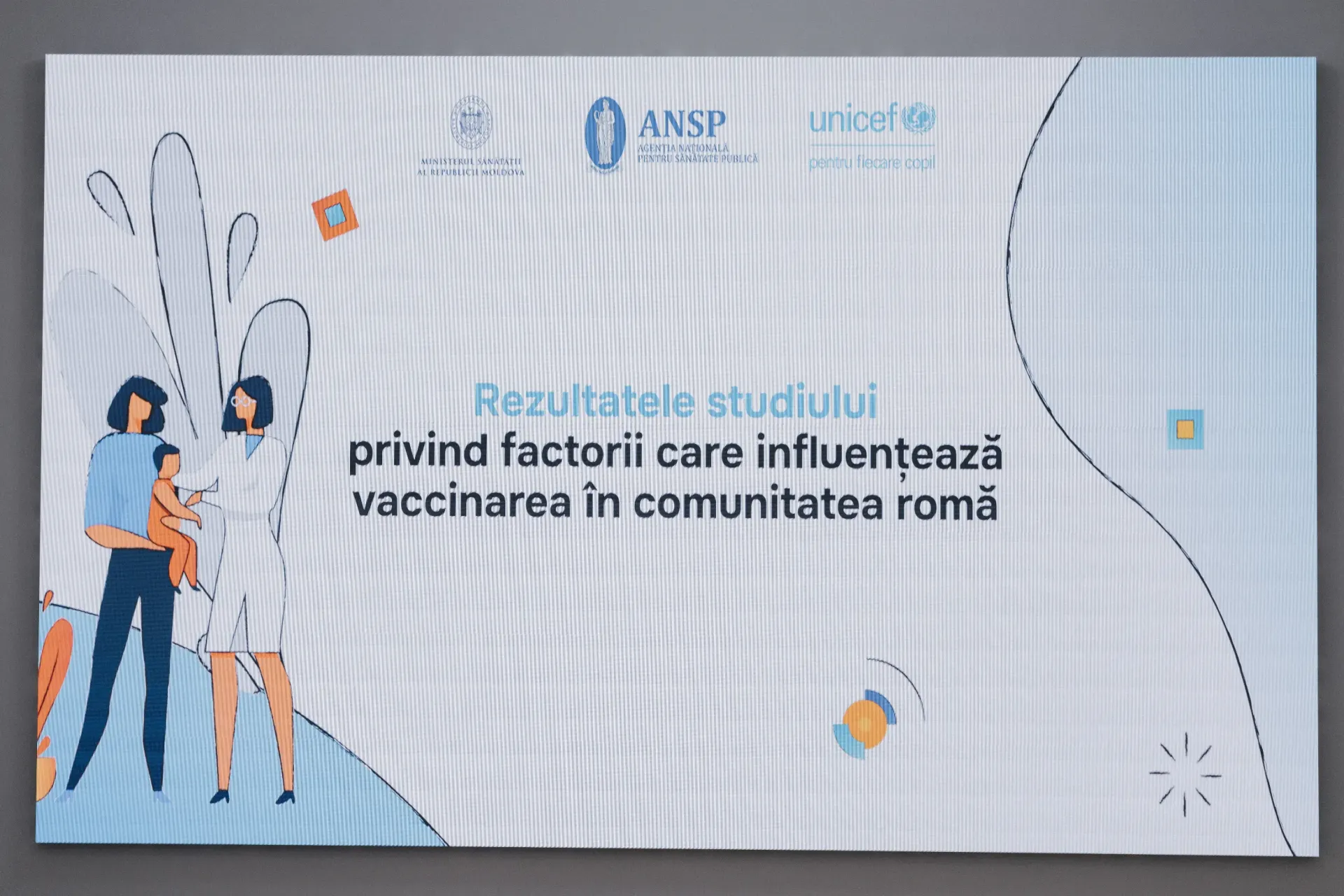
Brief report: Study on factors influencing child vaccination in Roma communities in Moldova
About
Summary
Roma children in Moldova remain significantly under-immunized despite effective national vaccination programs. This eight-month participatory study identified critical barriers and co-designed evidence-based solutions with Roma communities in Soroca and Otaci. The research reveals that vaccine hesitancy stems not from opposition to vaccines but from systemic exclusion, discrimination, and communication failures.
Methodology
This study employed participatory qualitative research grounded in behavioral science and human-centered design. The COM-B framework (Capability, Opportunity, Motivation, Behavior) guided barrier identification and intervention design.
Data Collection
Between May and November 2025, researchers conducted 12 focus group discussions (72-120 participants) and 30 in-depth interviews with Roma families, healthcare providers, mediators, and community leaders. Two workshops per site engaged communities in behavioral diagnosis and solution co-design, ensuring community ownership.
Central Finding
Vaccine hesitancy among Roma families is not rooted in anti-vaccine beliefs but in repeated experiences of discrimination, poor communication, and exclusion from healthcare services. Addressing these systemic issues through targeted, community-led interventions is necessary for improving immunization rates.