Failure to vaccinate carries significant economic costs in the Republic of Moldova, while investments in immunization remain among the most efficient public interventions

- Română
- English
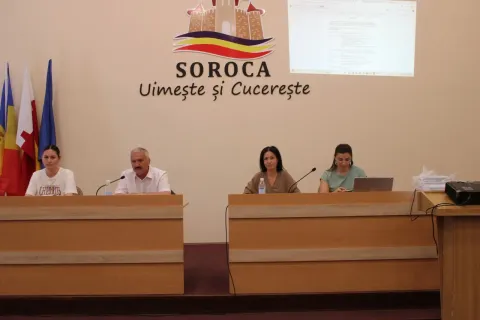
Chisinau, April 7, 2026. On World Health Day, UNICEF presented, during public hearings in Parliament, the results of an analysis on the financial burden of inaction in reaching unvaccinated and under-vaccinated children in Moldova. The study aims to provide decision-makers with an empirical basis for assessing the costs associated with non-vaccination and for guiding public health policies.
According to the estimates, for the period 2025-2035, under a scenario in which vaccination coverage does not reach optimal levels, more than 9,300 cases of illness are expected, including measles, pertussis, pneumonia, and meningitis. Managing these cases entails direct costs of approximately USD 2.1 million for the health system, reflecting medical services, hospitalizations, and treatment. The analysis also highlights the system’s sensitivity to variations in vaccination coverage. If coverage declines, the risk of outbreaks increases, and response costs can become significant. Estimates indicate that managing a single measles outbreak may exceed USD 4 million, depending on the scale and duration of the interventions required.
However, the impact is not limited to the health system. The consequences extend directly to the education system and to the everyday lives of families.

„35,000 school days will be lost due to measles alone over the next decade. Not only sick children will miss school, but also their classmates, who will have to stay in quarantine and be vaccinated”, said Fatima Cengic, Immunization Specialist at the UNICEF Regional Office for Europe and Central Asia.

In this context, the total economic impact is considerably broader.
The analysis estimates an economic burden of approximately USD 33.1 million for a single cohort of children, including both direct and indirect costs, such as productivity losses, absences from work and school, and long-term consequences for human capital.
„Every dollar spent on managing an outbreak is a dollar no longer invested in schools, kindergartens, hospitals, social services, or local development. It is a dollar redirected from the future into the past, from building to repair. Non-vaccination causes this shift, forcing the state to spend reactively, under pressure, and often inefficiently”, said Maha Damaj, UNICEF Representative in Moldova.

The results confirm that investments in immunization are among the most efficient interventions available. Achieving 95% vaccination coverage is associated with an estimated return of approximately 11:1, reflecting significant savings and medium- and long-term benefits.
„Thanks to the fact that we vaccinate against hepatitis B, last year we did not record a single case of hepatitis B among children”, said epidemiologist Nicolae Furtună. „In the 1990s, we used to record up to 1,000 cases”, Furtună added.

At the same time, the analysis shows that maintaining high vaccination coverage requires a coordinated approach across multiple sectors. The factors influencing vaccination include access to services, the level of information, public trust, and implementation capacity at the local level.
„Not vaccinating is not an isolated choice. It is a decision that increases the risk for children who are too young and may develop very severe forms of diseases against which they have not yet been vaccinated, affects vulnerable people, puts pressure on the health system, and generates public costs”, said Angela Paraschiv, State Secretary of the Ministry of Health.

The results of the analysis provide a framework for informed discussions on prioritizing public investments, underlining the role of immunization in protecting public health and supporting the sustainable economic development of the Republic of Moldova.
We note that vaccination coverage rates in the Republic of Moldova have fallen below the recommended threshold of 95%, increasing the risk of outbreaks of vaccine-preventable diseases. Compared to 2023, vaccination coverage decreased by approximately 1% in 2024 and by almost 5% compared to pre-pandemic levels in 2019. Thus, in 2024, coverage reached 86.7% for DTP, 87.3% for polio, and 83.9% for MMR.
About World Health Day
World Health Day 2026 will be celebrated on April 7 under the official theme ,,Together for health. Support science”, highlighting the importance of scientific evidence and collaboration in addressing global health challenges and promoting health equity.

Media contacts
About UNICEF
UNICEF promotes the rights and wellbeing of every child, in everything we do. Together with our partners, we work in 190 countries and territories to translate that commitment into practical action, focusing special effort on reaching the most vulnerable and excluded children, to the benefit of all children, everywhere.
For more information about UNICEF and its work for children, visit www.unicef.org
Follow UNICEF on Twitter, Linkedin and Facebook