"When the children are clean, I am clean!"
Access to clean water has been a source of health benefits but has also restored dignity and hope to this community.

- Français
- English
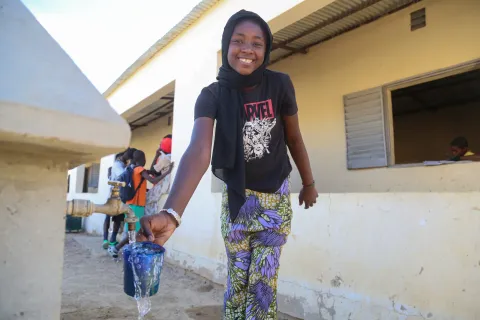
The Faladié site in Bamako, which hosts more than 1,189 displaced families, faced severe unsanitary conditions and a disastrous water shortage. Children, particularly those who are vulnerable, were falling ill due to the polluted environment and the lack of adequate sanitation facilities, exacerbating an already dire situation. Finding clean water was a challenge and maintaining basic hygiene was nearly impossible.

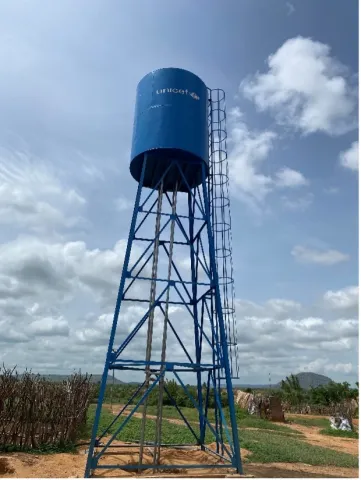
UNICEF's intervention, with the support of Solidarités International, a partner NGO, and funding from Austria, marked a positive turning point. The connection of four tanks to the potable water distribution network managed by the Malian Society for the Management of Drinking Water (SOMAGEP), the rehabilitation of 30 toilets between February and April 2023, the installation of 20 garbage bins of 100 liters each, and the training of 16 persons tasked with promoting hygiene and sanitation, had a direct impact on the lives of over 2000 people.
These initiatives have significantly improved sanitary conditions, paving the way for a better future for the children of the site, who now benefit from access to handwashing facilities and appropriate sanitation.

Hawa, a mother of seven children and aged 34, expresses her gratitude with emotion, underlining the transformative effect of cleanliness on the children and, by extension, on the entire community: "When the children are clean, I am clean." Access to clean water has been a source of health benefits but has also restored dignity and hope to this community.
Despite these advances, challenges remain, especially as the number of displaced people at the site continues to rise. The community is calling for more support, hoping that their children can not only survive but also thrive in a respectful and secure environment.