Water returns to the maternity ward
Improving access to clean water in health facilities is essential to combat infections, viruses, and epidemics.

- Français
- English
In the bustling corridors of the maternity ward at Gabriel Touré Hospital in Bamako, a quiet yet transformative change has taken place: clean, accessible water is flowing again, changing daily life for patients, their families, and medical staff.
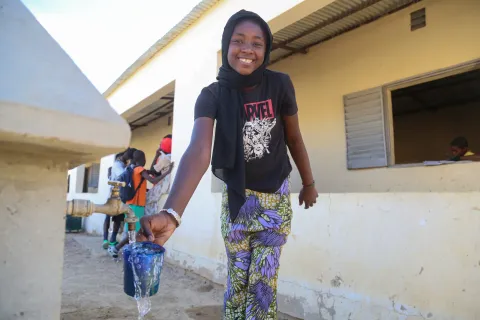
For a long time, the lack of sufficient, functional water points made life difficult in this referral hospital, which cares for expectant mothers with complications and premature newborns. With support from UNICEF, sinks and toilets have been fully rehabilitated, bringing immediate and lasting relief to patients, their companions, and the doctors, nurses, and midwives working in the maternity ward.
Samaké N’ya Samaké, mother of a premature baby hospitalized in the neonatal unit, shares her emotion:
“I’m very happy about the rehabilitation of these water points. It’s a huge relief for us mothers. Water is essential for maintaining hygiene standards, especially in a hospital.”
She is staying at the hospital with her newborn, practicing kangaroo care. She uses the renovated sinks and latrines to bathe herself and her baby.

Diarra Lucienne H. Traoré, a pediatric oncology health technician, highlights the public health impact of hygiene:
“To ensure a healthier and safer environment for children, we need clean water. It helps prevent disease transmission and improves living conditions for patients and staff alike. This initiative enhances our working conditions and the quality of care.”
Mamadou Kante, UNICEF’s water, sanitation, and hygiene specialist, oversaw the project and renovation work. He has an excellent relationship with the maternity care team, having planned the upgrades together to best meet the needs of the patients.

Yacouba Camara, a state pediatric nurse, uses the new facilities several times a day:
“Water is essential in the pediatric department at Gabriel Touré Hospital. It’s needed before and after every medical procedure, treatment, or intervention. It’s also crucial for cleaning medical equipment and maintaining hygiene for both staff and patients. Beyond the hospital setting, water is vital for staying healthy and for our bodies to function properly. Since the water points were rehabilitated, everything has become much easier for us. We no longer have to go down to the ground floor to fetch water—no more unnecessary effort. It saves time and makes us more efficient.”

On the ground floor, seven restrooms have been fully renovated with tiling that makes cleaning easier. They are equipped with running water taps, flush toilets, and metal doors with latches—all regularly cleaned. New neon lights illuminate the space after dark, enhancing safety for users.
This project was made possible thanks to UNICEF’s Regular Resources. The generous contributions of partners and donors—especially through unearmarked funding—are critical to achieving results where resources are most limited. This solidarity allows UNICEF to provide life-saving aid, essential services, and hope for a better future to children and communities.
At Gabriel Touré Hospital, water has reclaimed its rightful place at the heart of care and hygiene. The new restrooms and sinks improve the daily lives of patients and maternity staff—thanks to one simple yet essential act: turning on a tap.