PAFEEM, a pillar for community autonomy and resilience in Kidal
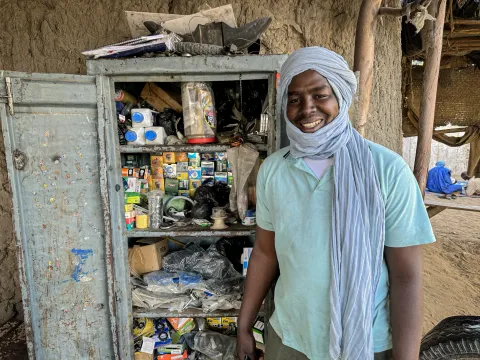
A breath of fresh air for small businesses thanks to young people capitalizing on the achievements of PAFEEM.

- Français
- English
In a tense socio-economic and security context, particularly in the center and north of Mali, the Project to Promote Access to Finance, Entrepreneurship, and Employment in Mali (PAFEEM) is proving to be a real driver of community resilience. In Kidal, the city of Adrar des Ifoghas, young people and women are testament to PAFEEM's success - saying it has enabled them to get back on their feet in a difficult context where the economy is slowing down. Fadimata, Askoua, Boncana, Moussa, and Illiass have all seen their living conditions improve thanks to their participation in Income-Generating Activities (IGAs) and Labor-Intensive Works (TP-HIMO).
A new beginning
Income-Generating Activities (IGAs) participants are strengthening their existing businesses, while those involved in Labor-Intensive Works (TP-HIMO) are using the income earned during the project to launch their own Income-Generating Activities. For many women and young people, PAFEEM's support has helped consolidate income-generating activities.
At 28 years old, Fadimata Walet Oumar has to take care of her four children on her own. Displaced from her village of Tassik due to insecurity, she found refuge in the town of Kidal.
"I am a beneficiary of PAFEEM activities through an income-generating activity. I chose livestock farming, which I have been doing for two years. To succeed, I benefited from numerous training courses in leadership, entrepreneurship, and resource management and mobilization. This has greatly contributed to the smooth running of my business," explains Fadimata.

This activity has greatly helped Fadimata to provide for her family and improve her financial situation, while strengthening her role within the community. The funds granted by PAFEEM enabled her to purchase five goats at the outset. Two years later, she now has twelve. “I would like to thank the Government of Mali, the World Bank, UNICEF, and the implementing partner New Horizons (NOHO) for the invaluable assistance they have provided us,” she concludes.
Askoua, a local shopkeeper, testifies to the direct impact on her business. “I already had my shop, but I didn't have as many items. The support from PAFEEM allowed me to increase my turnover and replenish my shop. Even though I don't have many customers due to the current economic situation, I'm not complaining too much.”

“My business allows me to take care of my children's schooling and other small needs”.
This financial support enables families to meet their basic needs, including children's education and healthcare costs, which are crucial for the region's future.
Similarly, Moussa Traoré confirms the progress made, stating that he has taken training courses on bookkeeping thanks to PAFEEM. "This has enabled me to strengthen my business and help my family. I can see the progress in my shop. I pay for my children's needs so they can go to school and have a better life," says Moussa.
Sanitation and professional integration
Another essential aspect of component three of the PAFEEM project is labor-intensive public works (TP-HIMO). These temporary sanitation and rehabilitation projects have a dual impact on communities. Not only do they improve the local living environment, but they also provide immediate income for unemployed young people and women.
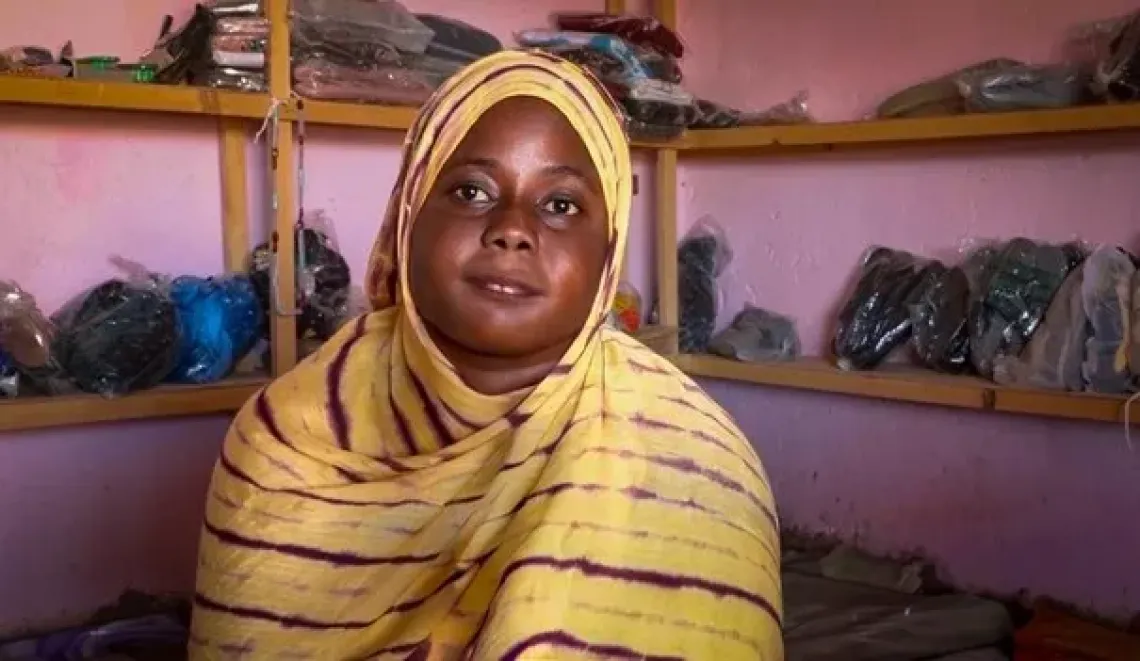
Boncana, a participant in the TP-HIMO program, was able to take advantage of this opportunity to strengthen her business.
“I took part in the Labor-Intensive Works Programme (TP-HIMO). This enabled me to later strengthen my small business. I benefit greatly from my business, which allows me to support myself and help my family,” says Boncana.

Illiass Sylla, another TP-HIMO participant, highlights the community impact and the training he received. “Thanks to TP-HIMO, we cleaned up public spaces and places such as the CSCOM (health centre) in the city of Kidal. We received training on good conduct on the construction site and on management and investment.”
This work is also seen to prevent idleness and delinquency, as Boncana explains.
“The TP-HIMO program has not only cleaned up the streets, but it has also enabled many young people to escape unemployment and protect themselves from attempts at bad practices. The PAFEEM has especially helped women, who are benefiting from it,” Boncana continues.
A call for extended support in light of the economic situation
Despite individual successes, the economic situation remains a major challenge in Kidal. The “slow market” and high prices are hindering the full development of micro-enterprises. Askoua highlights the difficulties associated with supply.
“Goods are expensive, and access is one of the factors that increases the purchase price of goods,” she says.
For Boncana, the lack of liquidity of customers is also a recurring problem. "There are very few customers. This may be due to the current economic situation. Customers don't have money. The market is very slow, and this has a huge impact on the region's economy."
Faced with these constraints and the need for opportunities, an appeal has been made to the country's authorities to extend PAFEEM assistance to more people, especially young people.
“I ask that assistance be extended to all unemployed young people and women. The idleness of young people and women during these times of insecurity is not easy,” urges Askoua.
The success of PAFEEM in Kidal is a testament to the importance of investing in human capital and basic infrastructure. Illiass Sylla concludes by thanking the key players in this vital project initiated by the Government of Mali and its partners.
“I would like to thank the Government of Mali, the NGO NOHO (New Horizons), the World Bank, and UNICEF,” concludes Illias.

Beyond the numbers, the PAFEEM project restores dignity and provides communities with sustainable tools to build their own future.
By offering financing, training, and temporary employment opportunities, PAFEEM strengthens communities' autonomy and resilience.
Initiated by the government and financed by the World Bank (in the form of loans and grants), component 3 of this project is implemented by UNICEF and its NGO partners. Its impact is particularly crucial in Kidal, an area where humanitarian and security crises have severely affected the population's purchasing power. The PAFEEM project has provided an adequate and effective response to basic needs, ensuring access to basic social services for many beneficiaries and their families.
This project has helped to foster a fresh and positive outlook on young people and women in Kidal, who have immense potential if only they are given a helping hand. A horizontal and vertical extension of PAFEEM, which is sensitive to shocks (particularly those related to the security and socio-economic context), is proving to be one of the best ways to guarantee sustainable access to financing and employability for young people. This is the joint advocacy of young people, women, opinion leaders, and authorities in the Kidal region.
Since 2012, Mali has faced an ongoing political and security crisis whose effects continue to weigh on its economy and may affect the implementation of public policies. In response, the government has launched several initiatives, including the PAFEEM, which aims to support national efforts to address the challenges of financial inclusion, the financing of Micro, Small, and medium enterprises (MSMEs), and job creation.
This objective aligns perfectly with the National Strategy for Emergence and Sustainable Development (SNEDD 2024–2033), which implements the vision “Mali Kura ɲɛtaasira ka bɛn san 2063 ma” in accordance with its third pillar: “Structural transformation of the economy and growth.” PAFEEM’s activities revolve around five components, including Component 3: “Support for Income-Generating Activities (IGAs) and Job Creation,” implemented with operational support from UNICEF.