Giving Premature Babies a Strong Start for a Brighter Future
Like Mariam, Fatoumata, and Seydou, many premature babies are now growing up healthy thanks to the Kangaroo Care method.

- Français
- English
Seydou, a curious and lively little boy, is his parents’ second child. His mother, Massaran, recalls their stay at the Bamako perinatal clinic:
“Seydou was born prematurely at 25 and a half weeks. On the advice of a relative, we went to Mohamed VI Hospital. Seydou spent 15 days in an incubator, followed by 30 days of hospitalization in the Kangaroo Care unit. Thanks to a professional and always available team, the care was provided under the best possible conditions. It was there that I discovered the benefits of Kangaroo Care, particularly its ability to maintain a newborn’s body temperature through skin-to-skin contact, as well as its positive effect on weight gain.”

After leaving the hospital, Seydou continued to receive regular outpatient follow-up care.
“This method helped us better understand how to care for our child. Today, Seydou is two and a half years old. I give thanks to God, to my husband, and to his family for their support.”

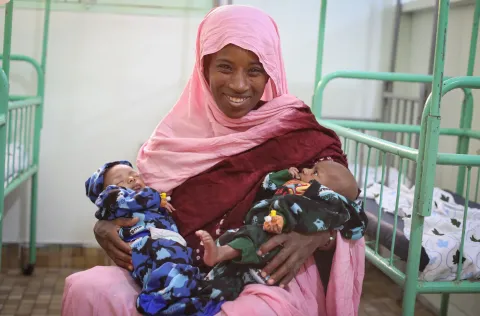
Mariam, who is also two and a half years old, is just as comfortable and healthy as Seydou. She was cared for at the same hospital with her mother, Fatoumata. Their stay coincided with that of Seydou and his mother, allowing them to share moments of life and hope together.
Although her husband was abroad when Mariam was born prematurely, he supported Fatoumata and encouraged the family to ensure that both mother and daughter received Kangaroo Care at the hospital. Fatoumata was thus able to rely on the invaluable support of her loved ones. This family solidarity helped her maintain courage and confidence.
Having herself been born prematurely, she remembers her mother’s words:
“If you survived, why wouldn’t your child?”
These words gave her renewed strength and unwavering determination to support Mariam.
“Our hospital stay went very well. The medical team created a reassuring environment through their professionalism and compassion—so much so that you sometimes don’t even want to go home!”
Fatoumata remains deeply hopeful for her daughter’s future. She believes that Mariam may one day become a great doctor and, in turn, save lives. She also shares a message for mothers of premature babies:
“Be courageous, because no one else can do this for you.”

“Do everything you can to bring your premature child to a specialized facility and practice Kangaroo Care. Your child’s life depends on it.”
Massaran Traoré, mother of Seydou, born at 25 weeks
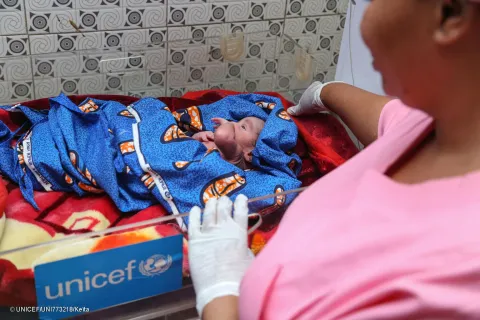
Fatoumata, 12 days old, is hospitalized in the Kangaroo Care unit with her mother, Maimouna.
“I was referred here because I was told that the health workers know how to properly care for premature babies.”
Fatoumata was born at 31 weeks of gestation, weighing 1,300 g, whereas a full-term pregnancy usually lasts around 40 weeks, with newborns typically weighing between 2,500 g and 4,000 g.
“Kangaroo Care is demanding, but I’m holding on. My husband helps by taking over at night. What matters most is our child’s health. Thanks to a skilled team and quality equipment, the care is going extremely well. Thank God, Fatoumata has already gained weight, and if everything continues this way, we will soon be able to go home.”
Dr. Niomo Kontao has been a pediatrician at Mohamed VI Hospital in Bamako since its opening in 2022. She is part of a highly skilled medical team that includes doctors, midwives, and specialized nurses.
“I chose pediatrics out of passion, because it begins with the newborn—this fragile being who needs support to grow. Prematurity is not a fatality. With appropriate care and trust between parents and doctors, every child has a chance to live and grow fully.”
Kangaroo Care (also known as Mother Kangaroo Care) is primarily intended for premature newborns (born before 37 weeks of pregnancy) or babies with low birth weight (less than 2,500 g) who are stable and show no signs of respiratory distress. Babies weighing less than 1,500 g are first admitted for stabilization in incubators, then transferred to the Kangaroo Care unit, where mothers and family members are introduced to the practice. Outpatient follow-up can begin once discharge conditions are met.
“During the hospital stay, we prepare mothers both psychologically and medically. The baby must be carried continuously, 24 hours a day, which requires the support of a relative. This method reduces the length of hospitalization, strengthens mothers’ confidence, lowers stress and infections, and creates a strong emotional bond between parents and their child.”
UNICEF provides strategic support to health facilities in Mali, including Mohamed VI Hospital, by strengthening their technical capacity and improving Water, Sanitation, and Hygiene (WASH) infrastructure. This support helps equip health facilities with modern neonatal equipment, ensure a safe and hygienic environment, and improve the quality of care for newborns and children. Through these interventions, healthcare workers can deliver appropriate care under optimal conditions, contributing to reduced infant mortality and improved maternal and neonatal health.
Mohamed VI Hospital in Bamako is a place of hope. Thanks to the expertise of its teams and innovative approaches such as Kangaroo Care, fragile lives are saved every day.