Strengthening resilience in schools to better cope with climate shocks in the South
UNICEF is organising the implementation of sustainable programmes in schools, financed by Zonta International, which target adolescent girls in particular.
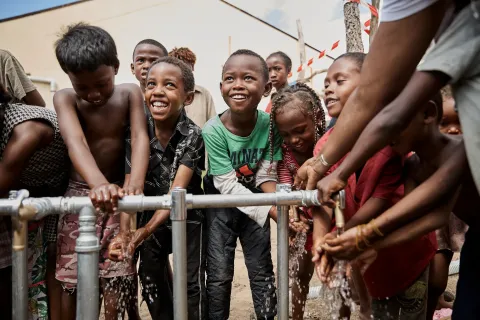
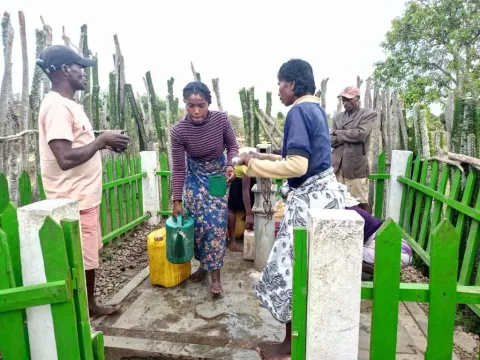
Madagascar is one of the countries most affected by disasters caused by climatic shocks and environmental degradation. As a result, the country is not meeting its sustainable development goals for water, sanitation and hygiene (WASH). In schools in particular, 81% of pupils lack drinking water and 31% have no basic latrines, according to an estimate by UNICEF France. In order to respond efficiently and sustainably to this situation, UNICEF, with the support of several partners, is organising the implementation of sustainable programmes financed by Zonta International, targeting adolescent girls in particular. Five primary schools in the Androy region have benefited from complete WASH kits, including the rehabilitation of existing water points, the distribution of handwashing devices and, soon, the construction of climate-resistant latrines separate for boys and girls. In addition to this, teachers and pupils take part in a training on the environment that incorporates the iKa'lio game, a tool designed to promote menstrual hygiene management (MHM). This ensures that communities learn in a playful way in a safe and inclusive space, transforming them into agents of change capable of building resilient communities in the face of climate challenges.

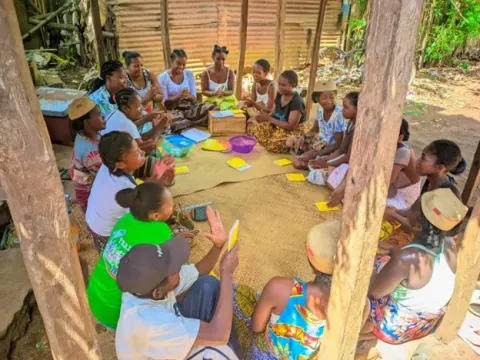
Presentation of iKa'lio, an educational game designed to raise young women's awareness of hygiene practices during menstruation, adapted from the traditional Malagasy game of Katro. Bodo and Lalatiana, from UNICEF, help teachers understand the game and take in information about the importance of good habits, knowledge, attitudes, and practices around menstrual hygiene management.
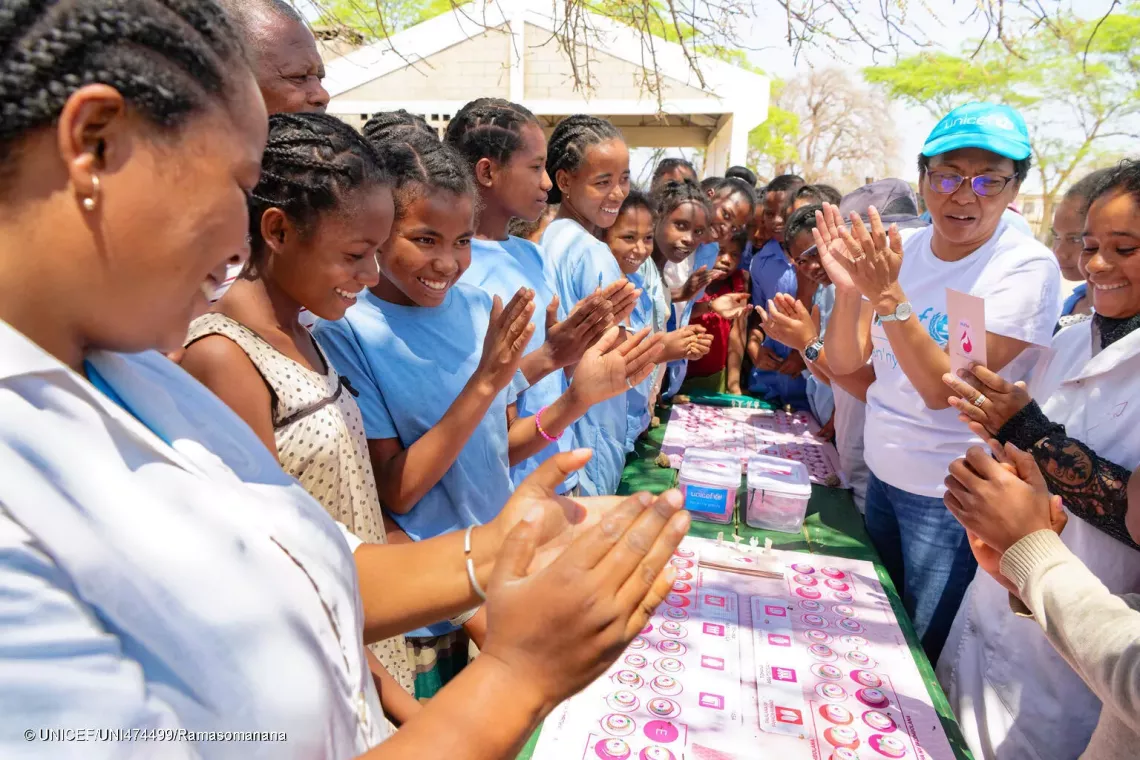
Now it is the pupils' turn to discover and play iKa'lio. The girls are fully committed to the game and are enjoying it immensely.

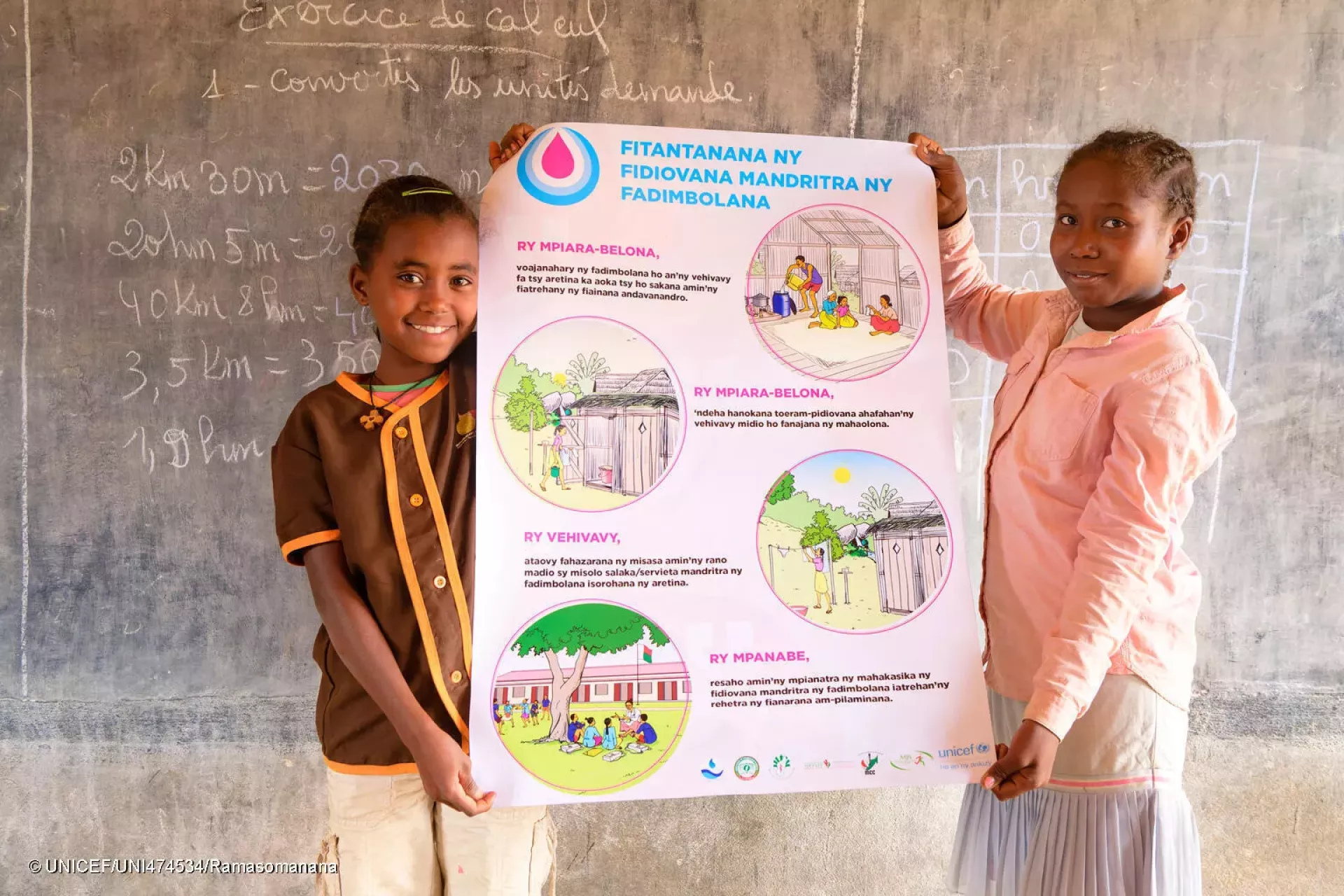
The children learn about good practices and sanitation and hygiene measures using a variety of media. Here, Tema, aged 12, proudly stands in front of her classmates as she presents the poster on menstrual hygiene management, while Clarisse, a 5th grade teacher, explains the contents of the poster.
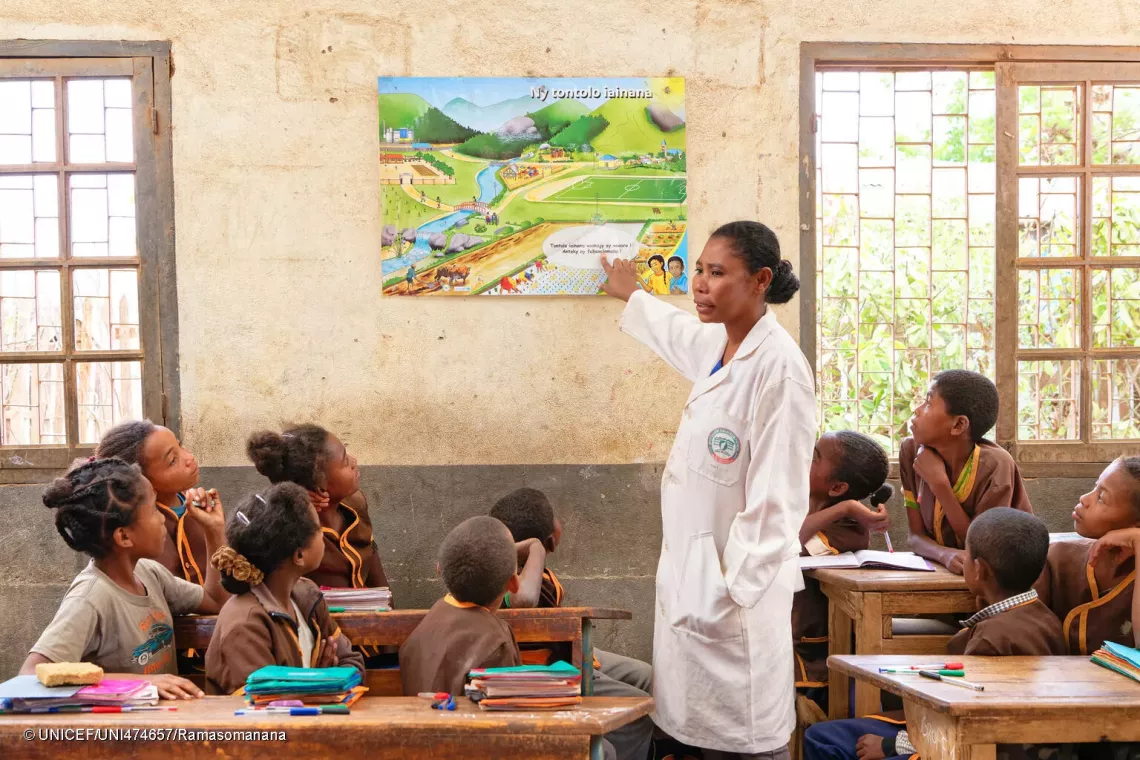
In a different classroom, Niaina, a teacher for Year 11, presents the benefits of respecting the environment using a poster on the wall. The walls are decorated with several posters raising awareness about environmental education.
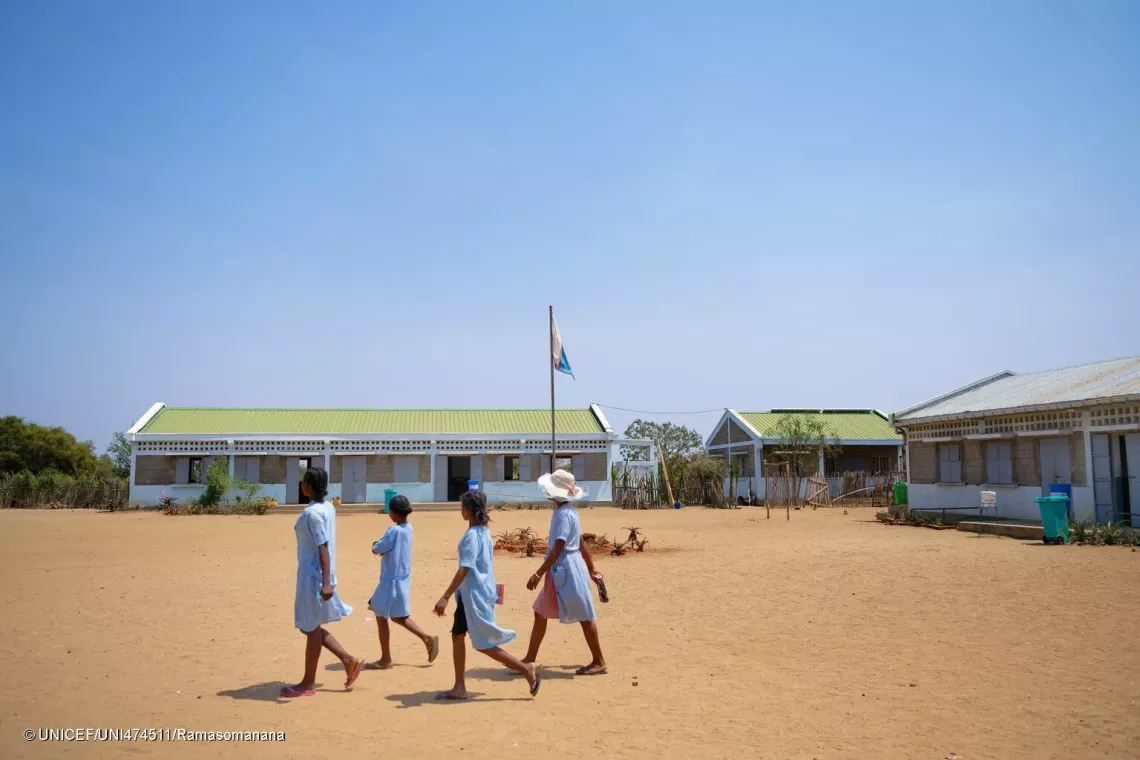
The five schools benefiting from the support programme funded by Zonta International and implemented by UNICEF have also received WASH kits, including handwashing devices, cleaning and waste management kits, and gardening kits.
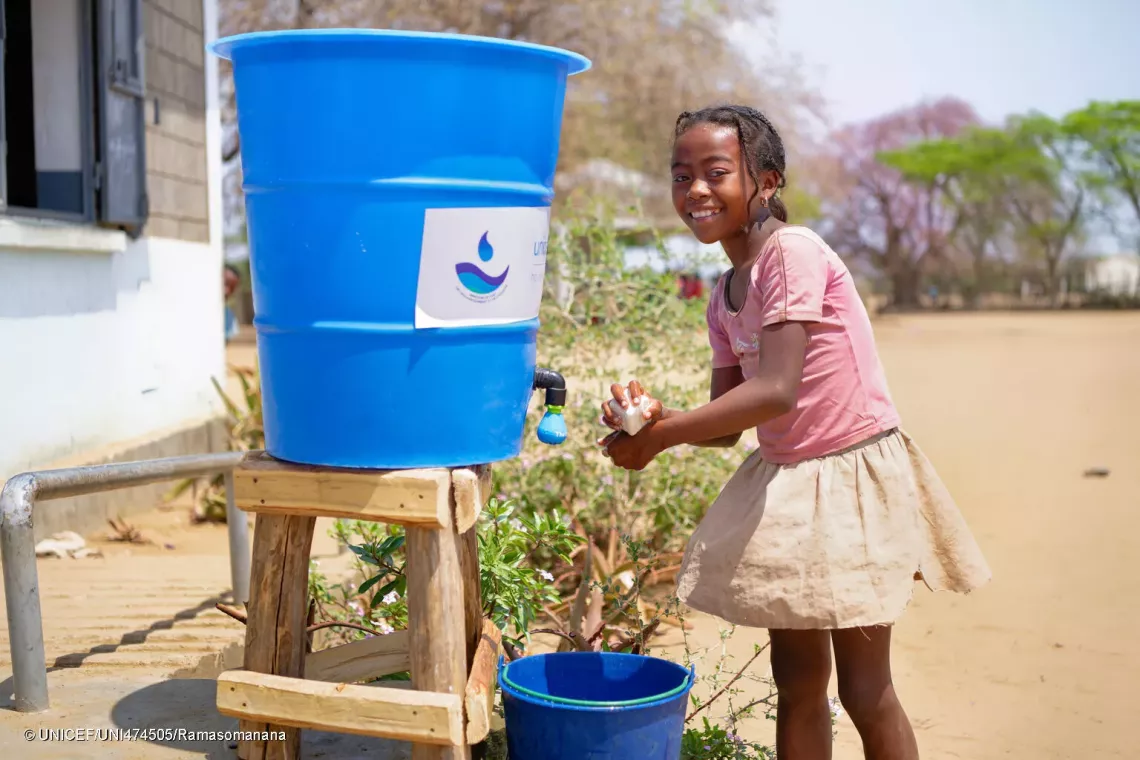
Florentine, aged 11, remembers the most important times to wash her hands. She does it with a smile, using soap and water after going to the bathroom, one of the key moments for handwashing, before returning to class.
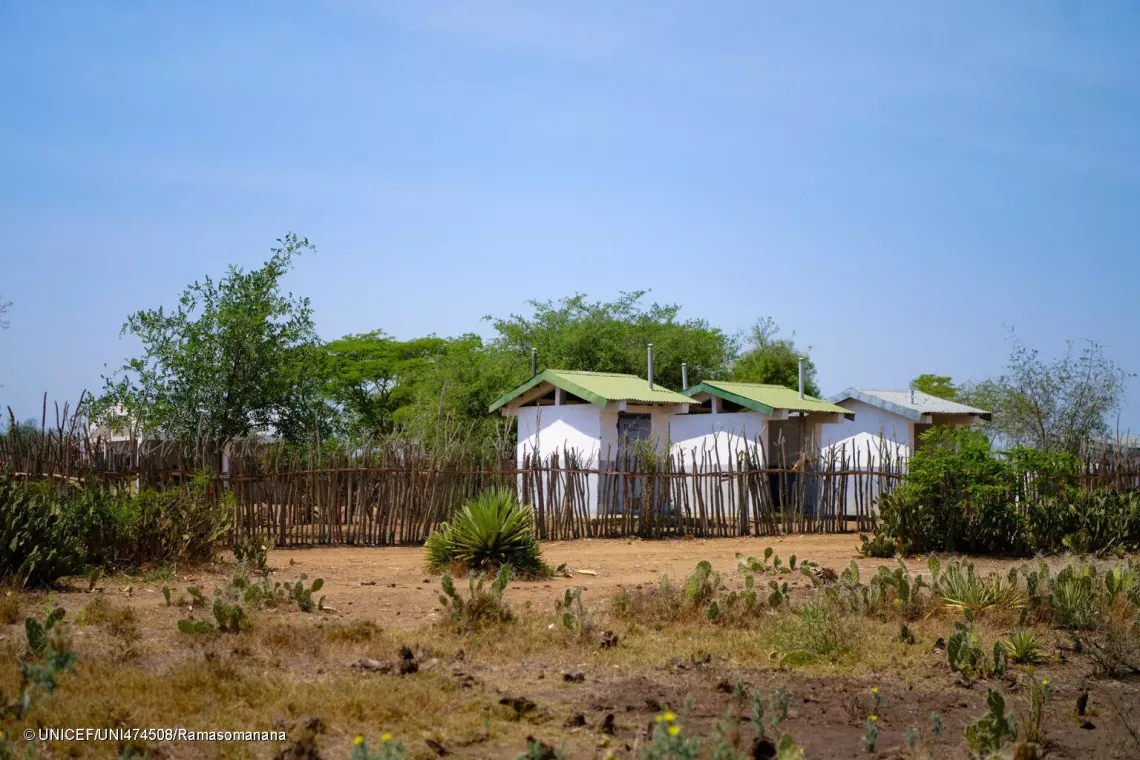
To ensure the well-being of the children and guarantee hygiene and comfort standards are followed, her school in Behabobo has separate toilets for boys and girls. These sanitary facilities were built together with all the school buildings according to inclusive norms, thanks to UNICEF's initiative.

The school is also equipped with a water pumping system powered by solar panels, providing access to water in an ecological and sustainable way. In addition, the raised cistern stores water for days when there is less sunshine.
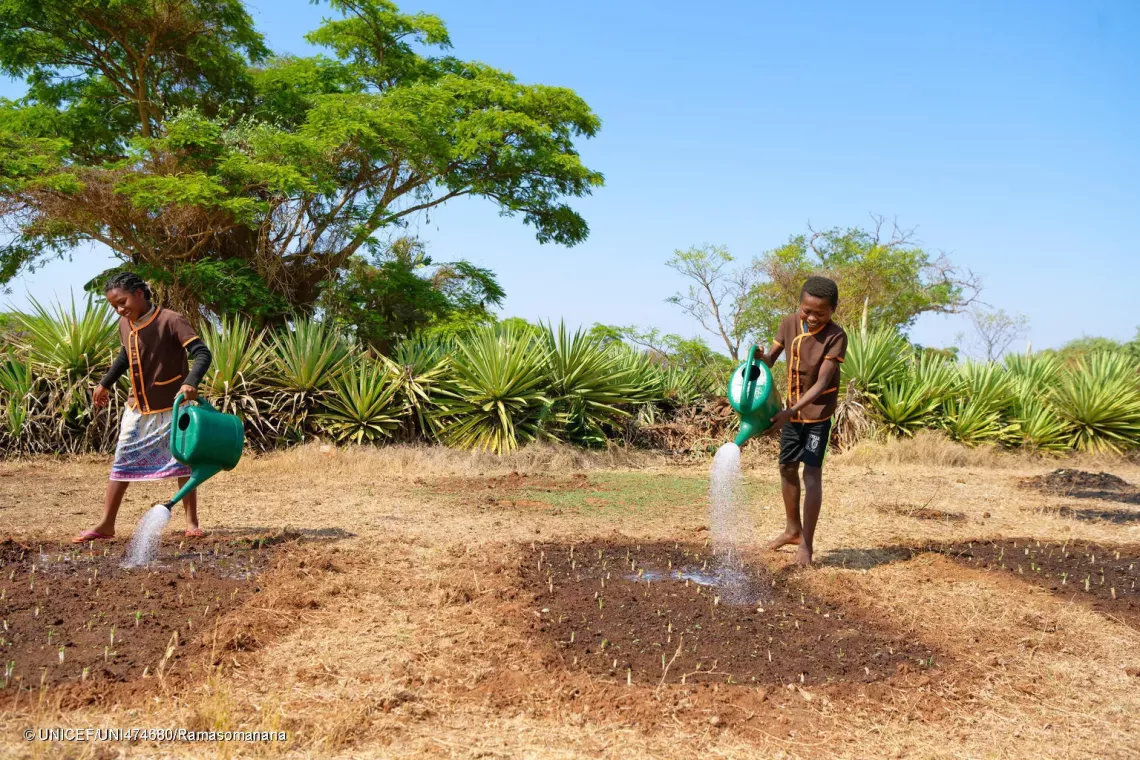
Supplying water to schools enables pupils to put into practice the environmental knowledge they learn in class, such as how to grow a vegetable garden. Sijahanitra, aged 11, and Lahaminosoa, aged 13, water vegetable plants in the courtyard of their school in Ankilimilopake.