Safe, treated water to better protect children
Thanks to chlorination, families have access to treated water and can better protect their children's health.

- Français
- English
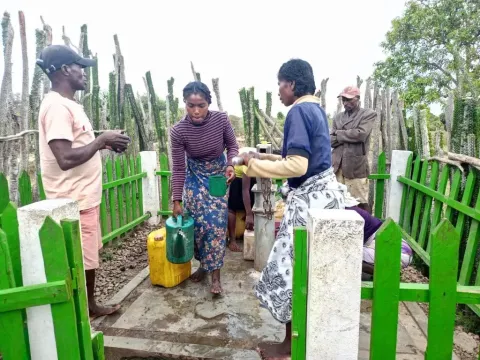
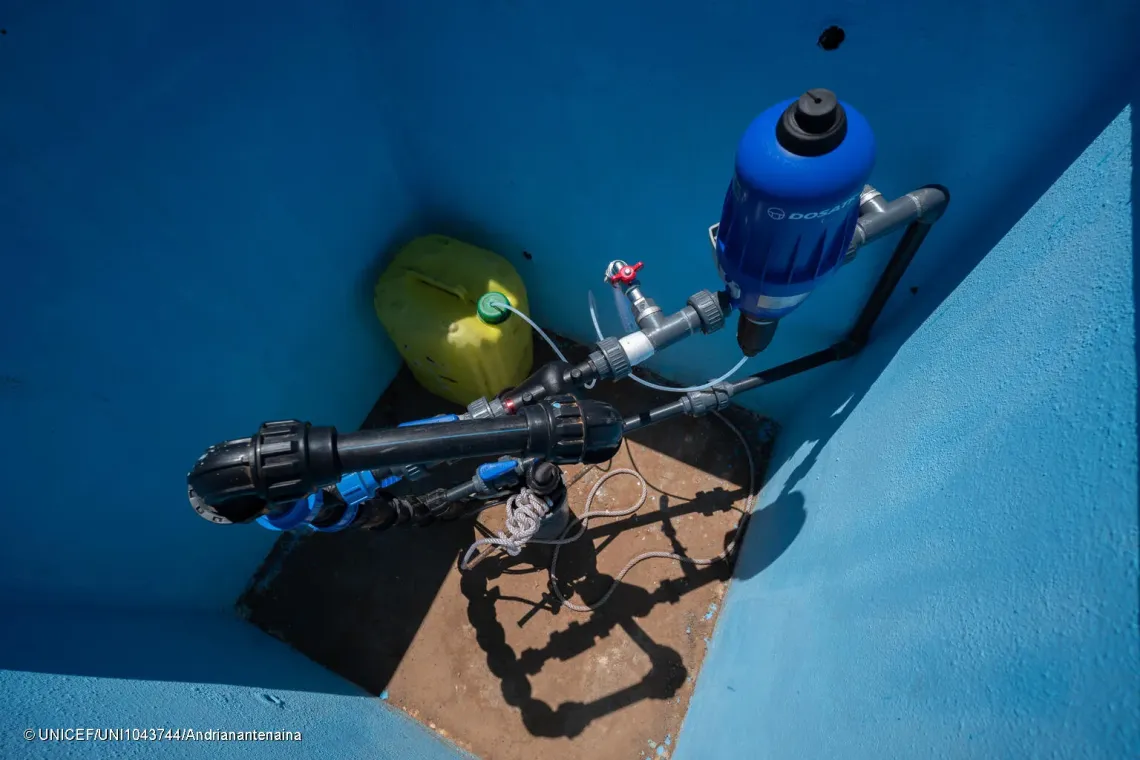
Along the national highway running through the eco-village of Ehavo, in southern Madagascar, bush taxis pass one after another, kicking up clouds of dust. Just a few metres away, the water point welcomes residents every day as they come to fill their jerrycans. Vitasoa and Jean-Pierre are there to greet them from 9 a.m. to 3 p.m. They sell water to the community, look after the facilities, and support the operator who ensures the right amount of chlorine is added to the water supply, using a chlorination unit recently installed by UNICEF.
"We make sure the service is well organized and that everyone is satisfied," says Jean-Pierre. Over time, the two managers have become a familiar presence for the people who come to collect water. The water point has become an important part of daily life, giving families access to treated water close to home.
For Haovanatolotsoa, mother of 16-month-old Fanjara, treated water is above all a way to protect her child's health.
We feel reassured about the quality of the water. It tastes a little different because of the chlorine, but it is better to drink safe water.
The water also supports other activities in the village. Jean-Pierre, who is also a member of the local farmers' association, has seen how its availability is helping agriculture grow.
Across the village, access to water is improving daily life for families. With chlorination, residents now also have treated water, which is essential for protecting health, especially that of young children like Fanjara.
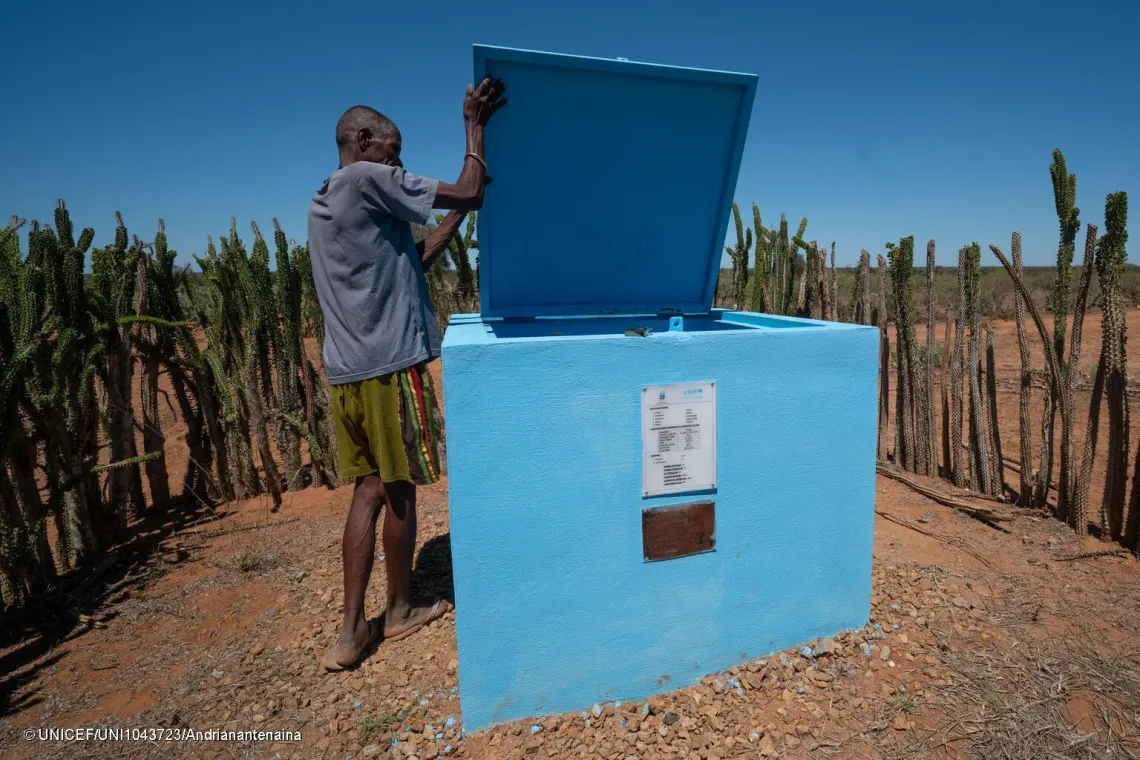
Since the beginning of 2026, UNICEF has been supporting the introduction of water chlorination in southern Madagascar. The chlorine is produced locally using devices that require only salt and solar energy. So far, the project covers 48 villages and benefits around 53,800 people, helping to improve water quality and reduce the risk of waterborne diseases. A total of 340 systems will be equipped by the end of the first quarter of 2027.
Note: Water chlorination is being implemented with support from the U.S. Fund for UNICEF, in partnership with GiveWell.