Responding to the water shortage in southern Madagascar
Multiple use of water and desalination systems help to meet the water needs of communities.

The lives of families in Manavy have changed thanks to the multiple use of water system
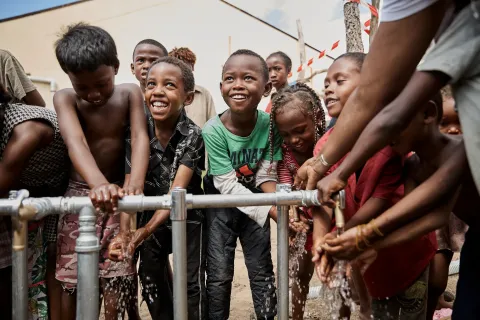
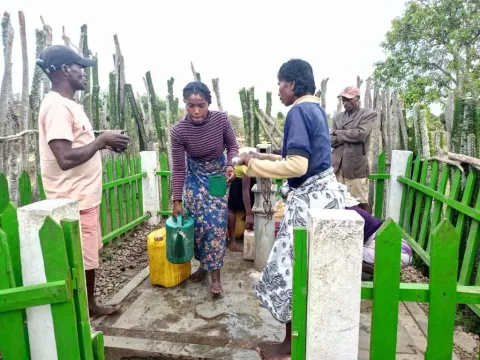
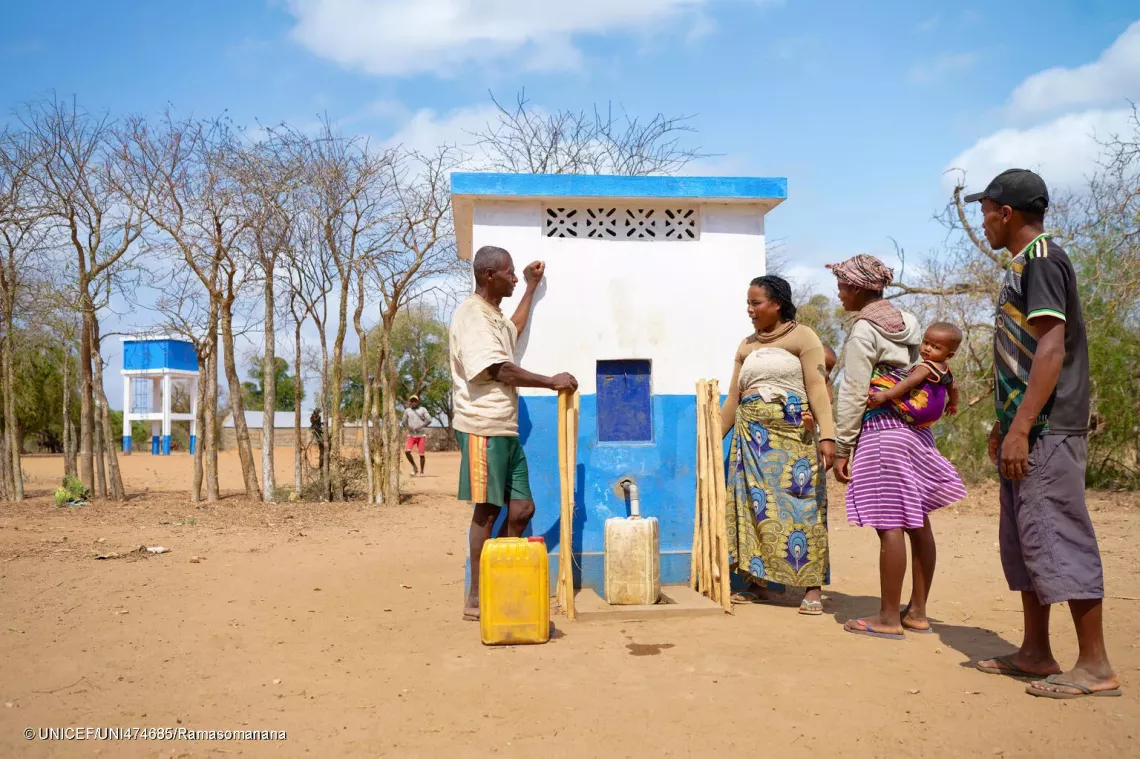
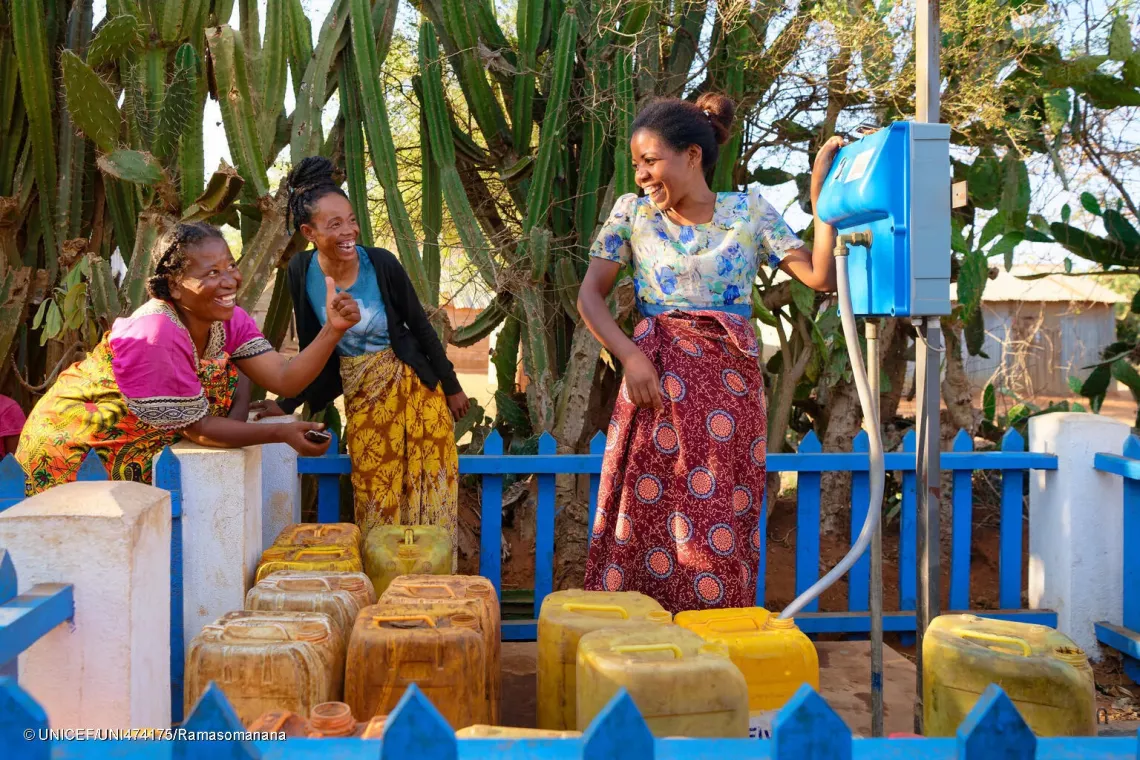
In the arid south of Madagascar, UNICEF has undertaken a crucial mission to resolve the persistent water shortage that afflicts communities. The solution? A multiple use of water system powered by solar panels and managed by kiosks in each village, to meet the various needs of the community: access to water, agriculture and livestock.
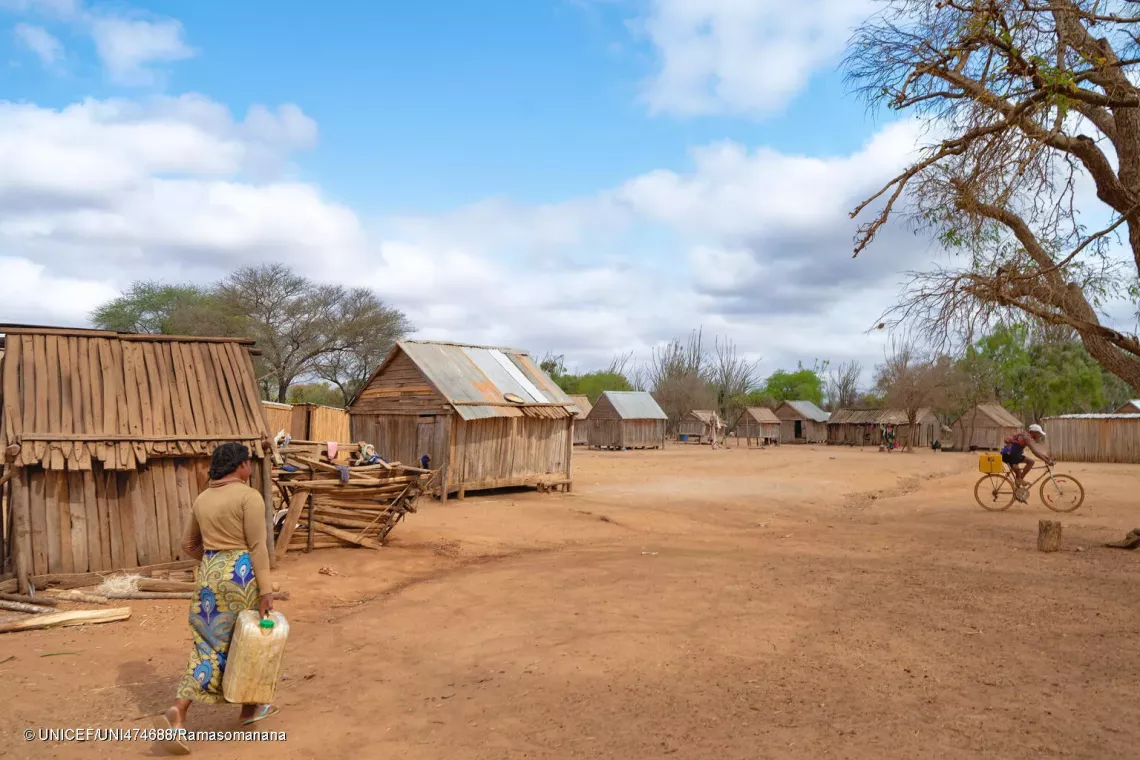
In Manavy, Ahovafidiazy, a young mother of three, has seen her life change since the introduction of this system. Finidisoa, her 9-month-old baby, was suffering from malnutrition. He was treated with Koba, a nutritional alternative to PlumpyNut (a ready-to-use therapeutic food paste), and drinking water supplied by the kiosk. Ahovafidiazy shares her feelings: "The Koba and the clean water from the kiosk were a real relief for my baby's health. It has brought a glimmer of hope to the difficult life we lead." Ahovafidiazy also uses the water for cooking and washing. To wash her laundry, she uses water from the old water point, 2 km from the village. She buys 5 or 6 20-litre cans a day from the kiosk, for 100 ariary each, or 0.022 USD. The fountain attendant, Mara, a village elder, ensures efficient daily distribution, and also manages the drip system that waters the vegetable field.
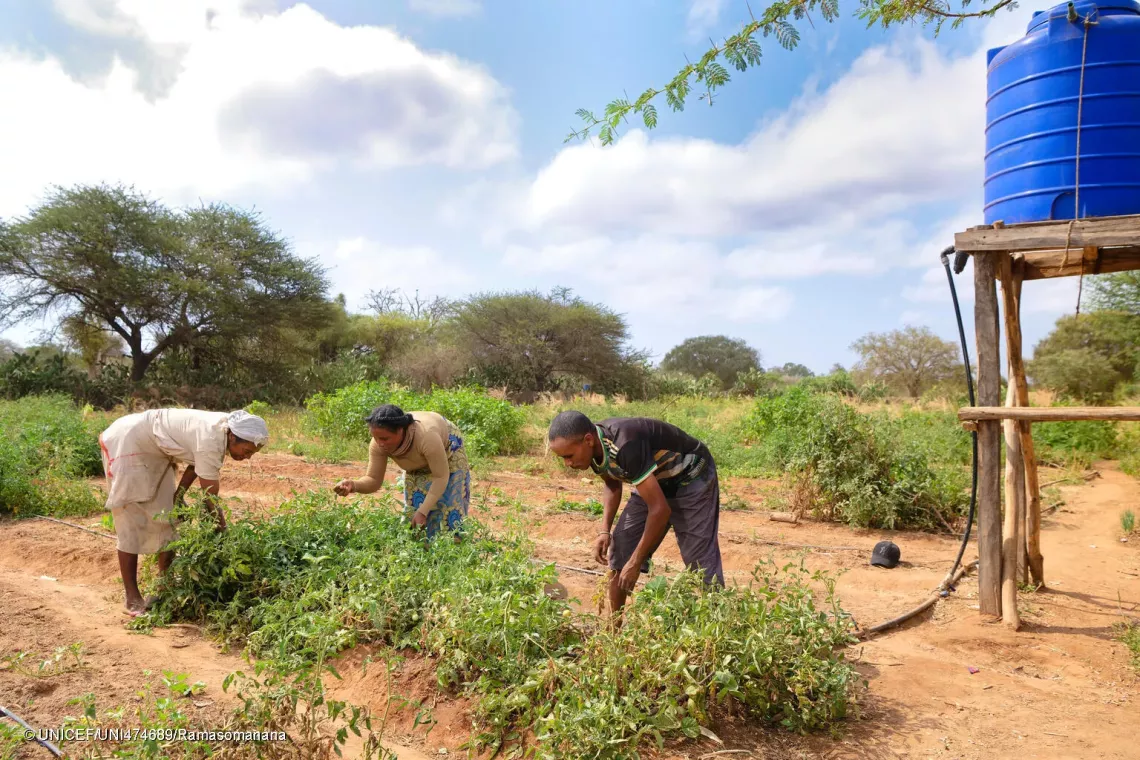
Sambeandrae, another resident of Manavy, has also benefited from the system. Thanks to the water supplied, she has been able to grow a variety of vegetables with other members of the local farmers' association. This association, made up of men and women, grows pineapples, tomatoes, onions, sweet potatoes, pumpkins, courgettes and carrots. In total, 67 members of the local association are actively involved in maintaining the field, strengthening solidarity within the community and providing a source of food for the village. She shares her experience, saying: "Thanks to the drip system, we have been able to diversify our crops and provide a stable source of food for our village." The system also provides water for the animals. This ensures an essential supply for livestock and contributes to the needs of the community.

Desalination gives Ambondro communities access to drinking water
In Ambondro, a neighbouring village, water management has been entrusted to a private company, which also supervises the desalination process prior to distribution. Mbola, as the company's manager, is responsible for overseeing both the desalination process and water distribution. Noella, who is 8 months pregnant, shares her experience of the last three months since the introduction of desalinated water to the community. She says: "For the past three months, I have finally been able to drink quality water that tastes just like bottled water. This desalinated water is mainly used for drinking, while for other household needs, the villagers still prefer to use well water."
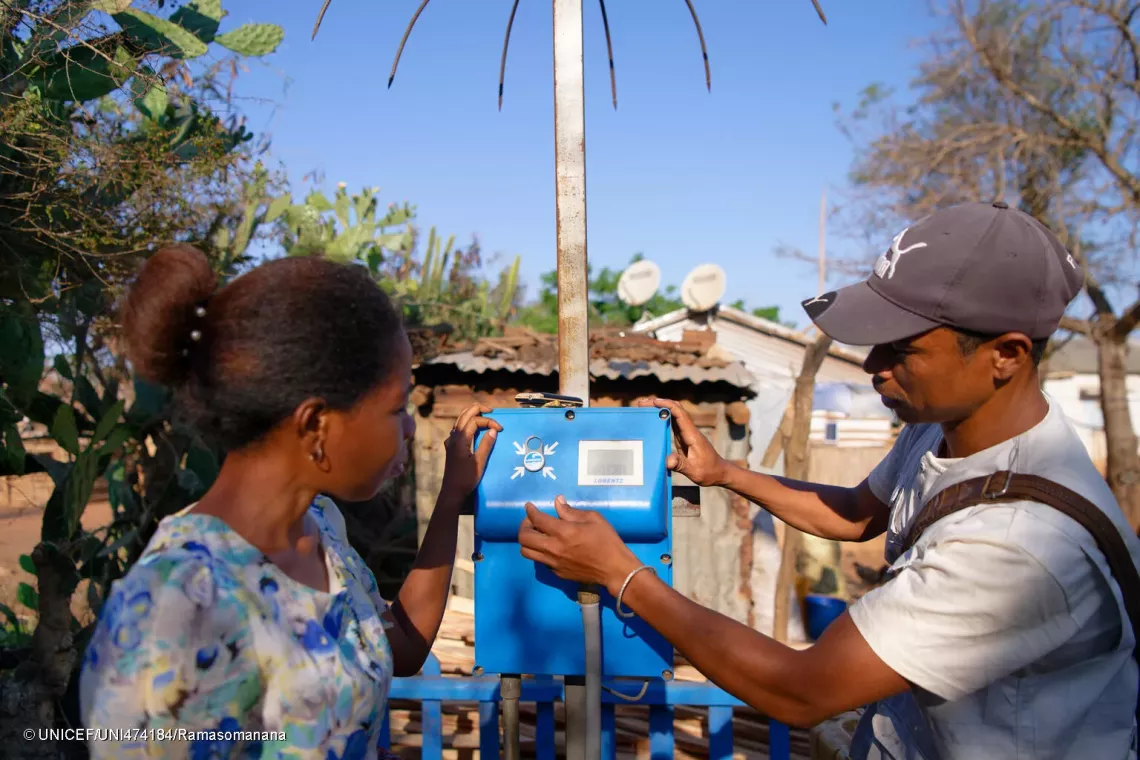
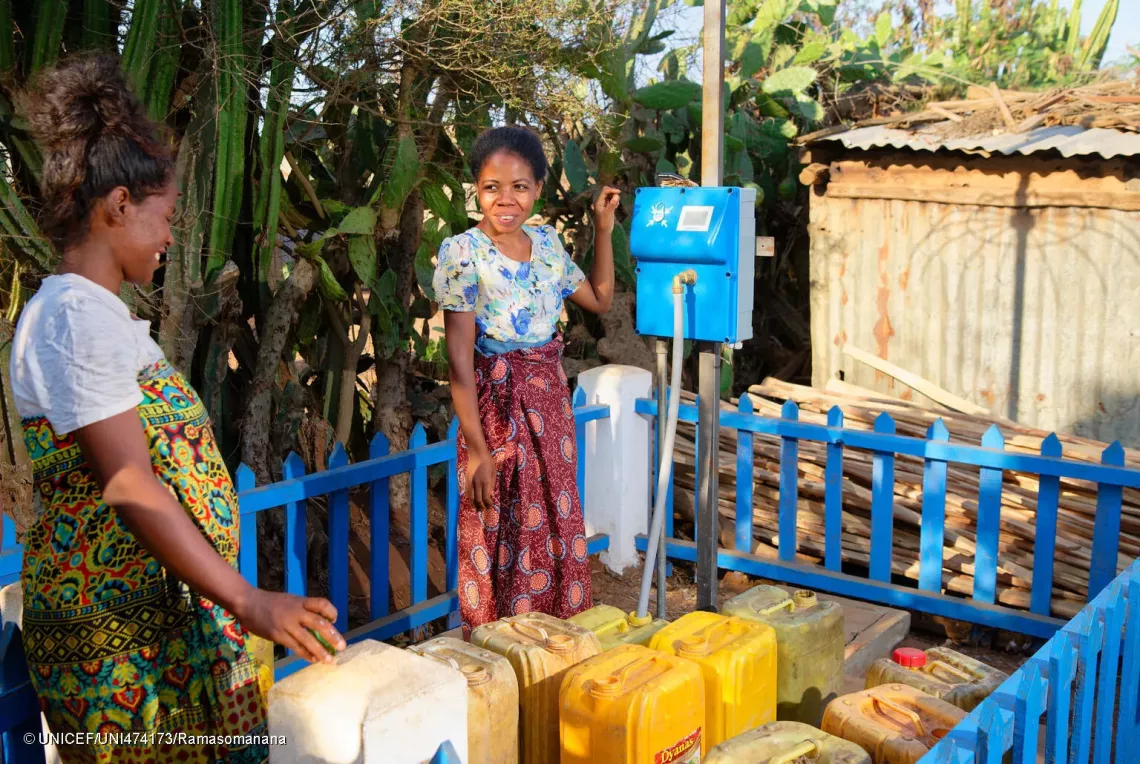
Vololoniaina, who works as the fountain attendant in Ambondro, plays an essential role in water distribution. In recognition of her services, she receives 10% of the payment every two months. She notes that the task of drawing water from the fountain is mainly carried out by women, although men also take part in the heavier tasks, using carts, for example, like the one Lambofomesoa handles. The pre-payment system used ensures that the system is well managed and, above all, sustainable.

UNICEF's impact in these arid villages is tangible. Access to a reliable source of drinking water has not only improved the health of the inhabitants but has also opened up agricultural opportunities, thereby strengthening the resilience of these communities in the face of recurrent water shortages.