Green schools to introduce pupils to environmental protection
In this article, meet students from different regions of Madagascar and find out why they are getting involved in tree planting.
- Français
- English
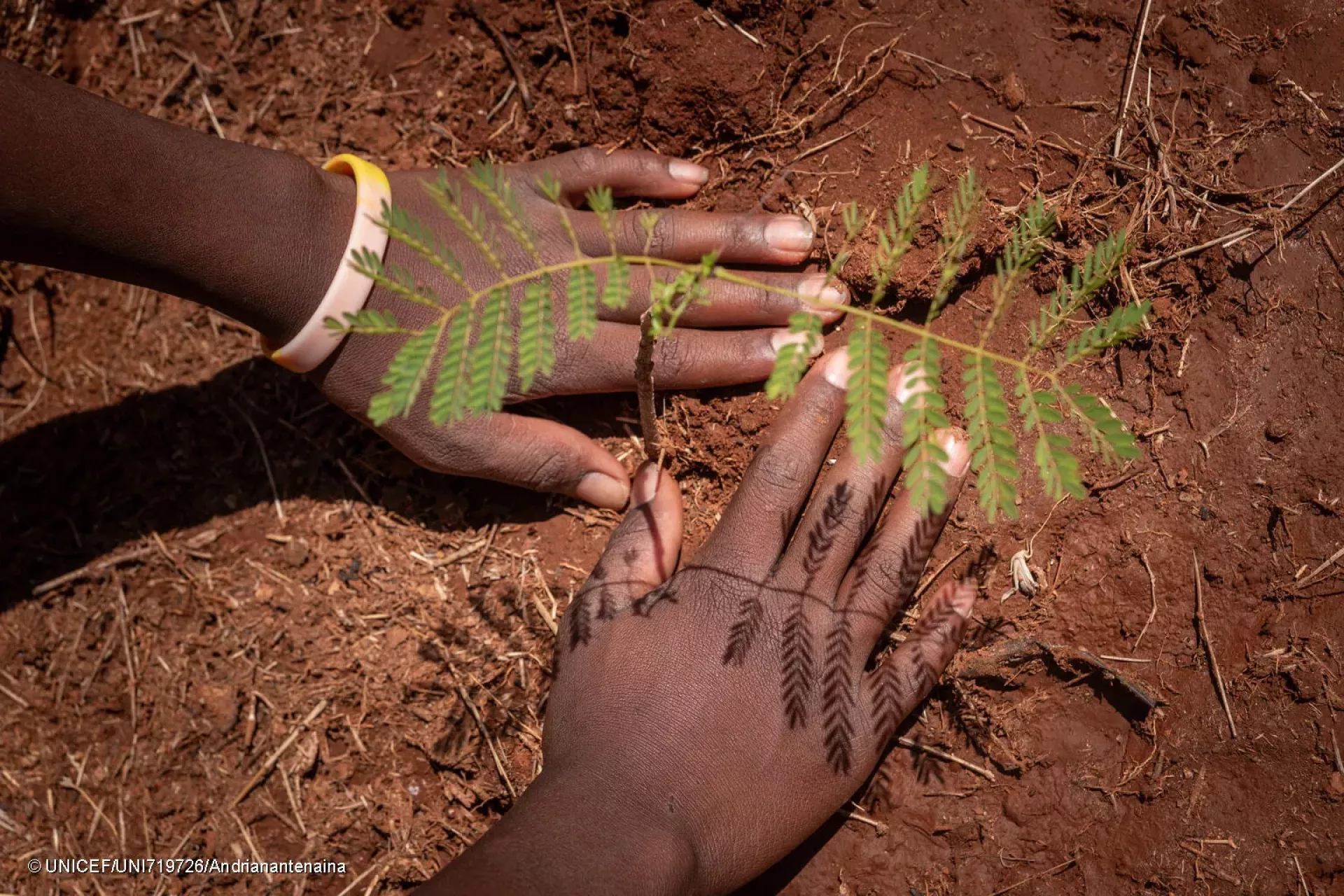
In the village of Terabovo, the pupils of the state primary school are preparing to plant young trees on the school grounds. As the first drops of rain fall on this usually arid region, their enthusiasm is written all over their faces. Hanitriniaina, 12, is one of the first to plant a seedling. ‘’We didn't know anything about this before, but our teacher taught us why it's important to plant trees and how to do it properly‘’, she says.
‘’These trees will provide us with clean air, rain and better health. And it's always more pleasant to study in a school surrounded by greenery‘’, adds Hanitriniaina with a smile.
Hanitriniaina takes pride in caring for her tree, watering it every day with water provided by UNICEF in the village, knowing that this simple act contributes to the greenery at her school and the well-being of her community.
In this region of the island, several consecutive years of drought have destroyed crops and compromised access to food. Although the situation has somewhat improved in recent years, part of the population is still struggling to survive. To raise awareness among children and young people about the need to protect their environment and to instill in them a sense of responsibility, UNICEF and its partners have launched the ‘One Student, One Tree’ programme.
This initiative, which encourages each student to plant and care for a tree, has gradually evolved into the ‘Green School’ programme. The latter goes beyond simply planting trees by integrating ecological practices within schools, such as sustainable water or waste management, the upkeep of green spaces and education on the impacts of climate change. The aim is to integrate these good practices into the daily lives of pupils and to make schools into beacons of environmental resilience within their communities.


Madagascar and climate change
Miles away, at the college in Antanimora, in north-western Madagascar, girls and boys are also busy around the greenhouse where young plants are growing under their watchful care. Watering cans in hand, they tend to the seeds in the nursery. "It's our way of ensuring a greener future for generations to come. And planting trees is also a moment of pleasure and sharing”, explains Sarobidy, a 15-year-old student involved in this initiative.
According to UNICEF's Children's Climate Risk Index, launched in 2021, Madagascar is one of the 10 countries where children are most vulnerable to the effects of climate change due to limited access to water, sanitation and hygiene (WASH), high poverty rates, inadequate social services, mainly in terms of health and nutrition, and low levels of education.
Through these actions, the pupils become agents of change, aware that every tree planted is a promise for tomorrow.
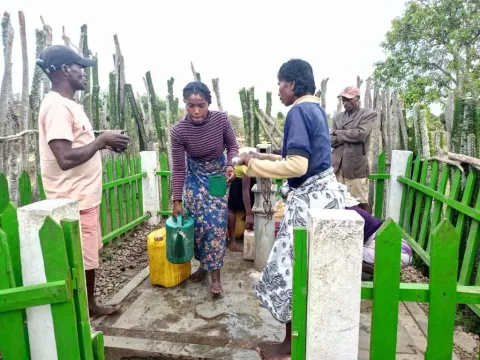
“Access to water has enabled us to plant fruit trees all around the school”, says Fredine, a 14-year-old student at Ankaranabo secondary school in southern Madagascar.


UNICEF and its partners, through its ecovillage program, support the “Green School” program with funding from Zonta International, the Findel Foundation, and the Today and Tomorrow Initiative. This ecovillage establishment program is also funded by the National Committees for UNICEF in Belgium, the Netherlands, the United Kingdom (Moondance and Eleva foundations), France, Andorra, and Germany.