Fagniria, the symbol of hope for Malagasy children with albinism
Fagniria is a young child with albinism. His story proudly symbolizes inclusion and the ongoing struggle for access for all Malagasy children to their rights.
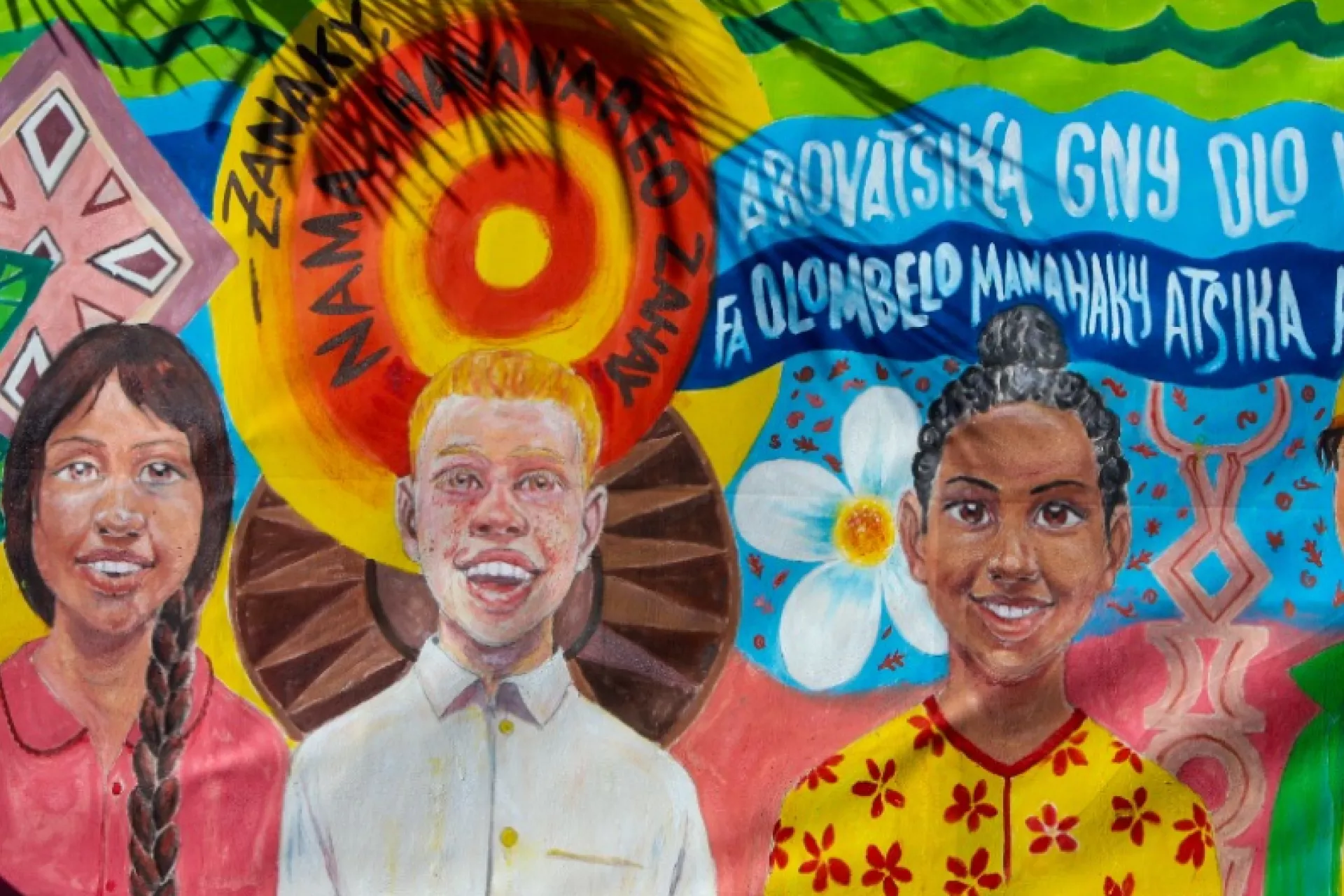
Fagniria is the main character of a tale imagined and illustrated by 26 children, as part of the celebration of International Albinism Awareness Day. Because of his illness: albinism, he finds it difficult to fit in to society. By the lack of pigmentation in the skin, eyes and hair, he is the only one of his siblings to have this genetic disease. His condition is a permanent bone of contention between his parents, urging his mother to exchange him for a large sum of money.
In order to conclude the deal, his mother and her accomplices hide him deep in a cave. But Fagniria complains so much that cattlemen passing through bring him back to the surface and even to the village. The community is strongly affected by the event, while stating that Fagniria is a child like any other and deserves to be treated as such. A big party is organized in his honour and Fagniria receives several presents, allowing him to have a fresh start. He finally feels he exists and is considered beyond his diversity. In addition, his father leaves his mother because of this unfortunate incident.
Fagniria is a child like any other and deserves to be treated as such
Based on a true story
The tale is based on the testimony of Ben, a child with albinism who attended the workshop. Abducted and returned to his family five days later, he is one of the 13 cases of abduction of children with albinism recorded in the three southern regions of Madagascar over the past two years. Today, the abductions continue and like Ben, children with albinism and their families live in constant fear. "Since the tragedy in October 2021, we have been on the alert, fearing a new disaster, " says Mino, Ben's older sister. They are 5 out of the 8 children of his siblings to have this particularity.
"We are no longer safe, even in our own huts," continues Mino. Indeed, his brother was coaxed by a neighbour of the village. Another child present at the workshop was also hijacked by his guardian in exchange for hundreds of thousands of Ariary. "I managed to escape by shouting and running away," recalls Arie, 14.
The motivations behind these acts are financial and mystical. The perceptions and beliefs rooted in the communities regard these children as vested with special power. UNICEF and all of its government partners are united in condemning these barbaric acts and working to protect these children. The resolutions taken at the end of the workshop organized with State authorities, traditional leaders and members of civil society for putting an end to this violence and protecting these children, relate in particular to the strengthening of ‘dina’ (social contracts) as well as the sensitization of traditional leaders, spokespersons for the communities.
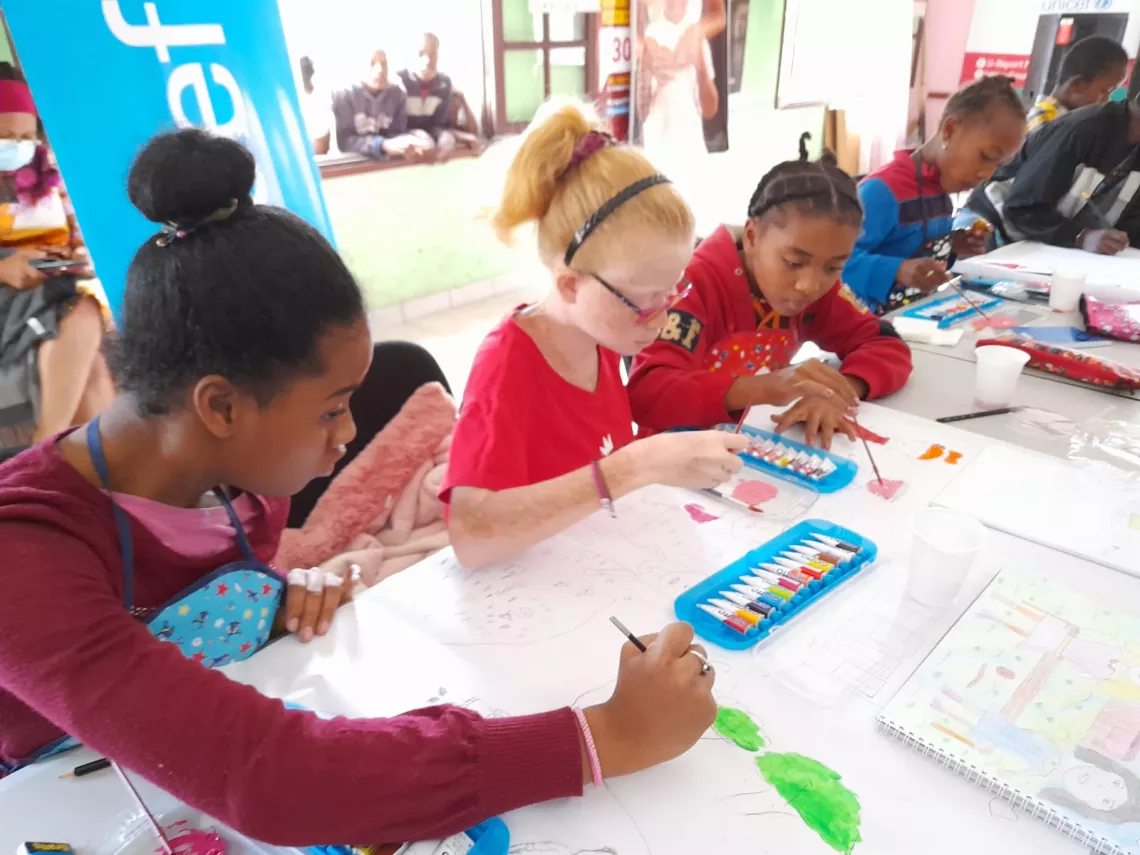
A child like the others
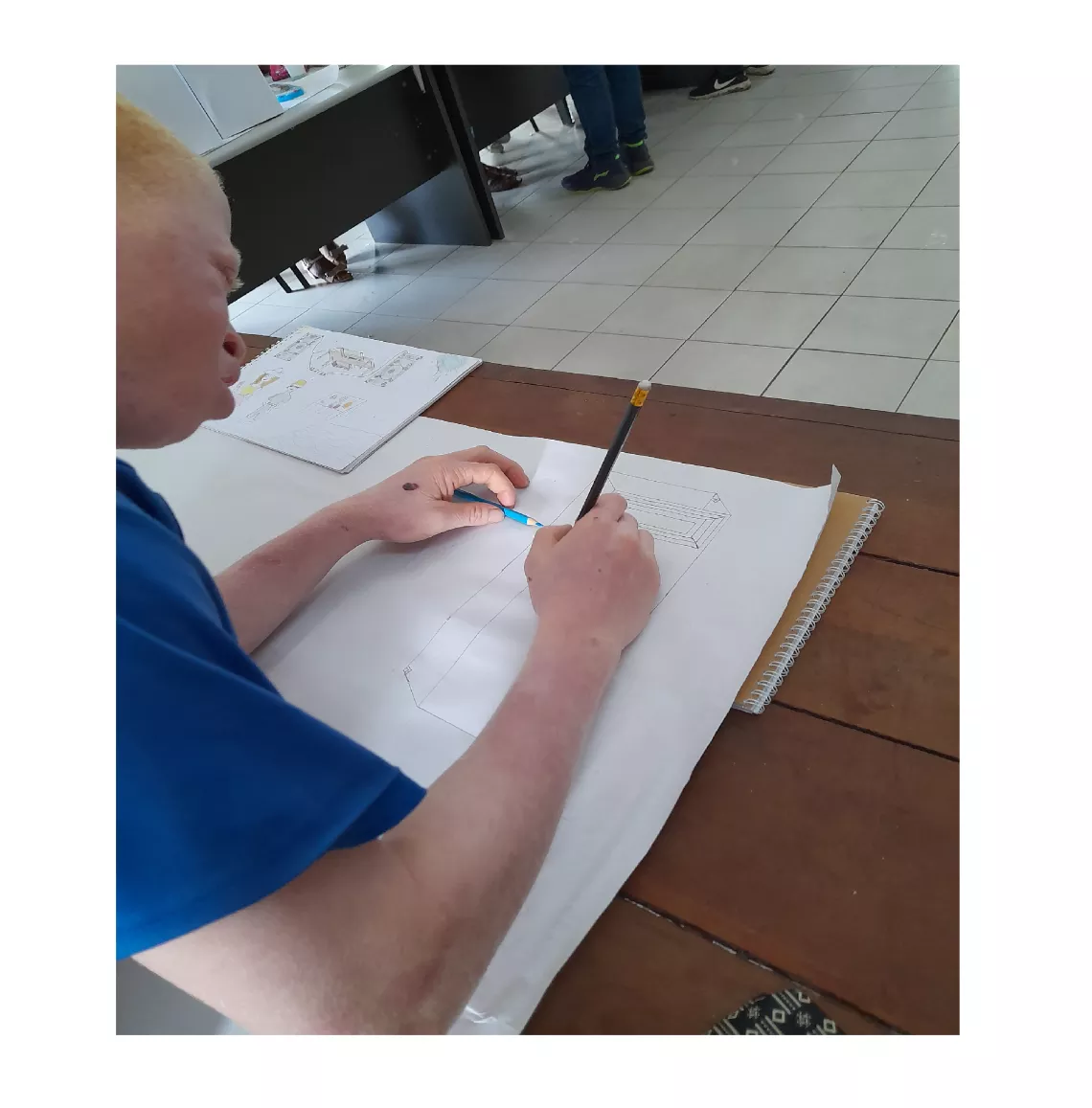
Ben clearly had fun during the 3-day workshop. Delighted to have a place among his peers, he forgot his trauma for a few moments: sometimes he laughs out loud, sometimes he is focused on his illustration. Ben recalls the importance for each child to enjoy the same rights at all levels. In terms of education in particular, specific needs are noted for a set of more inclusive system. "Ben is a participative and intelligent child. Because of his visual impairment, he must be very close to the board. To allow him to follow the programme, we involve his family members for a rigorous follow-up", explains the director of the Public Primary School he attends.
Discrimination and teasing take place outside the school. In Madagascar, children with albinism struggle for access to appropriate care, basic social services and even legal protection. "Provisions are made to supervise and reassure them: children are educated to respect the daily journeys between home and school, to report to adults in cases of doubt, not to speak to strangers..." she continues.
Ben recalls the importance for each child to enjoy the same rights at all levels.