Espace Mandady: a safe corner to play for the very young
Espace Mandady, a community play space developed under the Baby WASH approach, gives children under two a clean, protected place designed to support early learning.

- Français
- English
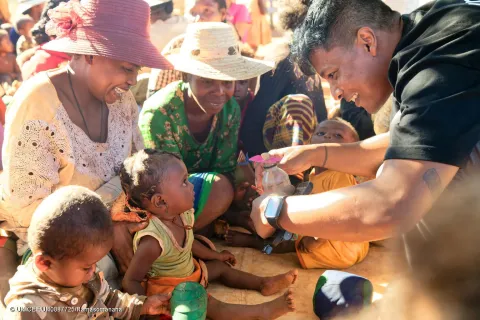
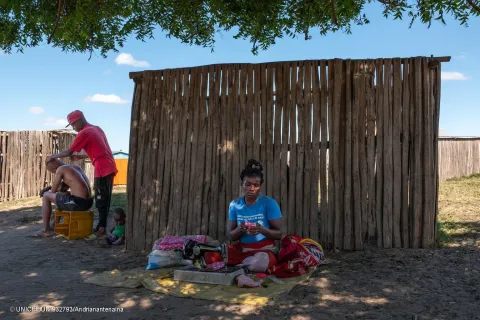
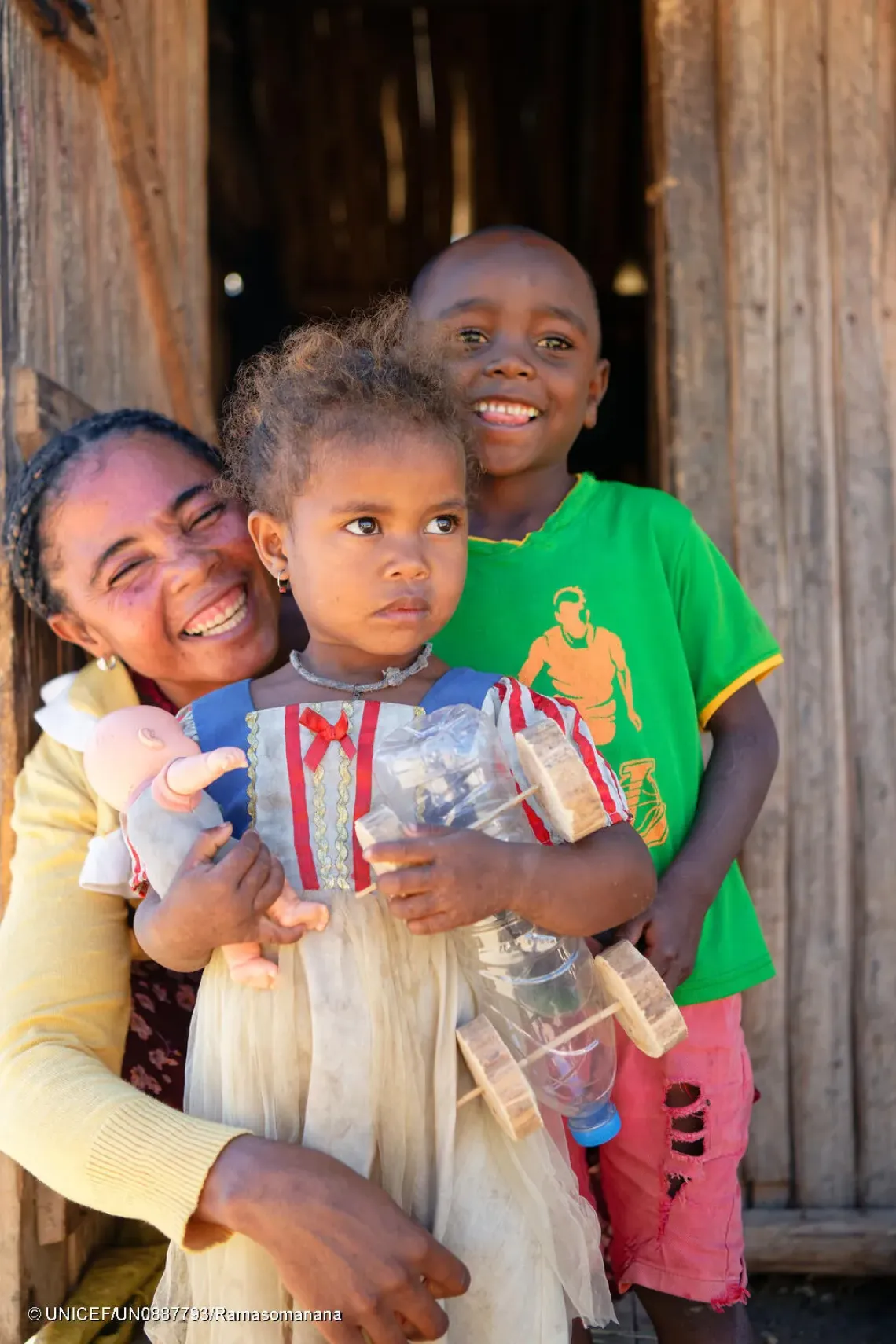
Like other families in the village of Ambotake in southern Madagascar, Nasolo Miza, 32, mother of Rodrigue, 4, and Tsodranoe, 2, regularly brings her children to Espace Mandady, set up just steps from her home.
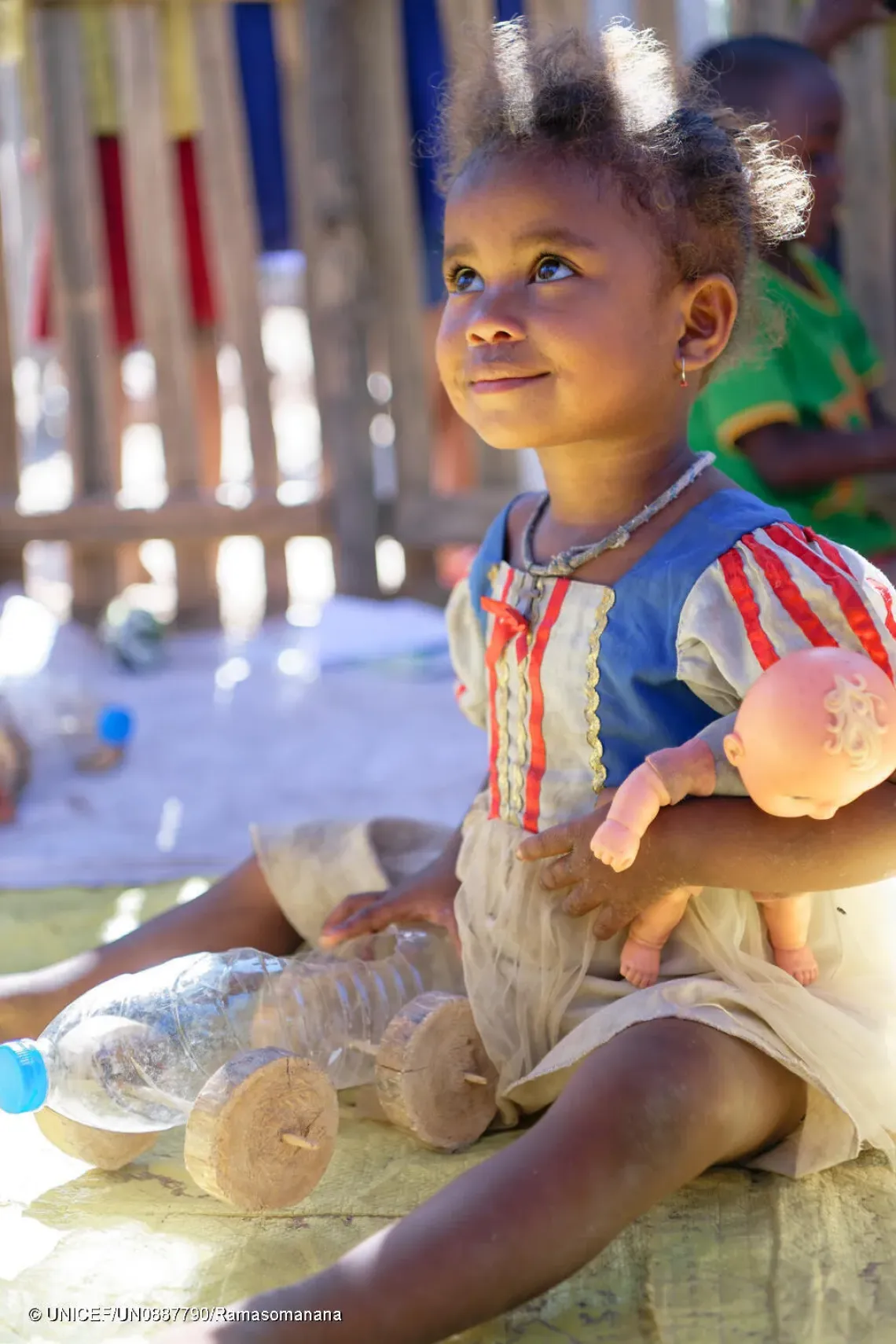
To her, it is far more than a simple mat where a child is set down to rest. It is a shared play space, designed so that Tsodranoe and children her age can explore, touch and handle things safely, away from dust and everyday hazards. Hygiene rules are built into the space, so that it stays both protective and clean.
I am satisfied, my children are healthy
To build their Espace Mandady, the parents pooled their own resources. Since then, families in the village describe the change: fewer illnesses, more alert children, and a place where parents know their little ones are safe while they go about their daily tasks.
This local progress reflects a wider trend across southern Madagascar: stunting has declined from 42 per cent to 37 per cent, and locally made toys are circulating more widely within communities.
Yet these gains coexist with troubling realities, which are a reminder of why spaces like the one in Ambotake remain necessary. Between 2018 and 2025, the proportion of children receiving stimulation at home fell from 25 per cent to 20 per cent, a decline that reflects persistent disengagement among families. Even more alarming, 88 per cent of children aged 1 to 4 grow up in an environment where violent discipline remains the norm.
Une approche communautaire pour la petite enfance
A community-based approach to early childhood
Souvienne is a nutrition technician with the NGO Sahy, a UNICEF implementing partner. Week after week, she supports families in Ambotake and the seven other villages of the Ankirikirika fokontany. Among other things, she has raised families' awareness of how to make toys from local materials, so that early learning does not depend on what can be bought.
On the ground, this support relies on a 15-member community support group focused on young children's education. Their activities follow a weekly rhythm: Thursdays for hygiene and sanitation, and Saturdays for a cooking demonstration followed by a discussion and a themed training session. The topics change every week, ranging from breastfeeding to the nutrition of pregnant mothers to feeding children from six months of age.
This rhythm is part of a broader approach that combines nutrition and WASH to prevent both hygiene problems and malnutrition: promoting varied, colourful meals, measuring mid-upper arm circumference, and community-led initiatives on toilet use, protecting children from hazards, and positive masculinity, which involve the fokontany president and community leaders. The whole plan of action stems from the community itself, but remains guided and monitored by technicians.
This commitment also draws on local figures: in every fokontany, a “Fivoarana Champion”, a natural, volunteer leader convinced of the benefits of the changes underway, devotes themselves to awareness-raising activities and may even go on to join the support group.
Before, children often had diarrhoea. Today, in villages with an Espace Mandady, they are developing better, both mentally and physically
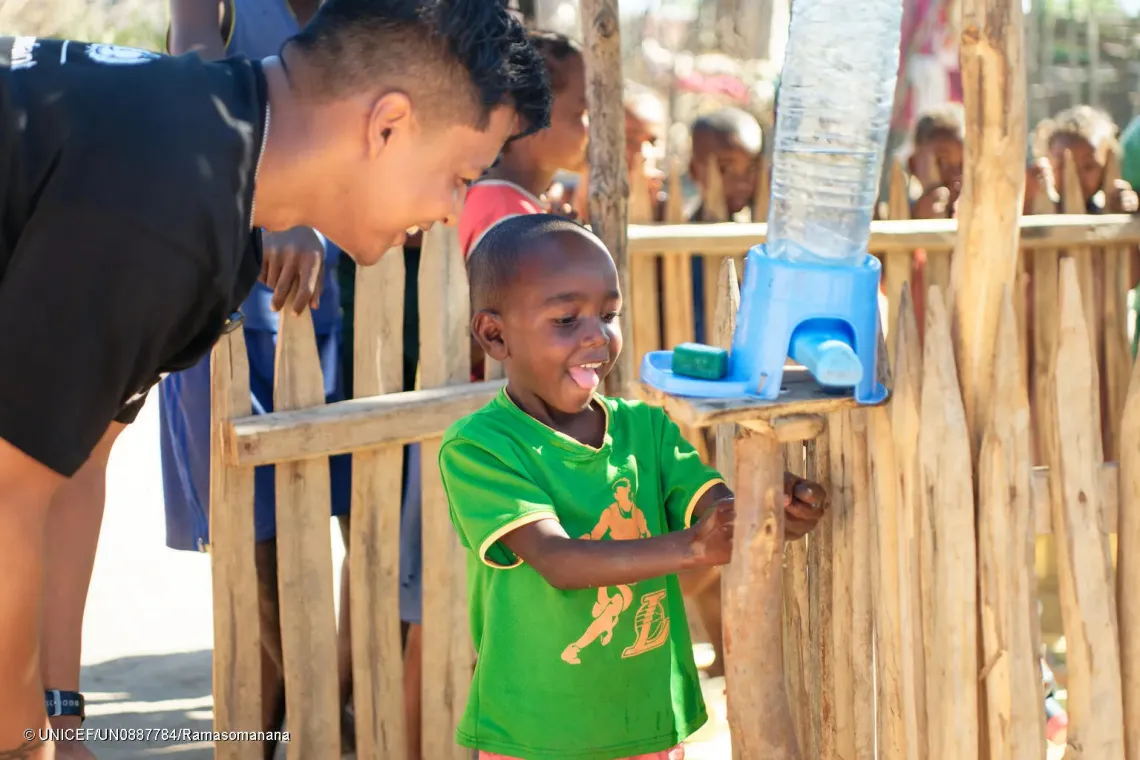
Note: Espace Mandady in southern Madagascar is supported by KfW, Irish Aid and Norway. To help close persistent gaps in early childhood development, UNICEF is rolling out a complementary set of interventions on the ground: early stimulation at community sites, psychosocial support for the management of malnutrition, Espaces Mandady, the making of toys from local materials, and preschool education.