Responsive care starts early
Early stimulation and local toy-making in the Androy region

- Français
- English
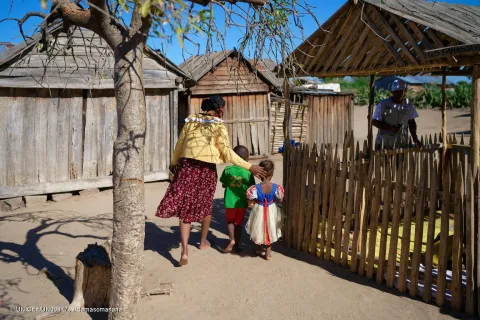
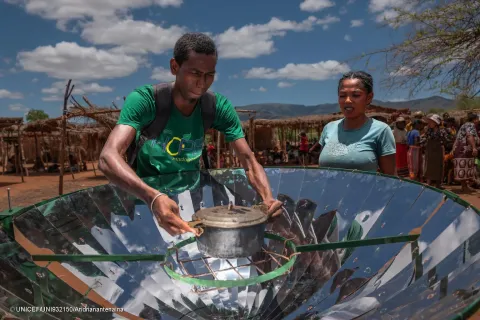
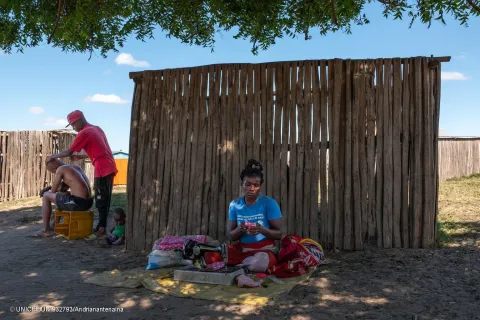
Early childhood development rests on five pillars of nurturing care: good health, adequate nutrition, safety and security, opportunities for early learning, and responsive caregiving. At the Malangy community site, in the Androy region, these pillars take the form of early stimulation sessions, toys made from recycled materials, and close support for mothers and community workers.
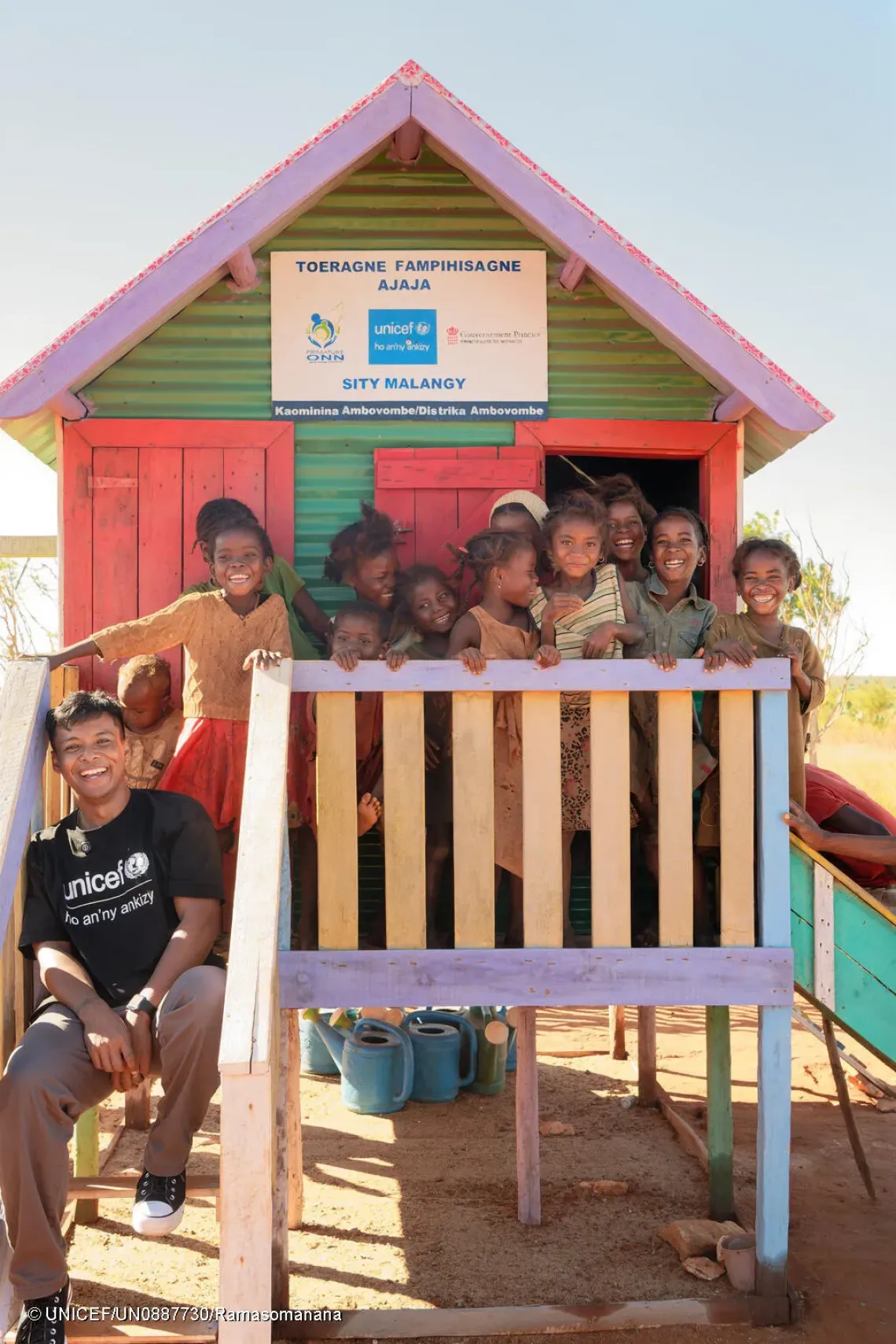
The Malangy community site, funded by Monaco, KfW and the Danish Committee for UNICEF, includes a play area that welcomes groups of children aged 6 to 36 months every two weeks.
Mirado, UNICEF Ambassador to Madagascar, poses with the children at the site's chalet.
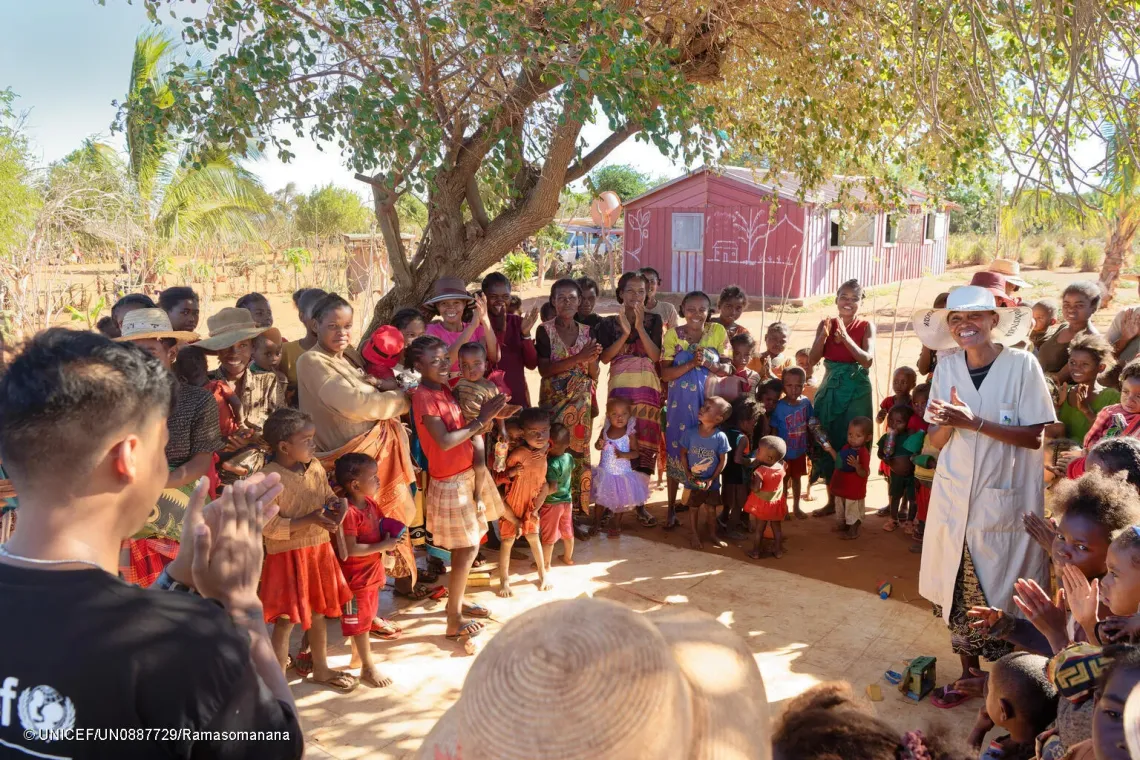
Sonjoasie Martine, community nutrition worker in charge of the Malangy site, leads sessions that combine positive parenting, positive discipline and group play.
Beyond facilitating and raising awareness, she also monitors the nutritional status of children at the site, with weekly weighing sessions and mid-upper arm circumference measurements.
Mothers first get to know me for the scale, but then I'm also the one who gets them singing with their children. Many tell me they didn't know that playing with their child was such an important part of their health.
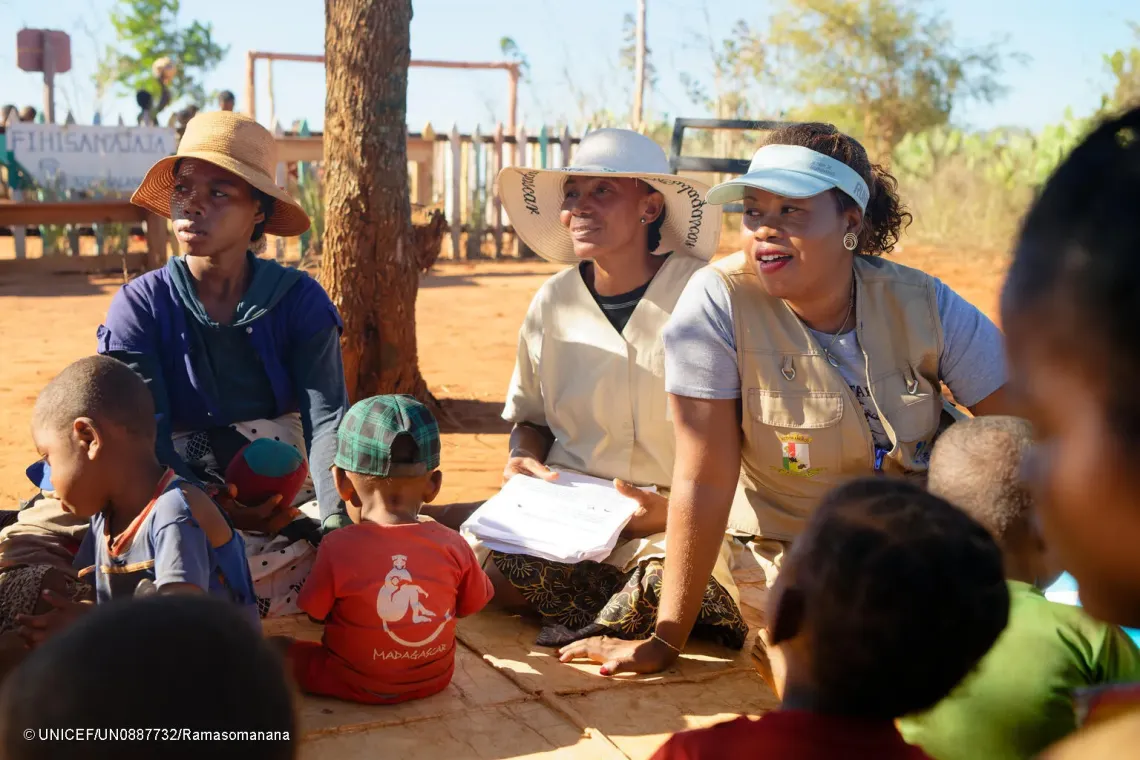
Antrananahary, a facilitator with the Regional Nutrition Office (ORN) for the Androy region, stands alongside Sonjoasie Martine, who is leading an awareness session on the importance of the first months of life.
We train community workers so that they know how to monitor children's nutrition, but also how to support parents in their day-to-day role.
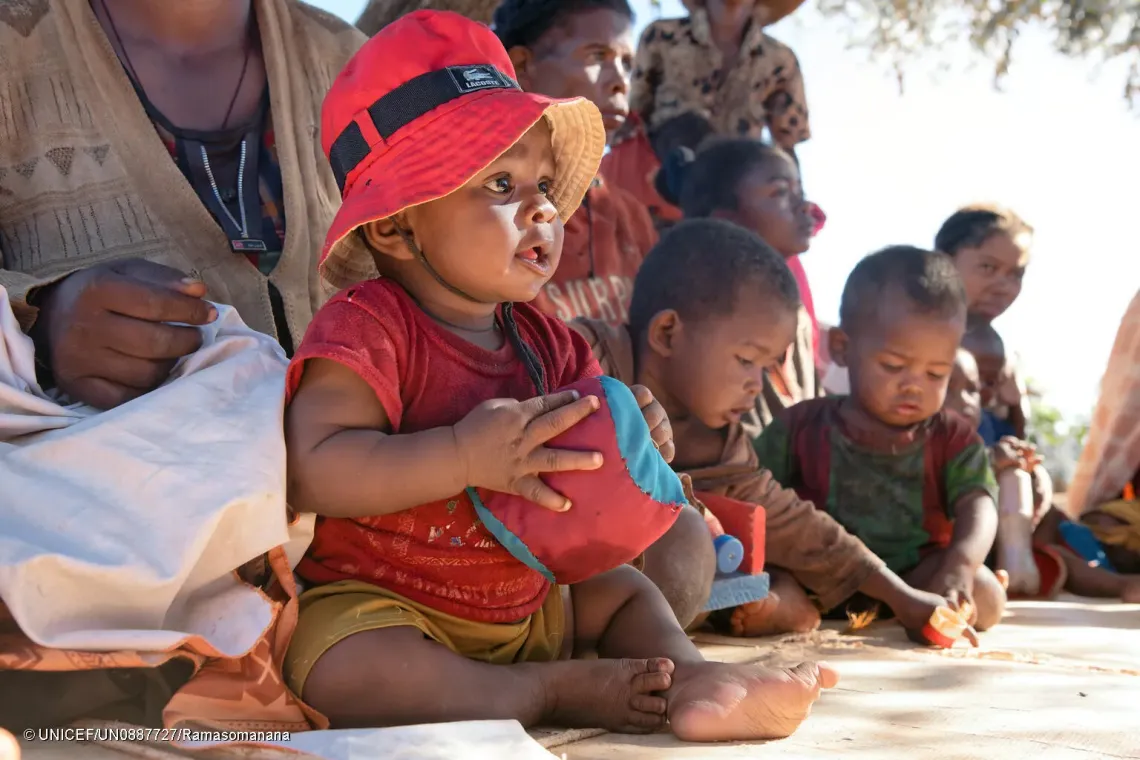
This lightweight, easy-to-grip fabric toy was made locally to meet the specific needs of a baby just a few months old.
Adapting the toy to the child's age is already a way of supporting their motor and sensory development.
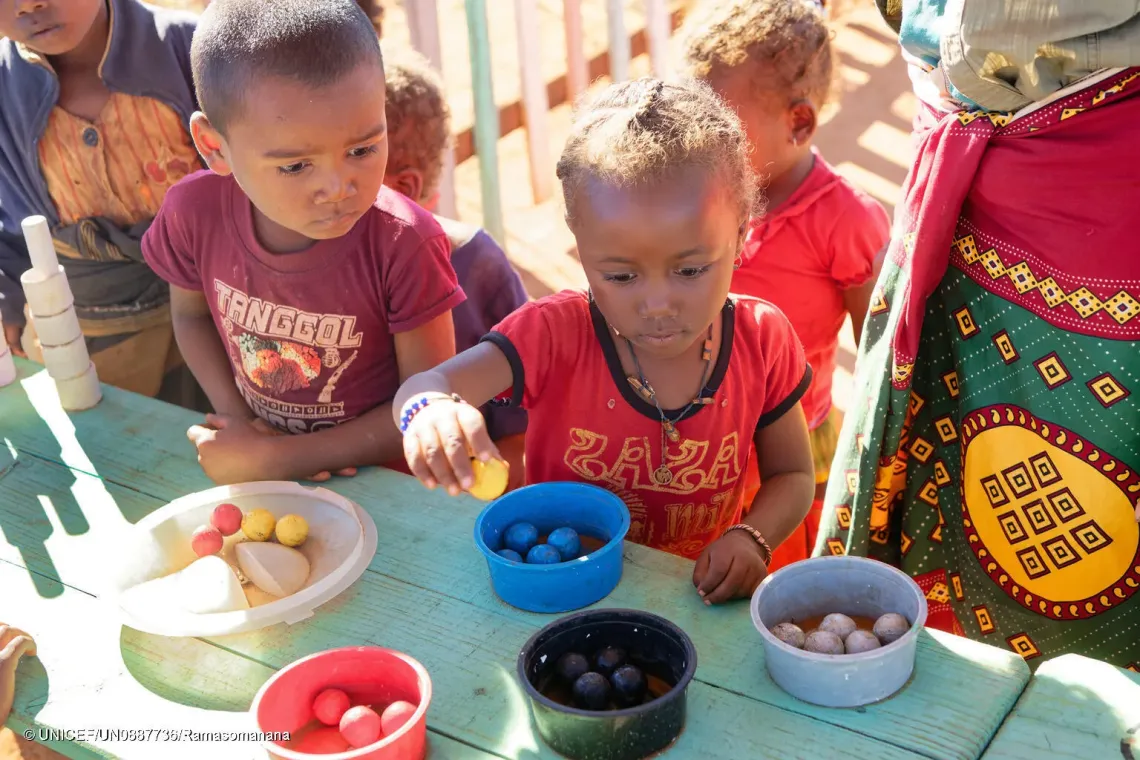
A little girl sorts small coloured balls into matching pots, a playful exercise that builds colour recognition and fine motor skills.
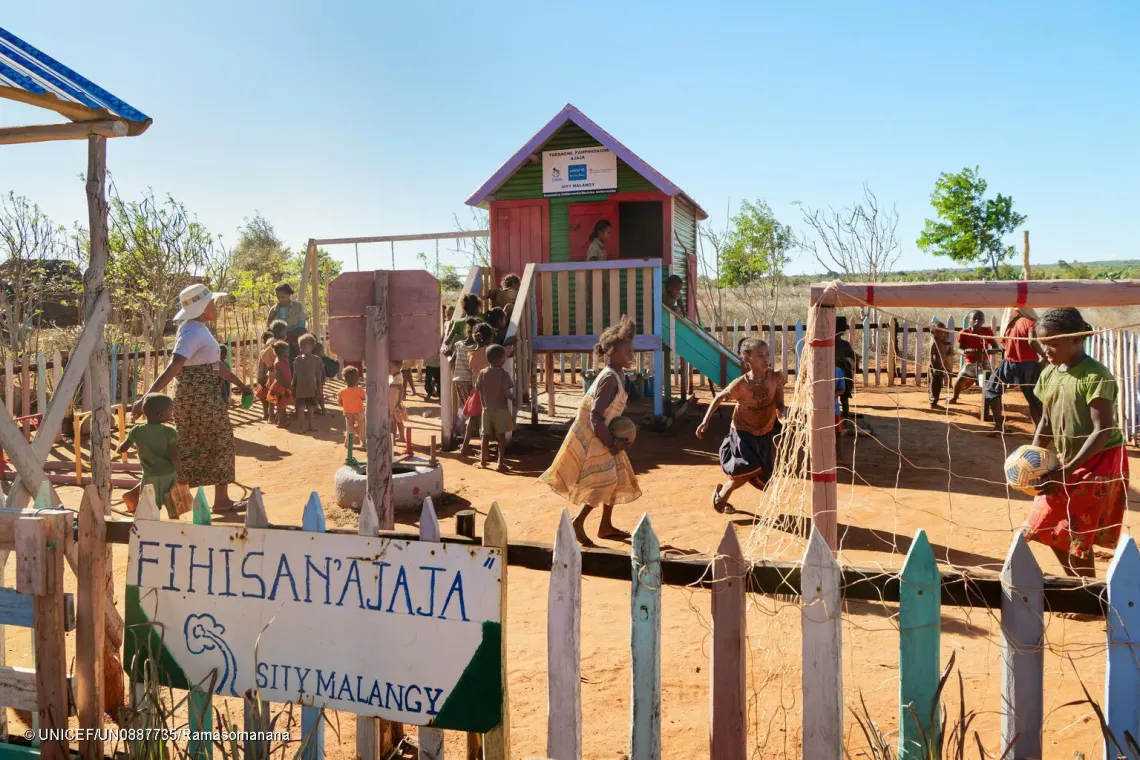
From toys for toddlers to shared equipment for older children, slides, balls, a swing, the Malangy site supports children's development at every stage.
Now a landmark for children from neighbouring villages, the play area brings families together during the sessions organised on site.
Turning recycled waste into toys
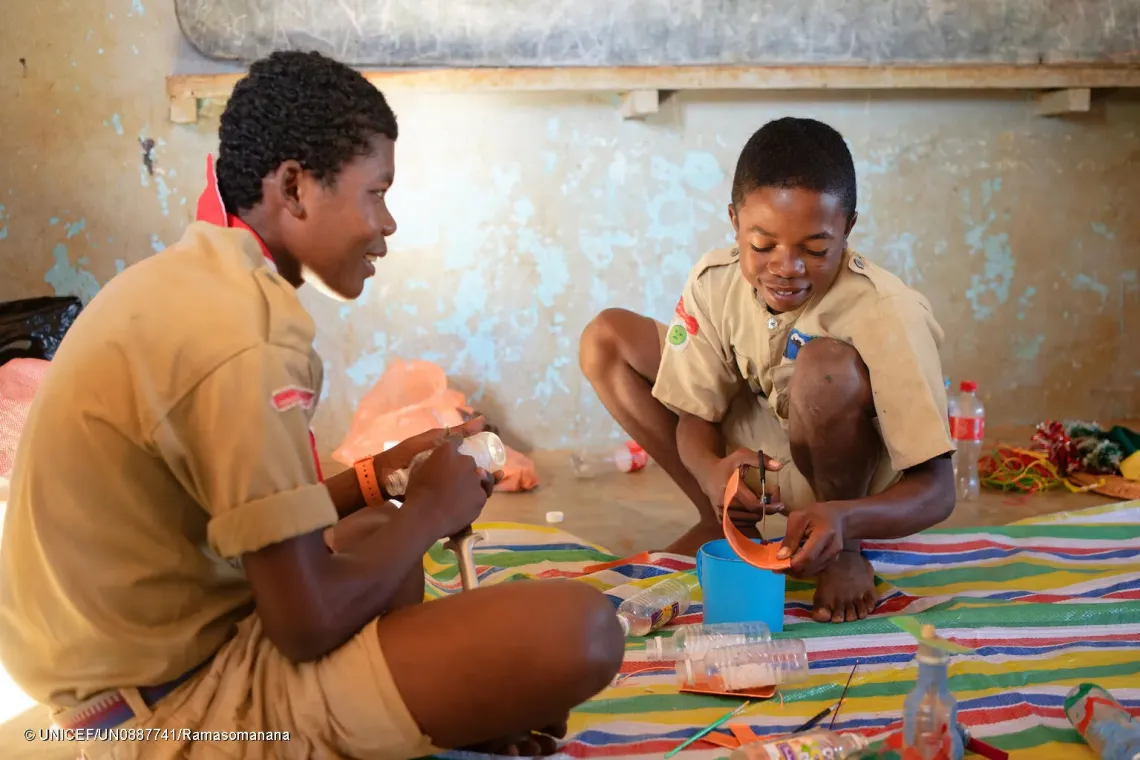
In a classroom converted into a workshop, two young scouts shape toys from recovered plastic bottles.
The scouts sort, and sometimes even buy, the recyclable waste themselves to use as raw material.
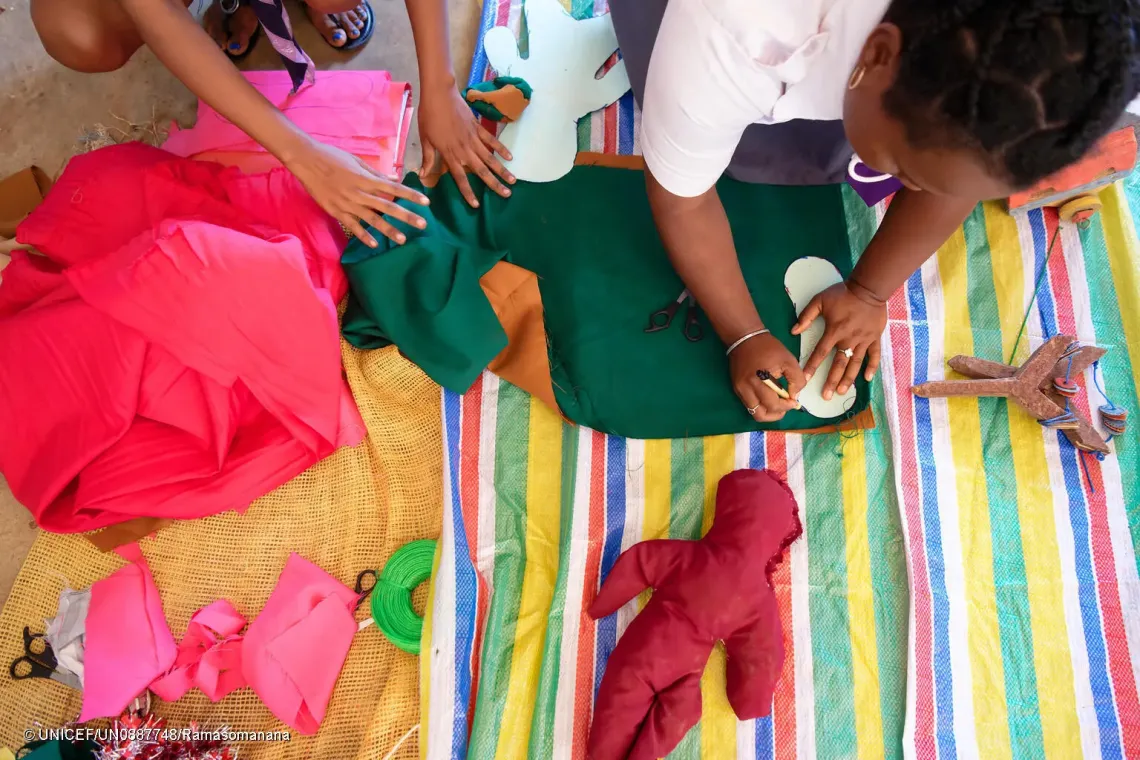
Cutting a fabric pattern for an early-learning ball. The scouts mainly use brightly coloured fabrics to encourage visual stimulation in young children while making good use of the materials available.
This ball is part of a 29-page catalogue of early-learning toys designed to support children's development from pregnancy through 36 months, although the most recent creations are not yet included. Creativity is at the heart of the making process: each team regularly comes up with new designs suited to young children's needs and gradually adds them to enrich the catalogue.
We collect what people throw away, and turn it into toys that children keep for a long time.
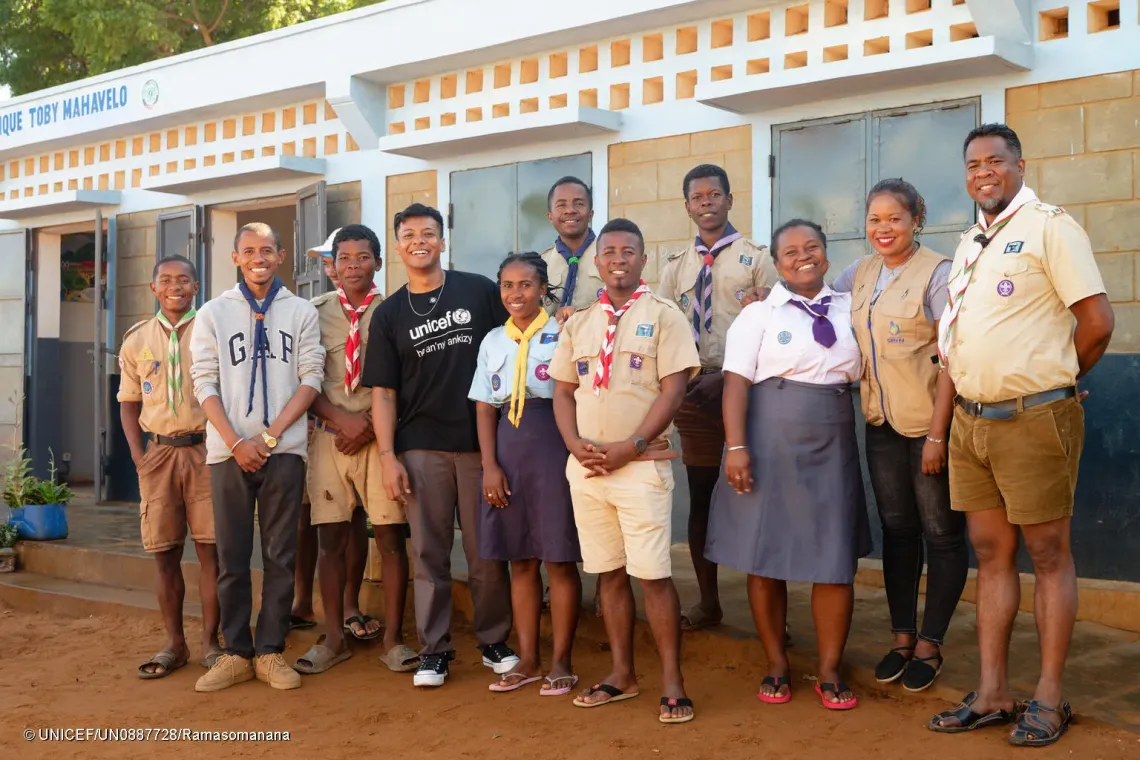
This partnership between UNICEF, the ORN and the scout movements Tily eto Madagasikara and Mpanazava eto Madagasikara makes it possible to produce low-cost toys for community sites, hospitals, preschools and temporary shelter sites during emergencies.
The production of these toys from recycled materials is supported by KfW, the Principality of Monaco, the Government of the United States and OCHA.